How does a generation that grew up amid social and political changes in Indonesia understand pride in its nation? A recent study reveals that Generation X in Indonesia views national pride through experiences related to the people, the nation, and Indonesia’s natural wealth and cultural diversity.
SDG 16: Peace Justice & Strong Institutions
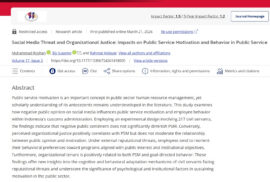
The rise of social media has changed the way the public expresses its assessment of the performance of public institutions. Negative opinions circulating on social media not only pose challenges to organizational reputation but may also influence the attitudes, motivation, and behavior of public servants in carrying out their duties.
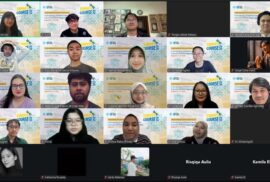
The Center for Indigenous and Cultural Psychology (CICP), Faculty of Psychology, Universitas Gadjah Mada (UGM), organized the International Summer Course CICP 2026 from August 3–8, 2026. Under the theme “Understanding Solidarity in the Global South: Cultural and Psychological Perspectives,” the program explored the formation of solidarity within Global South communities through social and cultural psychology perspectives.
UGM Faculty of Psychology Sends Off Professional Psychology Students from Batches IV and V for LPPPU
The Faculty of Psychology at Universitas Gadjah Mada (UGM) officially sent off students from Batch IV and Batch V of the Professional Psychology Study Program to undertake the General Psychologist Professional Psychology Services (Layanan Psikologi Profesi Psikolog Umum or LPPPU) on Thursday (20/8). Before providing psychological services in the community, the students received briefings on child protection and alternative psychological interventions.
Human beings are not born as a “blank slate.” From the beginning of life, people already possess a basic moral framework that continues to develop through environmental influences, culture, experience, and learning.
This topic was explored in the latest episode of Obrolan Psikologi (OPSI), a psychology talk show jointly produced by the Faculty of Psychology at Universitas Gadjah Mada (UGM) and TVRI Yogyakarta, on Tuesday (21 July). Hosted by Sekarayu Puspita, the tenth episode featured UGM Faculty of Psychology lecturer Samudera Fadlilla Jamaluddin, S.Psi., M.Sc., who discussed the psychological processes underlying human morality.
The Psychodiagnostic Instrument Development Unit (UPAP) of the Faculty of Psychology, Universitas Gadjah Mada (UGM), continues to provide accessible Graduate Academic Potential Test (PAPS) services for diverse participants. During the test session held on Thursday (25/6) in Room A-101, two deaf participants completed the PAPS assessment with assistance from UGM's Disability Services Unit (ULD) and service accommodations prepared by the UPAP team.
Yogyakarta, June 22, 2026 – Smart home applications such as Amazon Alexa, Google Home, and Samsung SmartThings have become increasingly integrated into daily life, offering greater automation and convenience. However, behind this convenience lies an important question: could these technologies inadvertently violate users' fundamental values? This question is at the heart of a recent study conducted by researchers from Universitas Gadjah Mada (UGM) in collaboration with researchers from Deakin University (Australia), Universiti Teknologi Malaysia, and Universiti Malaya. The findings were published in the international journal Internet of Things (Vol. 38) in an article titled "A Human-LLM Study of Value Concerns in Smart Home App Reviews."
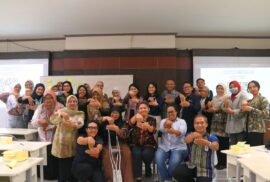
The Faculty of Psychology at Universitas Gadjah Mada (UGM), through its Information and Technology Development Unit (UIPTB), organized Tech in Training on Monday (June 15) and Thursday (June 18). The program was attended by 23 participants, consisting of students and alumni, at Room B-104, Faculty of Psychology UGM.
Ryan Sugiarto, M.A., a lecturer at the Faculty of Psychology, Universitas Sarjanawiyata Tamansiswa Yogyakarta, has officially earned his Doctor of Psychology degree from the Faculty of Psychology, Universitas Gadjah Mada (UGM) after successfully defending his dissertation in a public examination held on Wednesday (June 17) in Room A-203, Faculty of Psychology UGM.
The klitih phenomenon involving adolescents continues to attract public attention in Yogyakarta. Why do children who should be holding books instead carry sharp weapons? Where does the breakdown in communication between them and adults occur?