
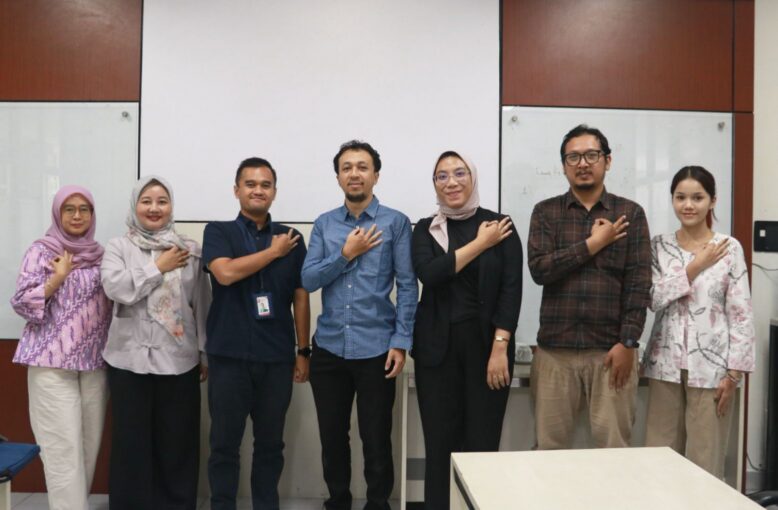
The Faculty of Psychology at Universitas Gadjah Mada (UGM) discussed social resilience amid the development of digital technology with the National Research and Innovation Agency (BRIN). The discussion took place in Room A-215 of the UGM Faculty of Psychology on Thursday, September 17, as part of BRIN’s efforts to develop the National Research Agenda Roadmap.
Shiddiq Sugiono, a representative of BRIN’s Directorate of Research, Technology, and Innovation Measurement and Indicators (PIRTI), explained that social resilience is one of the issues examined in the development of the roadmap.
“This time, we are conducting a study to support the National Research Agenda Roadmap. There are several agendas, one of which concerns social resilience. So, there are both hard science and soft science aspects,” Shiddiq said.
According to Shiddiq, the study covers the development of digitalization, which is considered likely to influence patterns of social interaction, economic activity, and the future workforce.
In a subsequent presentation, Angy Sonia from the BRIN team shared data on the impact of artificial intelligence (AI) on the world of work.
“The available data show society’s growing dependence on generative AI. Nearly 40 percent of the global workforce is affected by AI, and Indonesia is among the countries experiencing rapid growth in this area in ASEAN,” Angy said.
These findings, together with data on the rise of disinformation and mental health issues associated with digital technology addiction, serve as a basis for identifying challenges and opportunities and formulating policy priorities for the research roadmap.
In response to the presentations, Dr. Acintya Ratna Priwati, S.Psi., M.A., offered a social psychology perspective on intergroup relations. She explained that social identity is built on two foundations: interdependence and social categorization. These concepts help explain how individuals distinguish between members of their own group and those who do not belong to it.
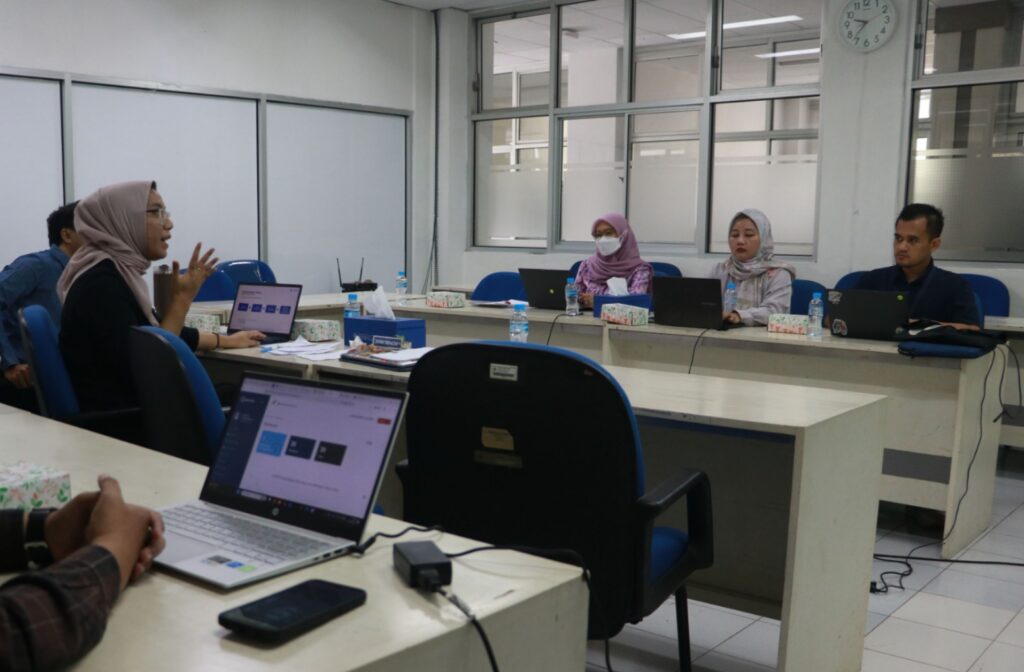
According to Acintya, social identity can have positive consequences, such as strengthening group identification and encouraging individuals to contribute to their groups. However, it can also lead to negative consequences, including stereotypes, perceived threats, and intergroup conflicts over resources.
The development of digital media can further accelerate these processes.
“Social media is a construct shaped by an individualistic perspective. It is about how people promote themselves,” she said.
She added that this condition may be at odds with the cultural characteristics of Indonesian society, which tends to be more collectivist.
Acintya also presented findings from a cross-cultural study on national identity comparing Indonesian and French societies. The study found that Indonesians demonstrated greater optimism about the future, while French respondents tended to be more pessimistic. In the Indonesian context, this optimism was associated with strong national identification and the perception that infrastructure and technological development could serve as catalysts for the future.
Adding to this perspective, Haidar Buldan Thontowi, S.Psi., M.A., Ph.D., highlighted Indonesia’s collectivism scores in comparison with those of Western countries.
“When compared with European countries and the United States, Indonesia still has a higher collectivism score. Research has already been conducted on this. One of the first scholars to examine the differences between individualistic and collectivist orientations was Hofstede,” Haidar said.
Writer: Erna Tri Nofiyana