
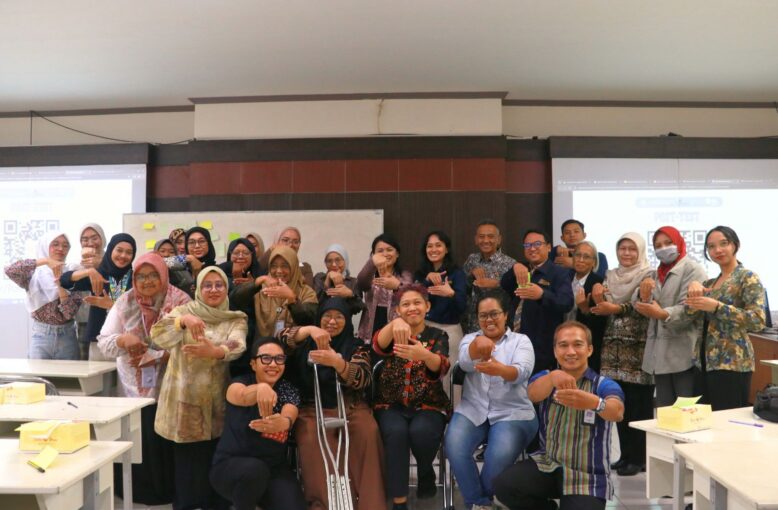
The Faculty of Psychology at Universitas Gadjah Mada (UGM) is strengthening cross-sector collaboration to prevent and address violence against children through a discussion forum titled “Together to Protect Our Children: The Roles of Law, Family, and School in Preventing and Addressing Violence Against Children.” The event was held in Room B104, Faculty of Psychology UGM, on Friday, August 21.
The forum was organized by the Faculty of Psychology UGM in collaboration with the Center for Life-Span Development (CLSD), the Center for Public Mental Health (CPMH), the Mental Processes and Behavior Laboratory (PMP), the Indonesian Child Protection Commission (KPAI), and Wiloka Workshop. Bringing together perspectives from law, psychology, and neuroscience, the event provided a platform for dialogue between academics and various stakeholders to develop a more comprehensive understanding of violence against children.
Satwika Rahapsari, S.Psi., M.A., Ph.D., a lecturer and researcher at the Faculty of Psychology UGM and chair of the organizing committee, emphasized the importance of bringing these three perspectives together to gain a more comprehensive understanding of violence against children.
“Bringing together these three perspectives—law, psychology, and neuroscience—is expected to help various parties understand violence against children more comprehensively. These cases are not merely legal matters; they are also experiences that can affect children’s psychological well-being, brain development, social relationships, and future,” Satwika said.
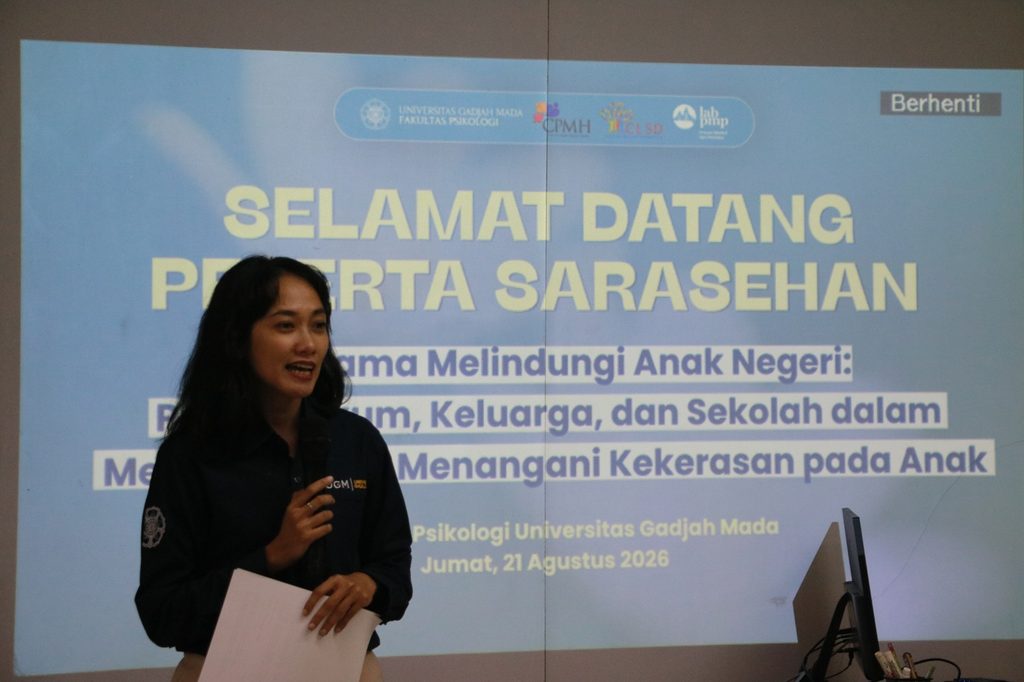
The forum brought together various stakeholders involved in child protection, including law enforcement officials, education professionals, women’s and children’s protection services, child protection institutions, and civil society organizations.
In addition to serving as a platform for cross-sector dialogue, the forum was also part of the process of developing a book titled Children Caught in the Cycle of Violence: An Integrative Perspective on Psychology, Neuroscience, Law, and Culture. Input from stakeholders and practical experience from the field are expected to enrich the development of knowledge that responds to the needs of child protection.
Pradytia Putri Pertiwi, S.Psi., Ph.D., Vice Dean for Research, Community Service, and Cooperation at the Faculty of Psychology UGM, emphasized that addressing violence against children requires collective action across sectors.
“Violence against children is a systemic problem. We cannot work in isolation: universities need practitioners’ experience to ensure that the knowledge they produce is relevant,” she said.
Dian Sasmita, S.H., M.H., from KPAI, highlighted several challenges in addressing violence against children. These include reporting systems still characterized by fear and stigma; legal proceedings that risk causing revictimization and repeated interrogations; fragmented legal assistance that is biased toward urban areas; and victim recovery that is not always accompanied by restitution.
From a neuroscience perspective, Satwika explained that children’s responses to violence must be understood in the context of their developmental stages. A child’s developing brain cannot be equated with that of an adult. Between the ages of 0 and 3, systems associated with emotions and responses to threats develop significantly. Meanwhile, between the ages of 10 and 25, the limbic system, which is associated with emotional responses, develops earlier than the prefrontal cortex, which plays a role in self-control and decision-making.
“The accelerator develops before the brakes,” Satwika said, describing this developmental process.
Therefore, children’s responses after experiencing violence need to be understood in the context of their brain development and traumatic experiences, rather than judged solely by adult developmental standards.
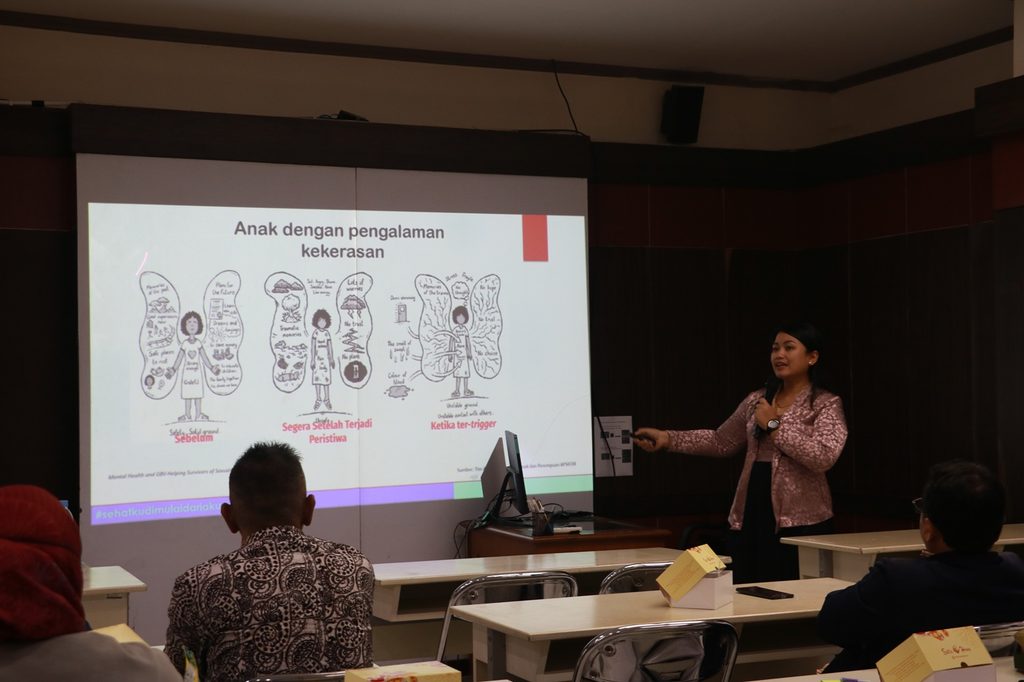
Meanwhile, Lucia Peppy Novianti, S.Psi., M.Psi., Psychologist, head of Wiloka Workshop, emphasized the importance of understanding a child’s condition following violence before determining the appropriate form of intervention.
“First, we need to understand the impact of violence on children and their condition after experiencing it,” Lucia said.
These three perspectives demonstrate that addressing violence against children cannot be undertaken in isolation. Neuroscience helps explain the effects of violence on development, psychology examines children’s experiences and recovery processes, while law ensures their protection and access to the services they need.
Writer: Mental Processes and Behavior Laboratory
Editor: Erna Tri Nofiyana