The moment a child begins to speak is certainly a joyful milestone for parents. However, a child’s development does not always progress as expected. When a child’s speaking ability appears different from that of other children their age, parents should observe their development carefully without immediately panicking.
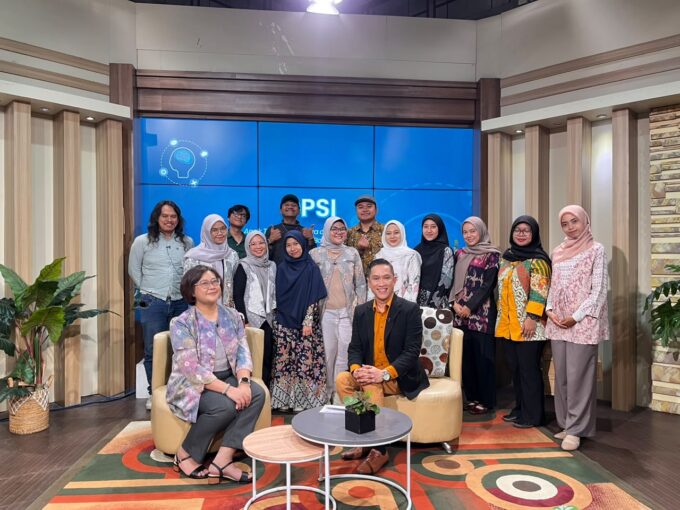
This topic was discussed in the latest episode of Obrolan Psikologi (OPSI), a psychology talk show produced through a collaboration between the Faculty of Psychology Universitas Gadjah Mada (UGM) and TVRI Yogyakarta, on Tuesday (4/8). Hosted by Ferry Anggara, the eleventh episode featured UGM Faculty of Psychology lecturer Edilburga Wulan Saptandari, S.Psi., M.Psi., Ph.D., Psikolog, familiarly known as Bu Yayi, who discussed language and communication development in children.
Speaking ability develops gradually. Before children are able to hold conversations, babies learn to recognize sounds, respond to others, babble, and eventually say their first words. This development follows developmental milestones, or stages of development that are generally reached within certain age ranges.
“Speech development begins as early as infancy, even before children are able to express what they are feeling,” Yayi said.
Every child goes through similar stages of development, although the pace may vary. Even so, parents still need to provide adequate stimulation.
Stimulation can be provided through simple activities such as talking to children, playing together, reading books aloud, and introducing them to different sounds and textures.
Communication should be “Two-Way”
According to Yayi, communication should take place in both directions. Children should not only listen, but also be given opportunities to respond and receive feedback.
This kind of interaction cannot be fully replaced by digital devices. Through direct interaction, children learn more than just how to pronounce words. They also learn how to express their feelings, understand other people, and develop social skills.
Observe your child’s development
Yayi reminded parents that there is no need to compare children’s development excessively. However, if a delay appears to be significant, it should not be ignored.
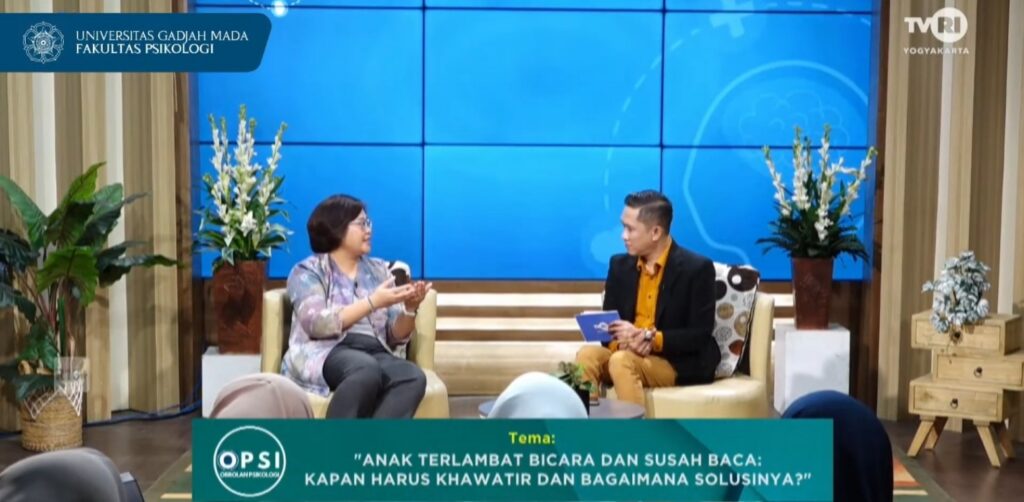
“One principle in developmental psychology is that every child goes through the same phases, but at a different pace,” Yayi explained.
If parents feel that something is different, an assessment can be conducted to better understand the child’s developmental condition.
“Consult a professional, whether a psychologist or pediatrician, as early as possible so that support is not delayed,” Yayi emphasized.
Seeking professional consultation does not necessarily mean that a child has a developmental disorder. Rather, it is a way to determine whether the child’s development is still within the expected range or whether further support may be needed.
In some cases, parents may also need guidance on how to provide appropriate stimulation and support at home.
Parents as Children’s Primary Role Models
Children learn to communicate by imitating the people around them. Therefore, parents need to model the correct pronunciation and use of words.
When children pronounce a word incorrectly, parents do not need to immediately scold them. Instead, they can first ask what the child means and how the child understands the word. Parents’ behavior is one of the primary sources of learning for children.
“Adults sometimes assume that children are simply saying things randomly, when in fact it is part of their developmental process,” Yayi explained.
Ultimately, two-way communication, adequate stimulation, and close attention to children’s development are essential. Parents do not need to panic too quickly, but they should also avoid ignoring clear signs of developmental delay.
Do not miss other engaging episodes of OPSI: Obrolan Psikologi. Watch the full episodes and continue exploring in-depth discussions on psychology through the UGM Faculty of Psychology’s Knowledge Channel:
Let us know if there are particular psychological issues you would like to see discussed on Obrolan Psikologi (OPSI), a collaborative talk show by the UGM Faculty of Psychology and TVRI Yogyakarta.
Watch the full episode on YouTube!
Share your suggestions and feedback regarding OPSI through the following channels:
Email: humas.psikologi@ugm.ac.id
Instagram: @psikologiugm
Writer: Arrasya Aninggadhira
Editor: Erna Tri Nofiyana