
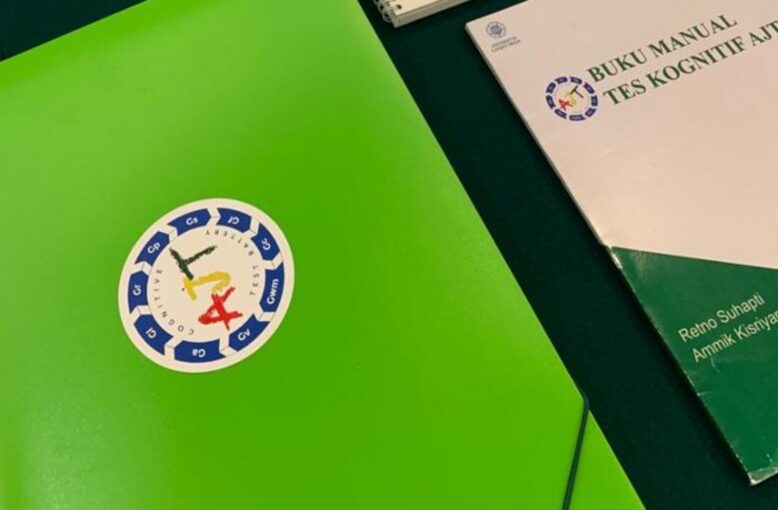
For years, psychologists in Indonesia have relied heavily on cognitive assessment tools developed abroad, often without sufficient consideration of local cultural contexts, while questions have also been raised regarding their legal status. The Faculty of Psychology at Universitas Gadjah Mada (UGM) is now addressing this challenge through the publication of Tes Kognitif AJT: Penyusunan dan Pengembangan Berbasis Teori CHC (AJT Cognitive Test: Development and Construction Based on CHC Theory).
The development of the AJT Cognitive Test was far from a short-term research project. Originating from the concern of a father who had to take his child abroad simply to receive a cognitive assessment, the research was driven by the belief that Indonesia deserves its own intelligence assessment tool—one that is valid, legally accountable, and culturally relevant.
More than a user guide, the book serves as a comprehensive reference covering the history of intelligence theory, the Cattell-Horn-Carroll (CHC) theory as its theoretical foundation, the development process of AJT, and detailed explanations of each subtest.
Cognitive assessment tools developed abroad and subsequently used in Indonesia have raised questions not only regarding their legal status but also about potential cultural bias. In an exclusive interview, AJT book publication coordinator Samudera Fadlilla Jamaluddin, S.Psi., M.Sc., gave a concrete example: some items in popular intelligence tests feature images of snow and chimneys, which may potentially result in inaccurate cognitive assessments because such objects are relatively unfamiliar to Indonesian children. AJT was developed to address such gaps.
The development of AJT began around 2013–2014 with funding support from a foundation and involved more than 3,000 Indonesian children as research participants. Work on the book itself was initiated around 2016 and involved dozens of lecturers from the UGM Faculty of Psychology, including the late senior lecturer Prof. Dr. Amitya Kumara, M.S. The book was eventually completed in 2023–2024, bringing the entire development process to nearly a decade. The three final editors were Prof. Drs. Subandi, M.A., Ph.D., Psychologist; Supra Wimbarti, M.Sc., Ph.D., Psychologist; and Restu Tri Handoyo, S.Psi., M.Psi., Ph.D., Psychologist.
With the publication of this book, AJT is now increasingly accessible for broader use. “The hope is simply that the AJT assessment tool will be used by more people, so that we can obtain fairer measurements of intelligence. The assessment takes into account the culture and characteristics of Indonesian society, thereby minimizing cultural bias in the measurement process,” said the AJT book publication coordinator.
He added, “Hopefully, this book will be useful and informative and provide greater insight into the assessment of children’s cognitive abilities.”
Indonesia now has an intelligence assessment tool developed through extensive research, designed for its own cultural context, and supported by scientific and legal considerations. The AJT book is not merely an academic reference, but also an invitation to educators, researchers, and practitioners to work together in advancing the standards of cognitive assessment in Indonesia.
Tester certification is currently available to psychologists from any university and is scheduled regularly each year, including an upcoming collaboration with a neurodevelopmental clinic in Bandung around October. Further information on certification programs, webinars, and access to the book is available through UPAP Psychology UGM or the official AJT Instagram account (@ajt.ugm).
Writer: Raden Roro Anisa Anggi Dinda
Photo: ajt-ugm.com