A decade-long career in the oil and gas industry, followed by two decades as a consultant and speaker, did not lead Okina Fitriani to leave the academic world behind. An alumna of the Faculty of Psychology at Universitas Gadjah Mada (UGM), she continued teaching, pursued her studies through doctoral level, and developed research in the field of parenting. Born and raised in Yogyakarta to a family of West Sumatran heritage, she has demonstrated that dedication to the industrial sector can go hand in hand with meaningful contributions to research and academia.
Release
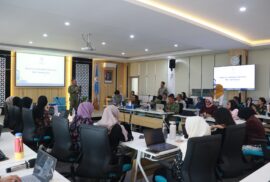
The Center for Public Mental Health (CPMH) at the Faculty of Psychology, Universitas Gadjah Mada (UGM), opened the 10th International Short Course on Psychology (ISCP) in person at Hall D of the UGM Faculty of Psychology on Tuesday (1/9). Carrying the theme “Turning a House into a Home,” the event featured the Head of the Yogyakarta Special Region Office for Women’s Empowerment, Child Protection, and Population Control (DP3AP2 DIY), Erlina Hidayati Sumardi, S.IP., M.M., as the keynote speaker.
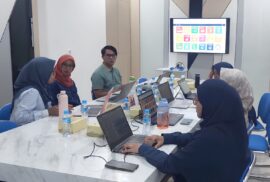
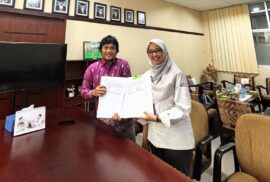
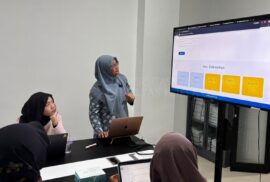
The Faculty of Psychology at Universitas Gadjah Mada (UGM) welcomed a delegation from the Ministry of Population and Family Development/National Population and Family Planning Board (Kemendukbangga/BKKBN) on Friday (4/9). Held in person, the meeting explored opportunities to collaborate in providing psychosocial support for disaster-affected communities, particularly in East Nusa Tenggara (NTT) and several other regions.
Bullying not only affects psychological well-being but can also affect brain function. Repeated and prolonged exposure to social stress can trigger chronic stress, potentially affecting the hippocampus, a region of the brain that plays an important role in memory formation and storage.
Yogyakarta, 8 September 2026 — An international collaborative study involving researcher from the Faculty of Psychology, Universitas Gadjah Mada (UGM), Riangga Novrianto, S.Psi., M.Psi., Psychologist, has found that specific post-traumatic symptoms, namely re-experiencing, or reliving traumatic experiences, and the dissociative symptom of depersonalization, significantly predict the severity of depression six months later.
“Try to focus.” “Don’t be lazy.” “You just need more discipline.” These comments may seem harmless, but for individuals with ADHD, they can be exhausting and hurtful.
This topic was explored in the latest episode of Obrolan Psikologi (OPSI), a psychology talk show jointly produced by the Faculty of Psychology at Universitas Gadjah Mada (UGM) and TVRI Yogyakarta, on Tuesday (1/9). Hosted by Hendry Saputra, this year’s thirteenth episode featured UGM psychology lecturer Muhammad Nabhan Husein, S.Psi., M.Psi., Psikolog, who discussed how ADHD manifests in adults.
Yogyakarta, 3 September 2026 — Research conducted by the Faculty of Psychology, Universitas Gadjah Mada (UGM), has revealed that religious beliefs and purpose in life are the most salient aspects of personal identity among Indonesian adolescents.
The finding comes from a study entitled “Personal Identity Domains among Adolescents in Indonesia: Salience of Religious Beliefs and Purpose in Life” conducted by Darmawan Muttaqin, S.Psi., M.A., Prof. Dr. Tina Afiatin, M.Si., Psikolog, dan Sutarimah Ampuni, S.Psi., M.Si., M.Psych., Ph.D., Psikolog. The study highlights the importance of culture-specific contexts in determining which aspects of life are most relevant to adolescent identity development. Historically, research on adolescent identity has focused primarily on the processes of exploration and commitment, while the identity content or domains that are most salient within particular cultural contexts have not been systematically mapped.
How does a generation that grew up amid social and political changes in Indonesia understand pride in its nation? A recent study reveals that Generation X in Indonesia views national pride through experiences related to the people, the nation, and Indonesia’s natural wealth and cultural diversity.
The rise of social media has changed the way the public expresses its assessment of the performance of public institutions. Negative opinions circulating on social media not only pose challenges to organizational reputation but may also influence the attitudes, motivation, and behavior of public servants in carrying out their duties.
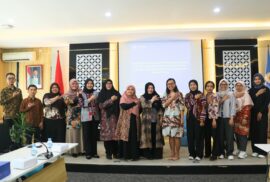
The Center for Indigenous and Cultural Psychology (CICP), Faculty of Psychology, Universitas Gadjah Mada (UGM), organized the International Summer Course CICP 2026 from August 3–8, 2026. Under the theme “Understanding Solidarity in the Global South: Cultural and Psychological Perspectives,” the program explored the formation of solidarity within Global South communities through social and cultural psychology perspectives.