
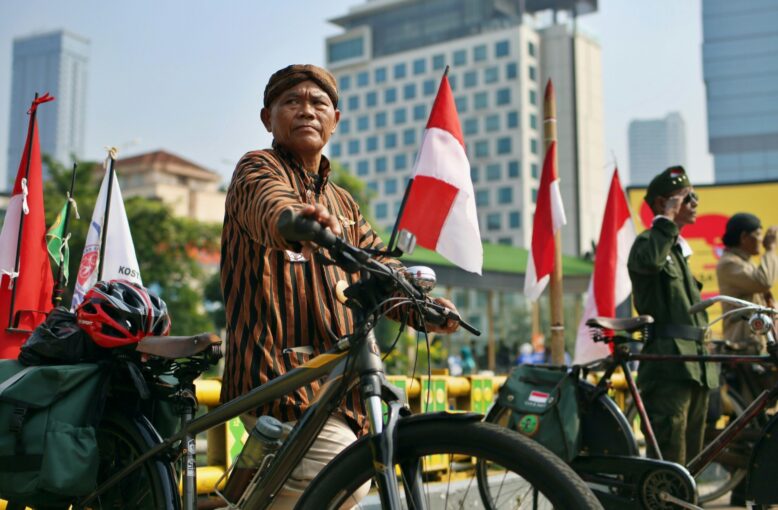
How does a generation that grew up amid social and political changes in Indonesia understand pride in its nation? A recent study reveals that Generation X in Indonesia views national pride through experiences related to the people, the nation, and Indonesia’s natural wealth and cultural diversity.
The findings are presented in a study entitled “Generation X’s Perspectives on Indonesian National Pride: A Reflexive Thematic Analysis” by Rizal Kurniawan, M.A., Sartana, M.A., and Prof. Dr. Avin Fadilla Helmi, M.Si., published as an Open Access (OA) article in The Qualitative Report.
The study is grounded in the view that national pride plays an important role in supporting a country’s well-being and progress. However, the sources of national pride may differ across generations, particularly because each generation experiences different historical, social, and cultural contexts.
The researchers specifically examined Generation X, defined as individuals born between 1960 and 1980. This generation has lived through various historical events and heard firsthand accounts of the struggle for independence from their parents. Although this generation has strong collective memories of the nation’s social dynamics, empirical research specifically examining the moments or factors that trigger their pride in Indonesia remains limited. This study therefore seeks to address this gap by identifying the sources of national pride among Generation X while comparing them with frameworks commonly used in Western countries.
To understand these experiences, the study involved 264 Indonesian citizens aged 45–60. Data were collected through an open-ended questionnaire, allowing participants to freely express their experiences and views regarding the things that make them proud of Indonesia. The data were then analyzed using a reflexive thematic analysis approach, which enabled the researchers to identify patterns and themes emerging from the participants’ subjective experiences. The analysis revealed three major themes that serve as pillars of national pride among Generation X in Indonesia: the people, the nation, and nature.
Generation X expressed strong pride in the characteristics of Indonesian society, particularly its friendliness, tolerance, and commitment to gotong royong (mutual cooperation). They also took pride in Indonesia’s achievements on the international stage, particularly in sports such as badminton. In addition, the nation’s long history of independence, the exemplary contributions of national figures, the philosophy of Pancasila, Indonesia’s rich tropical natural resources, and its cultural diversity were viewed as valuable assets that foster a sense of love for the country.
Interestingly, the study found significant differences when compared with the International Social Survey Programme (ISSP) framework commonly used in Western countries. In Indonesia, political conditions did not emerge as a source of pride, as they are often marked by negative issues and dynamics. Conversely, cultural diversity and natural wealth—which are not major focuses in the Western framework—emerged as highly dominant sources of pride among Generation X in Indonesia.
Generation X occupies an interesting position in Indonesia’s social development. This generation has experienced various phases of change in the country, from a period when access to information was still limited to the emergence of technology and digital media, which have enabled people to interact more broadly with the world.
These cross-era experiences may shape how Generation X understands national identity. Pride in Indonesia is not viewed merely as an abstract feeling, but is closely connected to concrete experiences of the people, the nation, the natural environment, and the diversity within Indonesian society.
The findings contribute to a broader understanding of national identity from a generational perspective while highlighting the importance of considering cultural contexts when examining nationalism and national pride. The study is also relevant to understanding how national identity develops within societies characterized by diverse cultural backgrounds and social experiences.
Understanding the sources of national pride can provide a basis for developing more context-sensitive approaches to strengthening people’s sense of belonging to their nation. Rather than viewing national pride as a uniform concept, this study demonstrates that its meaning can be shaped by generational experiences and the social and cultural context of a society.
The study also enriches research on Generation X in Indonesia, particularly by examining how individuals born between 1960 and 1980 understand the relationship between personal identity, society, the state, and Indonesia as a nation. Furthermore, the findings provide an important foundation for the development of research in national psychology and open opportunities for comparative studies of national identity across Southeast Asia in the future.
Editor: Zufar
Layout: Fauzi
Photo: Heru Dharma dari Pexels