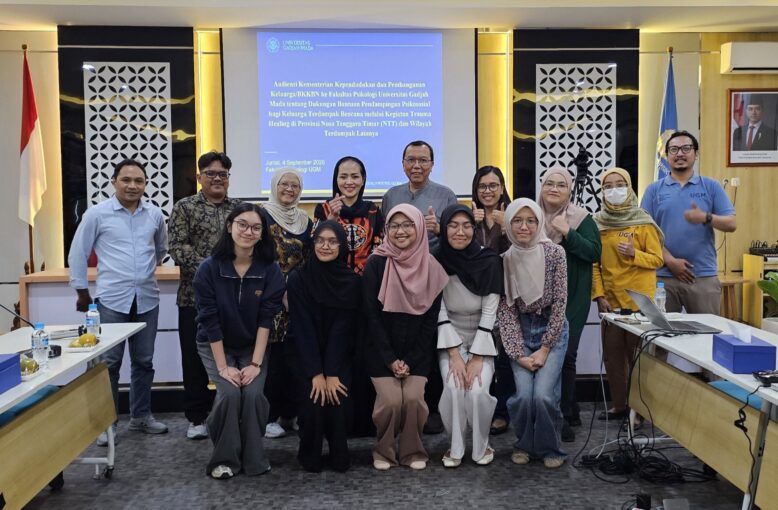
The Center for Public Mental Health (CPMH) at the Faculty of Psychology, Universitas Gadjah Mada (UGM), opened the 10th International Short Course on Psychology (ISCP) in person at Hall D of the UGM Faculty of Psychology on Tuesday (1/9). Carrying the theme “Turning a House into a Home,” the event featured the Head of the Yogyakarta Special Region Office for Women’s Empowerment, Child Protection, and Population Control (DP3AP2 DIY), Erlina Hidayati Sumardi, S.IP., M.M., as the keynote speaker.
The event began with opening remarks from CPMH Director Diana Setiyawati, S.Psi., MHSc., Ph.D., Psikolog. She emphasized that mental health approaches, interventions, and policies cannot simply be transferred from one country, culture, or community to another.
The 10th ISCP promotes the idea of the family as the “first school of life,” where children learn responsibility, self-discipline, empathy, and how to live alongside others. However, Diana also noted that families can become places where vulnerability, violence, neglect, and psychological distress are passed down across generations.
“Through this short course, we want to encourage all participants to develop the capacity to advocate for mental health systems and evidence-based policies,” Diana said.
This year’s program explores parenting patterns and traditions in several Asian countries. It seeks to position local knowledge as a foundation for global contributions, rather than treating local communities merely as recipients of externally imported approaches.
During the opening session, Erlina presented an overview of family-related challenges at the local level. She explained that the psychological consultation and domestic violence services provided by DP3AP2 DIY continue to receive high numbers of clients each year, with waiting periods for in-person counselling sometimes lasting several months.
“The government has introduced various initiatives to help people build stronger and better-prepared families so that conflicts and violence can be prevented. However, these efforts are still considered insufficient,” Erlina said.
She also highlighted several ongoing issues, including the persistently high rate of child marriage, divorce cases in which child-support obligations remain difficult to enforce because of regulatory limitations, and patterns of violence that often stem from perpetrators’ own childhood experiences.
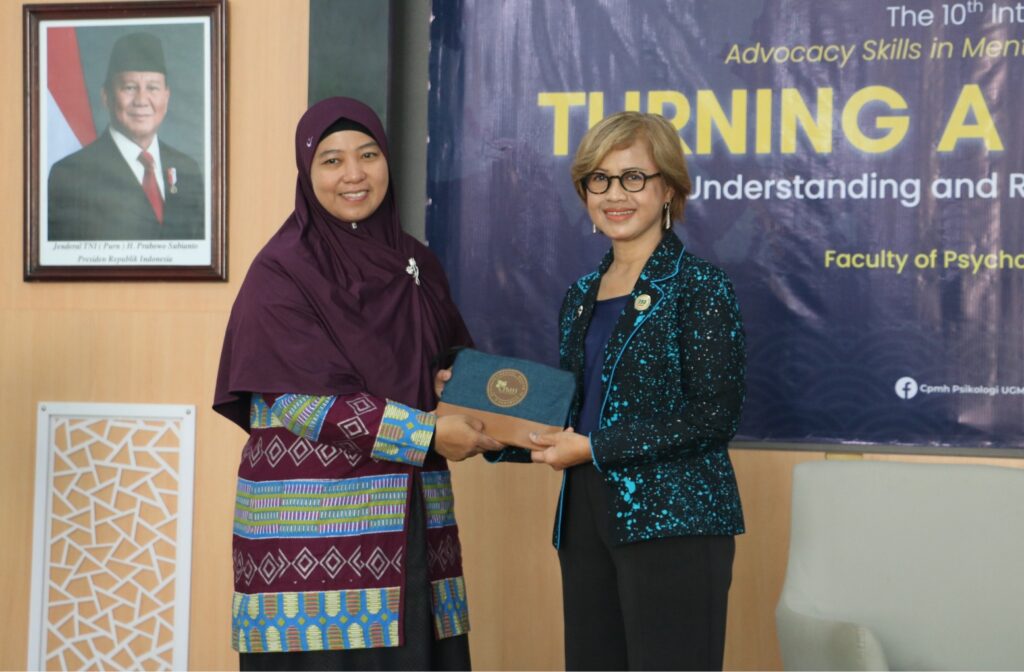
Erlina further emphasized how these problems may affect individuals’ readiness to become partners and parents later in life. She also drew attention to the prevalence of online violence against women and children. According to Erlina, these conditions underscore the importance of prevention and educational programs that begin early.
“Psychological knowledge is essential for families. For those who have already started a family without sufficient knowledge of the psychological aspects of family life, a Family School program is needed. In the future, this program must continue to be implemented,” Erlina said.
In response to these challenges, DP3AP2 DIY provides marriage-readiness education for secondary school students and runs an ongoing Family School program for married couples. These efforts are further strengthened through collaboration with universities that possess expertise in psychology, including the UGM Faculty of Psychology.
Through the 10th ISCP, participants are expected to broaden their understanding of parenting across cultures and develop approaches suited to the cultural contexts of the communities they serve. The knowledge gained is expected to extend beyond the classroom and be applied to strengthen families, create safer environments, and support better mental health within society.
Writer: Arrasya Aninggadhira
Editor: Erna Tri Nofiyana