Arsip:

SDG 4: Quality Education

CLSD UGM Prepares KKN-PPM Students with Early Childhood Development Assistance Training

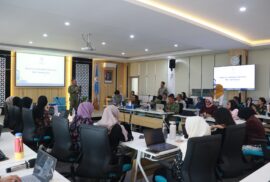
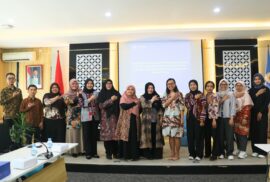
The Centre for Life-Span Development (CLSD) of the Faculty of Psychology at Universitas Gadjah Mada (UGM) organised a KKN Warming Up program in the form of training on socio-emotional stimulation and early childhood literacy on Saturday (16/5). This activity is part of the preparation for students participating in the KKN-PPM UGM program. CLSD itself is a research and community service centre within the Faculty of Psychology UGM that focuses on human development across the lifespan.

Developmental Psychology Expert Emphasizes the Importance of Early Childhood Care Standards Following Daycare Abuse Case in Yogyakarta

The child abuse case at Little Aresha daycare in Yogyakarta has revealed layers of issues that have long remained hidden within Indonesia’s early childhood care system. This phenomenon cannot merely be understood as an individual act of violence, but also as a matter closely related to the quality of childcare services, caregiver preparedness, and family support systems.

HPU of the Faculty of Psychology UGM Enhances Reproductive Health Awareness through Cervical Cancer Education

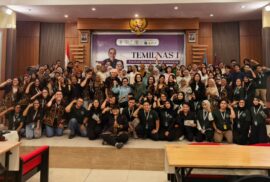
The Faculty of Psychology at Universitas Gadjah Mada, through its Health Promoting University (HPU) program, held a Reproductive Health Seminar titled “Cervical Cancer Education and Prevention” on Tuesday (12/5) at Room A-203 of the Faculty of Psychology UGM and online via Zoom. The event was attended by 47 participants consisting of female lecturers, educational staff, and students.

Researchers from UGM Faculty of Psychology and International Partners Validate Indonesian-Language Depression Assessment Tool to Strengthen Mental Health Services

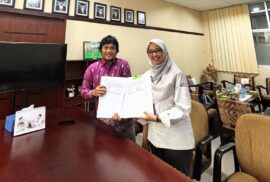
Yogyakarta, May 12, 2026 — Efforts to strengthen mental health services in Indonesia have once again received a contribution from researchers at Universitas Gadjah Mada. A research team from the Faculty of Psychology at Universitas Gadjah Mada, together with national and international partners, successfully adapted and validated an Indonesian-language version of a behavioral activation measurement instrument for depression through a study titled “Adaptation and Validation of the Indonesian Version of Behavioral Activation for Depression Scale – Short Form (BADS-SF) Using Confirmatory Factor Analysis and Rasch Modeling.” The study was published in JP3I (Indonesian Journal of Psychological and Educational Measurement) and involved collaboration between researchers from UGM, Universitas Diponegoro, as well as academics from the University of Wisconsin–Milwaukee and the University of Washington.

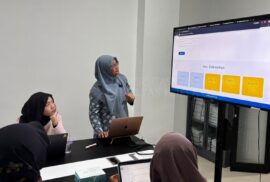
UPAP Conducts First Trial of Digital PAPs Test Platform

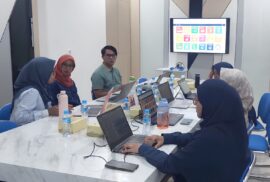
Following the Focus Group Discussion (FGD) on the Acceleration of Psychological Service System Integration and GMST Mandiri held on April 10–11, 2026, the Unit for the Development of Psychodiagnostic Instruments (UPAP) conducted a trial of its new PAPs test platform.

Sungkan, People Pleasing, and Decolonization in Academic Publishing

Yogyakarta, May 7, 2026 – Amid the euphoria surrounding scientific publication and the obsession with global indexing systems, one fundamental question is rarely asked: are we truly producing knowledge, or merely fulfilling academic administrative standards?

Research from the Faculty of Psychology at Universitas Gadjah Mada on people-pleasing behavior from the perspective of the Javanese concept of sungkan opens the door to broader reflection. The article titled “People Pleaser Behavior within the Perspective of Sungkan: A Psycho-Anthropological Interpretation” demonstrates that the tendency to please others is not merely an individual trait, but rather the result of deep cultural constructions rooted in values of respect, harmony, and social relationships.