
Arsip:

SDG 10: Reduced Inequalities

Re-experiencing and Depersonalization Symptoms Predict Depression Severity in Women

Yogyakarta, 8 September 2026 — An international collaborative study involving researcher from the Faculty of Psychology, Universitas Gadjah Mada (UGM), Riangga Novrianto, S.Psi., M.Psi., Psychologist, has found that specific post-traumatic symptoms, namely re-experiencing, or reliving traumatic experiences, and the dissociative symptom of depersonalization, significantly predict the severity of depression six months later.

OPSI UGM Explores ADHD Symptoms in Adults

“Try to focus.” “Don’t be lazy.” “You just need more discipline.” These comments may seem harmless, but for individuals with ADHD, they can be exhausting and hurtful.

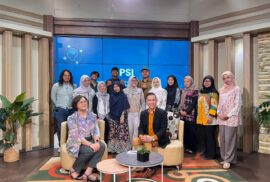
This topic was explored in the latest episode of Obrolan Psikologi (OPSI), a psychology talk show jointly produced by the Faculty of Psychology at Universitas Gadjah Mada (UGM) and TVRI Yogyakarta, on Tuesday (1/9). Hosted by Hendry Saputra, this year’s thirteenth episode featured UGM psychology lecturer Muhammad Nabhan Husein, S.Psi., M.Psi., Psikolog, who discussed how ADHD manifests in adults.

International Summer Course CICP 2026 Explores Solidarity from a Global Perspective

The Center for Indigenous and Cultural Psychology (CICP), Faculty of Psychology, Universitas Gadjah Mada (UGM), organized the International Summer Course CICP 2026 from August 3–8, 2026. Under the theme “Understanding Solidarity in the Global South: Cultural and Psychological Perspectives,” the program explored the formation of solidarity within Global South communities through social and cultural psychology perspectives.

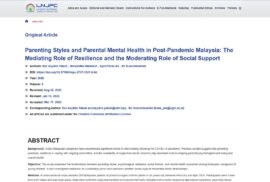
Collaboration Among UGM Researchers Reveals Roles of Parenting Styles, Resilience, and Social Support in Parents’ Post-Pandemic Mental Health

Yogyakarta, August 20, 2026 — Collaborative research involving Sri Kusrohmaniah, a researcher from the Faculty of Psychology, Universitas Gadjah Mada (UGM), has revealed the relationship between parenting styles, psychological resilience, social support, and parental mental health in the post-COVID-19 pandemic context. The study of parents in Malaysia shows that parenting styles and the social environment play important roles in shaping the psychological well-being of parents with young children.

Older Adults with Diabetes Need Psychological and Social Support in Addition to Medical Treatment

Yogyakarta, August 10, 2026 – The quality of life of older adults living with type 2 diabetes mellitus is influenced not only by their physical condition but also by psychological and social factors, as well as their ability to independently manage their condition (self-management). These findings are presented in a scientific article entitled Multidimensional Determinants of Quality of Life in Older Adults with Type 2 Diabetes: A Narrative Synthesis, published in the international journal Clinical Gerontologist.

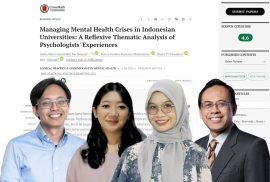
UGM Psychologists Advocate for Standardized Mental Health Crisis Services in Indonesian Universities

Yogyakarta, August 7, 2026 – The rising number of mental health crises in higher education settings, ranging from self-harm urges to suicidal ideation, highlights the urgent need for a more standardized crisis response system, particularly within universities. Addressing this challenge, a research team from the Faculty of Psychology at Universitas Gadjah Mada (UGM) examined psychologists’ experiences in managing mental health crises at Indonesian universities.

OPSI UGM Explores the Complexities of Human Morality in the Age of Social Media

Human beings are not born as a “blank slate.” From the beginning of life, people already possess a basic moral framework that continues to develop through environmental influences, culture, experience, and learning.

This topic was explored in the latest episode of Obrolan Psikologi (OPSI), a psychology talk show jointly produced by the Faculty of Psychology at Universitas Gadjah Mada (UGM) and TVRI Yogyakarta, on Tuesday (21 July). Hosted by Sekarayu Puspita, the tenth episode featured UGM Faculty of Psychology lecturer Samudera Fadlilla Jamaluddin, S.Psi., M.Sc., who discussed the psychological processes underlying human morality.