
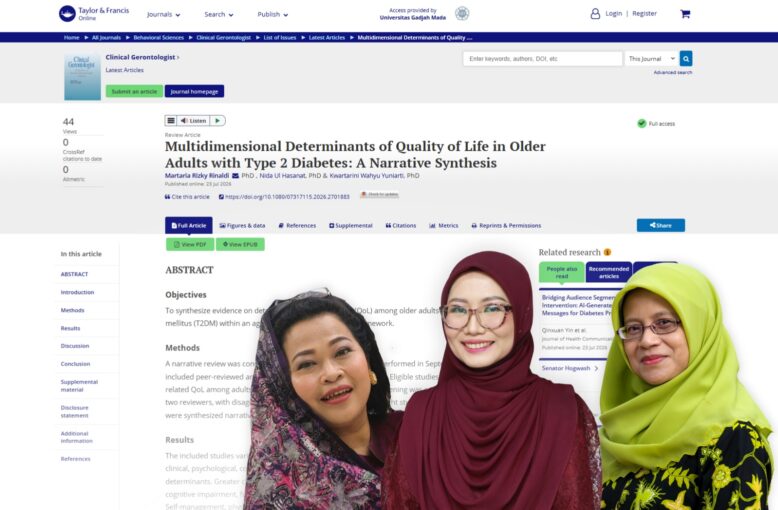
Yogyakarta, August 10, 2026 – The quality of life of older adults living with type 2 diabetes mellitus is influenced not only by their physical condition but also by psychological and social factors, as well as their ability to independently manage their condition (self-management). These findings are presented in a scientific article entitled Multidimensional Determinants of Quality of Life in Older Adults with Type 2 Diabetes: A Narrative Synthesis, published in the international journal Clinical Gerontologist.
The study, conducted by Dr. Martaria Rizky Rinaldi, M.Psi., Psychologist, Dr. Nida Ul Hasanat, M.Si., Psychologist, and Prof. Dra. Kwartarini Wahyu Yuniarti, M.Med.Sc., Ph.D., Psychologist, provides a comprehensive synthesis of the various factors influencing the quality of life of older adults with type 2 diabetes. Using a narrative review approach, the research team examined 48 scientific articles published between 2007 and 2025 and indexed in the Scopus database.
The review found that the quality of life of older adults with diabetes is shaped by a range of interconnected factors, including clinical conditions, psychological distress, cognitive impairment, functional capacity, self-management, and social context. Complications, comorbidities, depression, cognitive decline, and physical functional limitations were found to be strongly associated with lower quality of life.
On the other hand, the study identified several protective factors that can improve quality of life among older adults. The ability to engage in self-management, adherence to treatment, regular physical activity, caregiver involvement, and social support from family and the surrounding community all play important roles in helping older adults lead healthier and more productive lives.
According to the researchers, quality of life among older adults with diabetes results from a complex interaction between health conditions, functional capacity, emotional well-being, and the social environment in which they live. Therefore, diabetes management in older adults should not rely solely on biomedical assessment. It should also include assessments of depression, psychological distress, cognitive functioning, treatment-related challenges, and functional limitations.
Based on this review, the researchers recommend that healthcare services for older adults with diabetes adopt a multidisciplinary approach. Routine assessments of psychological well-being, cognitive functioning, the ability to perform daily activities, and family support should become part of clinical care so that interventions can be more comprehensive and focused on improving patients’ quality of life.
These findings are expected to serve as a reference for healthcare professionals, policymakers, and researchers in developing more holistic healthcare strategies for the growing older adult population. By considering the various interacting determinants of quality of life, diabetes management can go beyond disease control to support older adults in remaining active, independent, and able to enjoy a better quality of life.
Editor: Zufar
Layout: Fauzi