
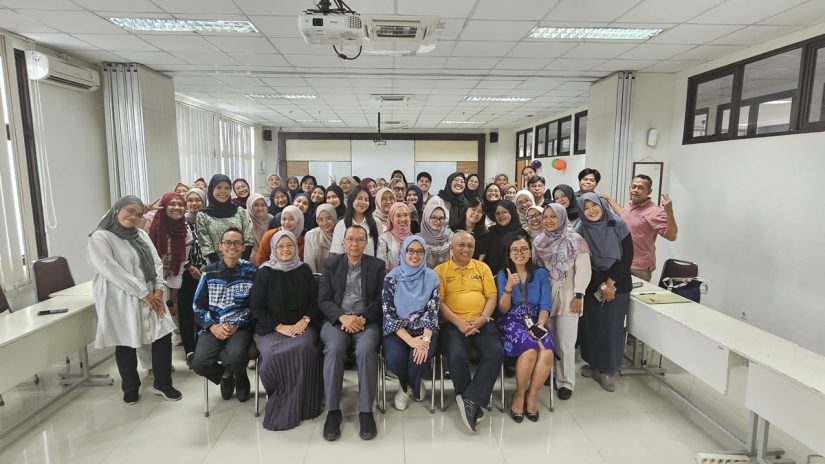
Developing the competencies of a psychologist does not begin during professional practice, but from the very first day of professional education. With this in mind, the Professional Psychology Education Program at the Faculty of Psychology, Universitas Gadjah Mada (UGM), organized the Academic Orientation for New Students (OAMABA) for the Fifth Cohort as an initial preparation for 40 new students enrolled in the Even Semester of the 2025/2026 Academic Year before they begin their professional psychology education.
OAMABA consisted of a series of activities, including an academic orientation on Friday (February 6) and an outbound program on Saturday (February 7). A total of 40 new students participated in the program, which was designed to introduce them to the academic environment, the professional psychology education system, and the values that underpin professional psychological practice.
In his opening remarks, the Dean of the Faculty of Psychology UGM, Rahmat Hidayat, S.Psi., M.Sc., Ph.D., emphasized that professional education is part of a lifelong learning journey. He encouraged students to make the most of every stage of their education to continuously develop the competencies and readiness required of professional psychologists.
“No matter how far we go, we remain students. We remain lifelong learners. This professional program is an instrument that you can use to continue learning in the fields of psychology and the psychology profession,” the Dean said.
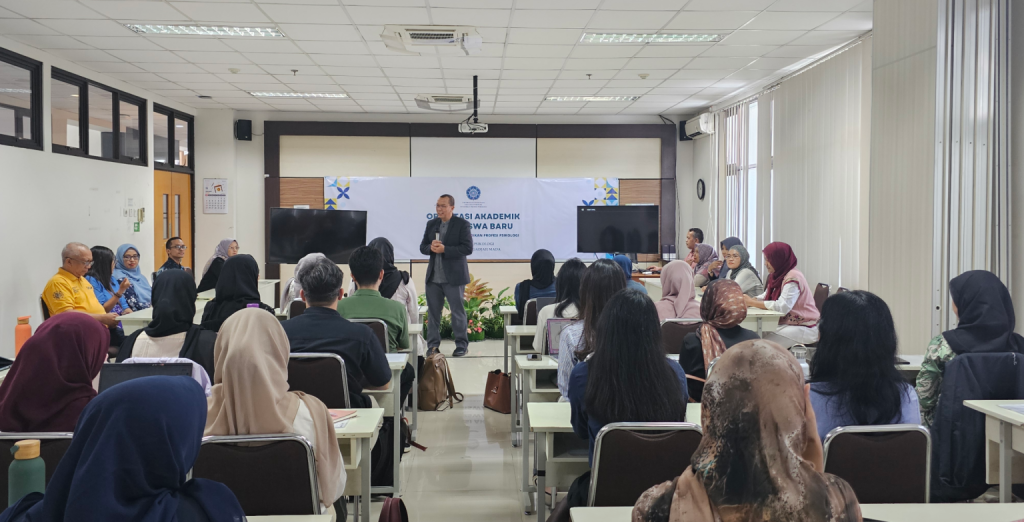
During the academic orientation, students were introduced to the Faculty of Psychology UGM, the curriculum of the Professional Psychology Education Program, academic services, and the various support units that facilitate the learning process. They also received guidance on preparing for professional education, including the ethics, responsibilities, and professional attitudes required throughout their studies and future practice.
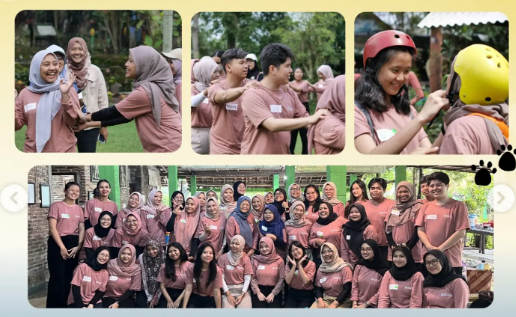
As part of the OAMABA program, students participated in an outbound activity facilitated by the Astadaya Training Center using an experiential learning approach. Through team-based games, simulations, reflection sessions, and discussions, participants learned directly from experience while developing adaptability, teamwork, self-management, initiative, and empathy. The approach was designed to strengthen students’ adaptability, independent learning skills, self-regulation, and collaboration, while fostering a sense of belonging to the educational process and a strong commitment to learning throughout the Professional Psychology Education Program.
Rahmat added that the admission process, including the bridging course, reflects the Faculty of Psychology UGM’s commitment to maintaining the quality of its professional education.
“One of our efforts to uphold that commitment is through a rigorous selection process, from the initial stages through the bridging course. We are confident that this process has produced 40 prospective students who are well prepared to undertake professional psychology education,” he said.
Concluding his remarks, Rahmat reminded students that the psychology profession carries significant responsibility. He encouraged them to take full advantage of every stage of their education to build competence, integrity, and readiness to face the diverse challenges of professional psychological practice. He also stressed that the profession entails both moral and legal responsibilities, requiring every graduate to uphold the highest standards of professional ethics in serving the community.
Author: Erna Tri Nofiyana
Photos: Erna, Professional Psychology Education Program UGM