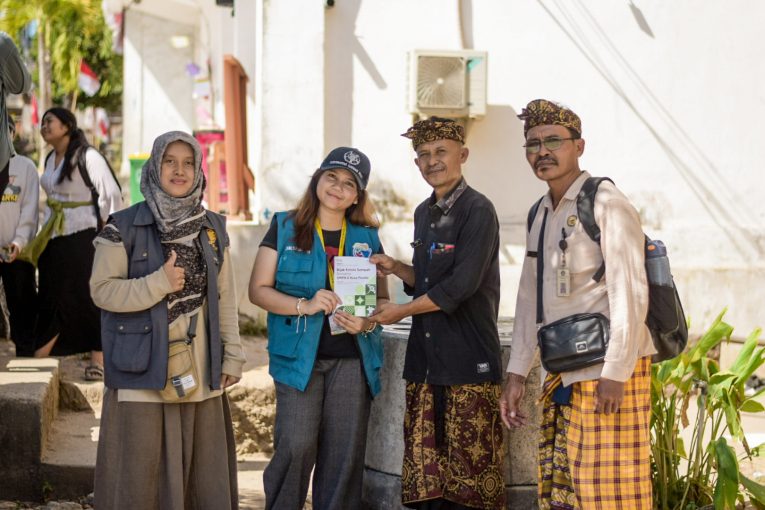
A total of 30 students from the UGM KKN-PPM Nirwana Nusa Penida 2026 unit collaborated with SMPN 4 Nusa Penida to develop a Projek Penguatan Profil Pelajar Pancasila (P5) module entitled “Wise Waste Management with SMPN 4 Nusa Penida.” Focusing on responsible waste management, the module represents the students’ contribution to advancing Sustainable Development Goal (SDG) 4: Quality Education.
The module was developed as part of the community engagement program carried out by the UGM KKN-PPM Nirwana Nusa Penida 2026 unit, which was assigned to Nusa Lembongan. In 2026, this unit was the only UGM KKN-PPM team in Bali Province conducting its community service program outside the island of Bali.
Recognizing the urgency of waste management challenges in Bali, the Nirwana Nusa Penida unit adopted the theme of strengthening waste management from upstream to downstream through a circular economy approach in Jungutbatu Village and Lembongan Village, Nusa Penida District, Klungkung Regency. To implement the program, the students collaborated with various stakeholders in Nusa Lembongan, including local educational institutions.
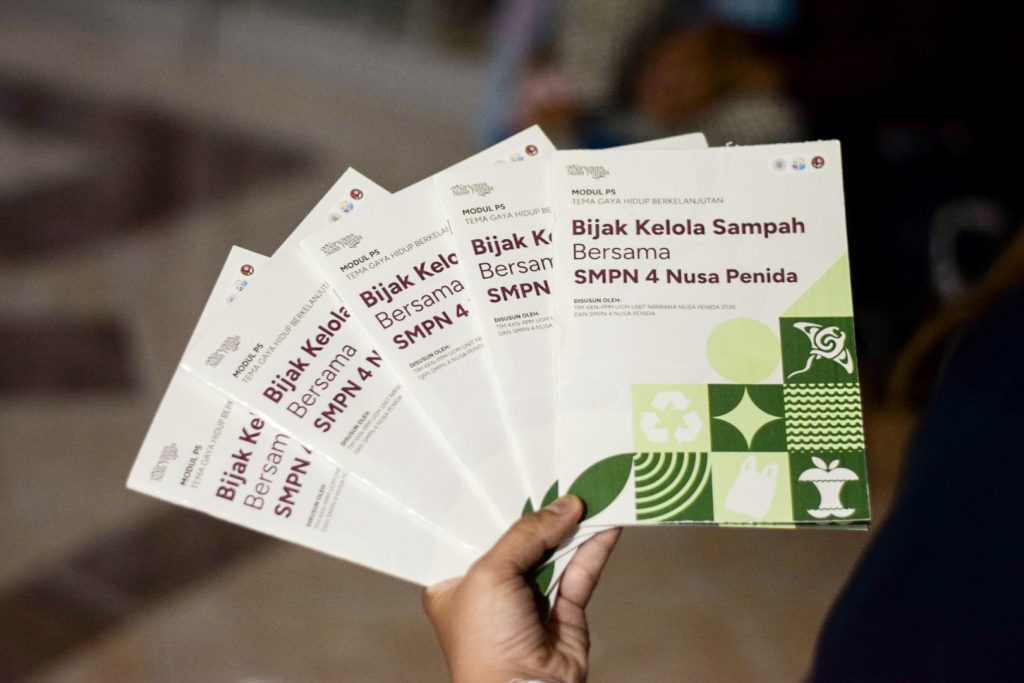
The initiative was led by Jane Giselle Stephany Simanjuntak, a 2023 undergraduate student at the Faculty of Psychology, Universitas Gadjah Mada (UGM), in collaboration with I Wayan Gede Abhyudaya, Vice Principal for Curriculum Affairs at SMPN 4 Nusa Penida. Together with the school, Jane designed a project-based learning curriculum, which was then presented to the principal and teachers to gather feedback and refine the module.
“Presenting the overall concept of this module is important so that we can receive direct feedback from the school, ensuring that it is relevant and applicable in the classroom,” she explained.
The module was implemented every Saturday morning for three consecutive weeks beginning on 18 July 2026. During the program, four pairs of KKN students facilitated project-based learning activities for ninth-grade students at SMPN 4 Nusa Penida. The first three sessions focused on assessing students’ initial understanding of waste management, introducing fundamental concepts of waste, and providing hands-on waste processing activities. In addition to classroom instruction, the students participated in ice-breaking activities and reflection sessions to reinforce learning outcomes while evaluating the effectiveness of the teaching process.
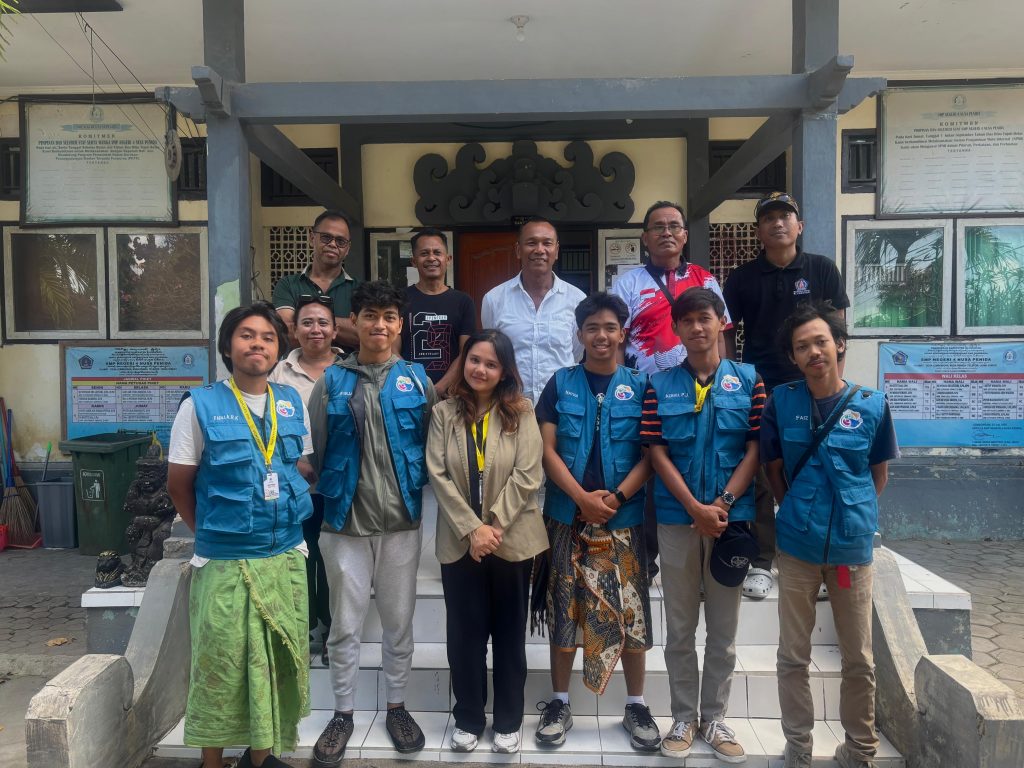
“There is theory, and there is practice—they need to complement each other. Through practice, students learn the underlying theories, and sometimes they learn both simultaneously while carrying out the activities,” said I Wayan Gede Abhyudaya.
By integrating waste management education through a project-based learning approach, the program aims to encourage students to actively gather information and develop practical action plans for managing waste in Nusa Lembongan.
Through this initiative, the students hope that the module will continue to be used and further developed by SMPN 4 Nusa Penida beyond the KKN program, serving as a sustainable learning resource that fosters responsible waste management practices among adolescents.
Authors/Contributors: Jane Giselle Stephany Simanjuntak, Kaffah Athena Magali, UGM KKN-PPM Nirwana Nusa Penida Unit 2026
Editor: Erna Tri Nofiyana