
The Faculty of Psychology at Universitas Gadjah Mada (UGM) encouraged its academic community to develop the habit of setting aside part of their income for investment from an early stage through the Financial Literacy Workshop: Investment Management, held on Friday (June 19).
The hybrid event, conducted at Hall D of the UGM Faculty of Psychology, was organized in collaboration with Bank Muamalat Indonesia and Bank Syariah Indonesia (BSI). The workshop was attended by administrative staff, faculty members, and student representatives from the Communication Forum and Student Activity Units.
The Vice Dean for Finance, Assets, and Human Resources of the UGM Faculty of Psychology, Dr. Sumaryono, M.Si., Psikolog, emphasized the importance of adopting a new mindset in personal financial management. According to him, funds for savings and investments should be allocated at the beginning, rather than waiting to save what remains after spending.
“Save first, enjoy the benefits later,” he said.
Reflecting on his own experience, he added, “Whenever I receive my salary, I immediately set aside a portion and transfer it directly into my savings.” He cited Hajj savings and gold investment as examples of financial instruments that can be prepared from an early stage.
In the introductory investment session, Permada Wirapranata, Regional Manager for Central Java, Yogyakarta, and Kalimantan at Bank Muamalat Indonesia, encouraged participants to understand their financial condition, age, and risk profile before selecting investment instruments.
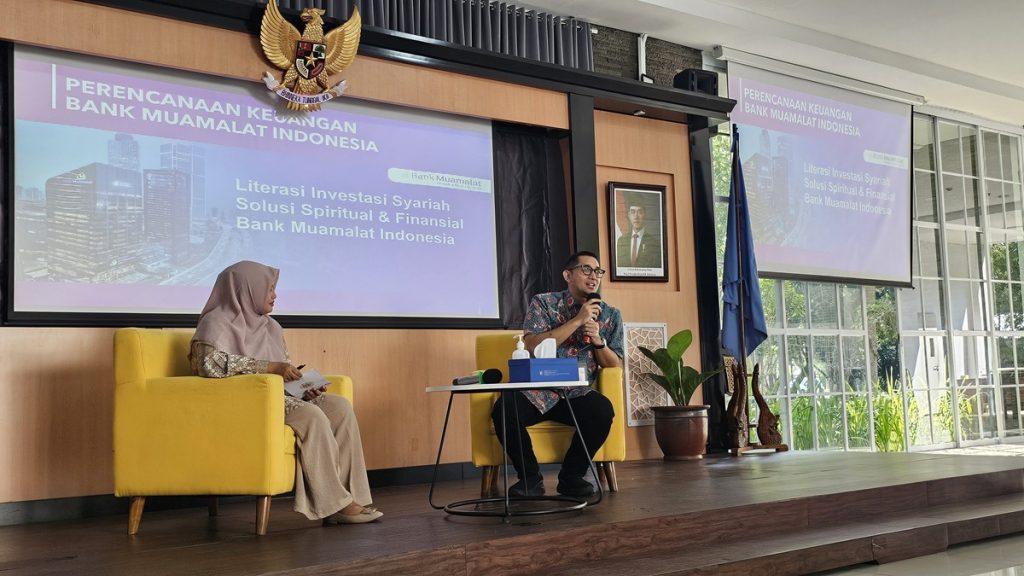
“Before choosing an investment type, we must first know ourselves. Understand who we are, our current financial position, income, and age,” he emphasized.
He explained that investors generally fall into conservative, moderate, or aggressive risk profiles. Each investment option carries different levels of risk and characteristics, making it important to align investment decisions with individual financial goals.
Permada also discussed today’s economic environment, often described as the VUCA era—characterized by volatility, uncertainty, complexity, and ambiguity. In such conditions, he noted that gold can be considered one of the instruments for preserving asset value. Bank Muamalat also introduced its Sharia-compliant investment products and Hajj financial planning programs to participants.
Meanwhile, Agus Hari Nugroho, Area Consumer Financing Manager for BSI Yogyakarta Area, explained the fundamental principles of Islamic banking, including Sharia compliance, transparent contractual agreements (akad), investment in halal sectors, and social contributions through corporate zakat.
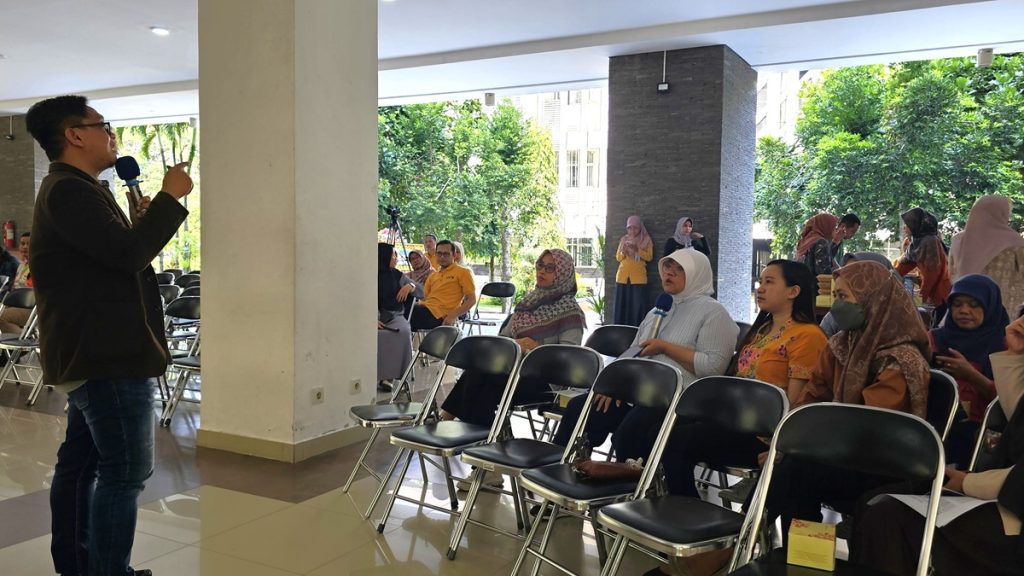
He also introduced BSI’s digital gold service, which allows customers to buy, sell, print, and transfer gold between accounts. According to him, the convenience of the service makes gold investment a practical option for long-term asset management.
“When you need cash, you can sell your gold today, and, God willing, the funds will be credited to your rupiah account in less than a minute,” he explained.
Agus further emphasized that gold’s primary advantage as an investment instrument lies in its resilience against inflation.
“Gold is inflation-resistant,” he stated.
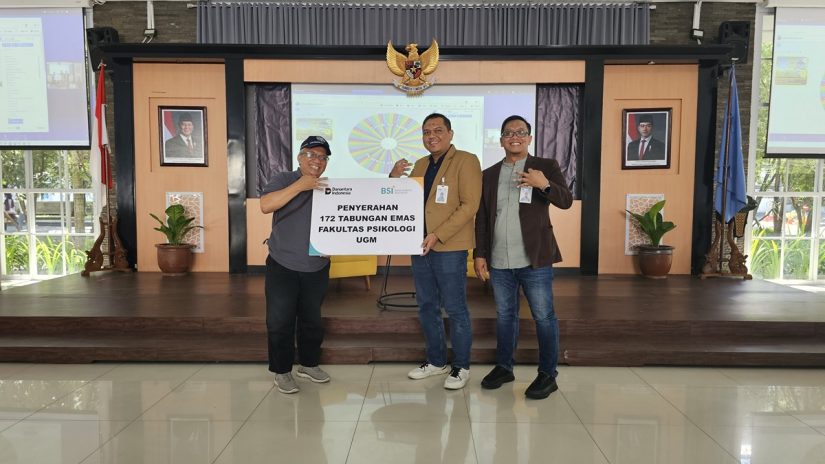
At the end of the event, BSI symbolically presented 172 gold savings accounts to the UGM Faculty of Psychology. The handover was carried out by Sugito, Branch Manager of BSI KCP Godean 1, and Agus Hari Nugroho, and was received by Dr. Sumaryono, M.Si., Psikolog.
The workshop also included pre-tests and post-tests to assess participants’ understanding. Through this program, participants were expected to gain the knowledge needed to manage their income more strategically and choose investment instruments that match their financial needs, goals, and individual risk profiles.
Writer & Photo: Erna Tri Nofiyana