
The child abuse case at Little Aresha daycare in Yogyakarta has revealed layers of issues that have long remained hidden within Indonesia’s early childhood care system. This phenomenon cannot merely be understood as an individual act of violence, but also as a matter closely related to the quality of childcare services, caregiver preparedness, and family support systems.
SDGs
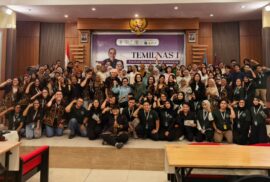
The Faculty of Psychology at Universitas Gadjah Mada welcomed a visit from SMAS Trimurti Surabaya on Wednesday (13/5). A total of 132 participants, consisting of 125 eleventh-grade students and seven accompanying teachers, attended the event at Hall D of the Faculty of Psychology UGM as part of an introduction to the university environment.
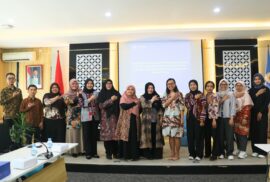
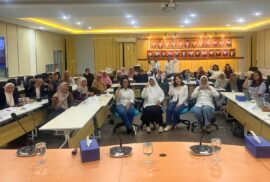
The Faculty of Psychology at Universitas Gadjah Mada, through its Health Promoting University (HPU) program, held a Reproductive Health Seminar titled “Cervical Cancer Education and Prevention” on Tuesday (12/5) at Room A-203 of the Faculty of Psychology UGM and online via Zoom. The event was attended by 47 participants consisting of female lecturers, educational staff, and students.
Yogyakarta, May 12, 2026 — Efforts to strengthen mental health services in Indonesia have once again received a contribution from researchers at Universitas Gadjah Mada. A research team from the Faculty of Psychology at Universitas Gadjah Mada, together with national and international partners, successfully adapted and validated an Indonesian-language version of a behavioral activation measurement instrument for depression through a study titled “Adaptation and Validation of the Indonesian Version of Behavioral Activation for Depression Scale – Short Form (BADS-SF) Using Confirmatory Factor Analysis and Rasch Modeling.” The study was published in JP3I (Indonesian Journal of Psychological and Educational Measurement) and involved collaboration between researchers from UGM, Universitas Diponegoro, as well as academics from the University of Wisconsin–Milwaukee and the University of Washington.
Following the Focus Group Discussion (FGD) on the Acceleration of Psychological Service System Integration and GMST Mandiri held on April 10–11, 2026, the Unit for the Development of Psychodiagnostic Instruments (UPAP) conducted a trial of its new PAPs test platform.
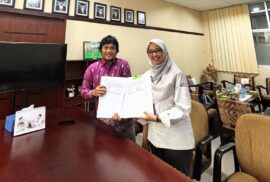
The Faculty of Psychology at Universitas Gadjah Mada has officially received the transfer of Economic Rights for the AJT Cognitive Test from PT Melintas Cakrawala Indonesia (MCI) through a signing ceremony held on Thursday (7/5) in Room D-506 of the Faculty of Psychology UGM.
Yogyakarta, May 7, 2026 – Amid the euphoria surrounding scientific publication and the obsession with global indexing systems, one fundamental question is rarely asked: are we truly producing knowledge, or merely fulfilling academic administrative standards?
Research from the Faculty of Psychology at Universitas Gadjah Mada on people-pleasing behavior from the perspective of the Javanese concept of sungkan opens the door to broader reflection. The article titled “People Pleaser Behavior within the Perspective of Sungkan: A Psycho-Anthropological Interpretation” demonstrates that the tendency to please others is not merely an individual trait, but rather the result of deep cultural constructions rooted in values of respect, harmony, and social relationships.
Yogyakarta, May 6, 2026 – Amid growing pressure to publish and the increasing emphasis on global indexing systems such as Scopus, researchers from the Faculty of Psychology at Universitas Gadjah Mada have warned that methodological quality should not be sacrificed for publication quantity. This concern was emphasized through a recent study examining common method bias (CMB) in quantitative research methodologies.
Yogyakarta, May 5, 2026 – Researchers from Universitas Gadjah Mada have once again highlighted their contribution to strengthening governance through a recent academic publication. The study, published in the Journal of Social Sciences and Politics (JSP), examines the psychological mechanisms underlying public sector employee behavior while supporting the global agenda of Sustainable Development Goal 16 on strong, transparent, and accountable institutions.
Yogyakarta, May 4, 2026 — The persistence of corruption cases and integrity crises in society indicates a serious issue related to individuals’ attitudes toward how wealth or resources are obtained for their families. A recent study conducted by researchers from the Faculty of Psychology at Universitas Gadjah Mada, published in the journal Personality and Individual Differences, sheds interesting light on this issue.