
Have you ever asked a teenager, “How was your day?” only to receive a brief reply? Or tried to have a heartfelt conversation, only to find their attention fixed on a screen? These situations often raise questions: is there something we need to better understand about communicating with today’s teenagers?
Generation Alpha, those born roughly between 2010 and 2024 and raised amid rapid digital development, is often labeled as a “quiet” or “disconnected” generation. However, perhaps they are not ignoring others, but instead waiting to be understood through different forms of communication.
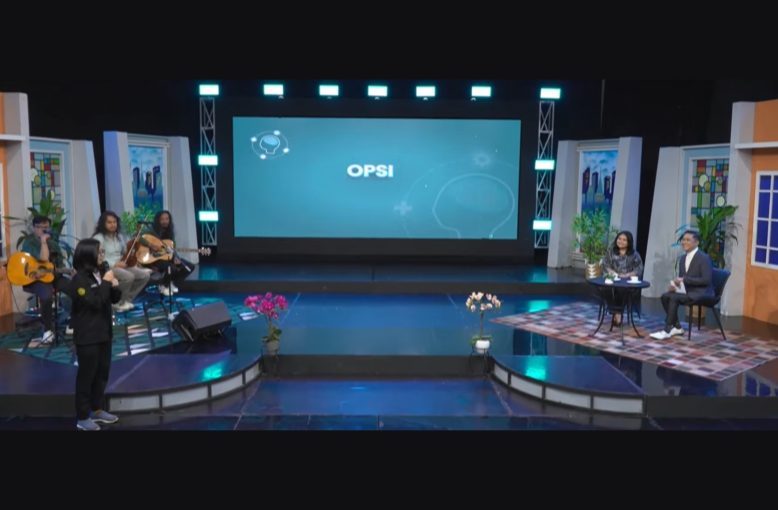
This topic was discussed in the latest episode of Obrolan Psikologi (OPSI), a psychology talk show collaboration between the Faculty of Psychology Universitas Gadjah Mada and TVRI Yogyakarta, aired on Tuesday (5/5). Hosted by Ferry Anggara, the fifth episode featured Adhika Ayu Pratisthita, Head of SMP Budya Wacana and an alumna of UGM’s Master’s Program in Psychology, who discussed the communication challenges faced by Gen Alpha teenagers in the digital era.
Selective, Not Apathetic
According to Ayu, the communication style of Gen Alpha is often misunderstood and quickly labeled as that of a “fragile generation.” In reality, this condition cannot be separated from the digital environment they navigate every day.
“Teenagers today live in an era where even written communication can be criticized or perceived as wrong by others,” she explained.
This situation leaves many teenagers feeling as though they lack a safe space for self-expression. As a result, they become more cautious and even hesitant to speak spontaneously due to fear of judgment. On the other hand, in spaces that feel safer, such as written reflections, they may become far more expressive.
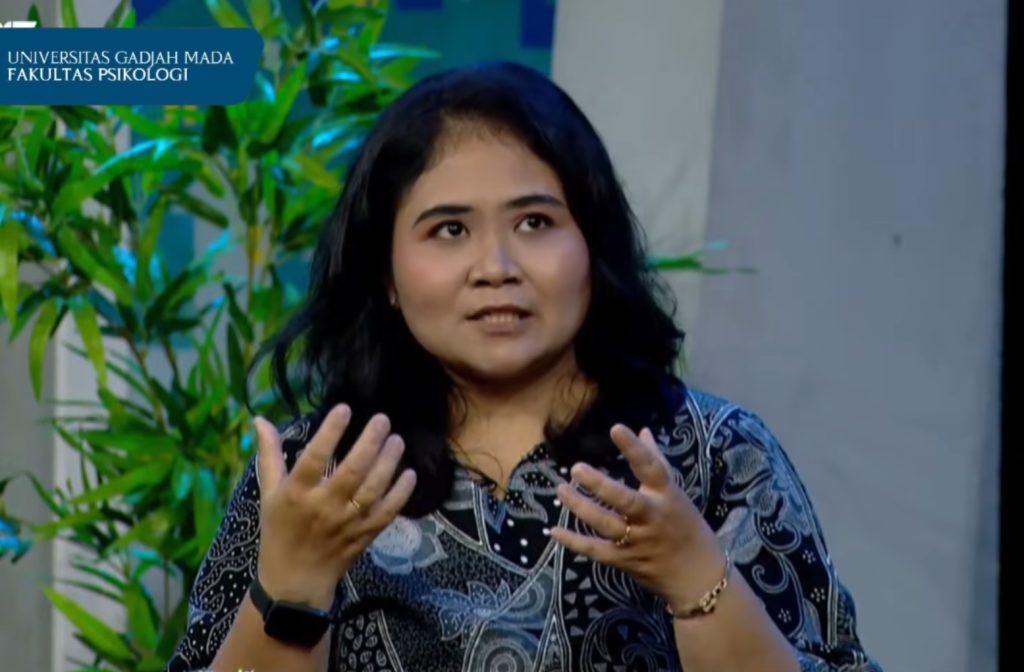
Ayu emphasized that today’s teenagers are not unwilling to communicate; rather, they are more selective in choosing how and where they communicate.
“I prefer using the term ‘selective,’ because this becomes homework for adults to understand which communication media feel most comfortable for teenagers,” she said.
In this context, adults themselves need to reflect. Communication barriers may not stem solely from teenagers, but also from adults’ limited understanding of their world. Ayu highlighted the importance of empathy over judgment, as labeling teenagers can push them further into silence.
“We need to make an effort to get closer to them, understand their perspective, and gradually help them feel brave enough to express what they are feeling,” she added.
Building Safe Communication Spaces
Creating a safe and nonjudgmental communication culture is an important first step. One approach is through circle time, a regular session where family or class members take turns sharing their feelings in a relaxed and supportive environment. The use of magic words — positive and affirming expressions such as “please,” “sorry,” and “thank you” in everyday communication — can also serve as an important foundation. In addition, consistently building quality two-way interactions helps strengthen relationships between teenagers and adults.
“When teenagers stay silent, it does not mean they do not need us. Silence may simply mean they do not know how to begin communicating,” Ayu explained.
In closing, Ayu reminded audiences that when teenagers choose silence, it is actually an invitation for adults to come closer and listen more carefully. Parents, teachers, and other adults need to show genuine interest in teenagers’ world in order to build healthy communication.
Don’t miss other episodes of OPSI: Obrolan Psikologi!
Watch the replay and explore more discussions on psychology through UGM Psychology’s official YouTube channel.
Let us know if there are specific psychology topics you would like us to explore on the talk show Obrolan Psikologi (OPSI), a collaboration between the Faculty of Psychology UGM and TVRI Yogyakarta.
Watch the full episode on YouTube!
Share your suggestions and feedback regarding OPSI through the following channels:
Email: humas.psikologi@ugm.ac.id
Instagram: @psikologiugm
Author: Arrasya Aninggadhira
Editor: Erna Tri Nofiyana