
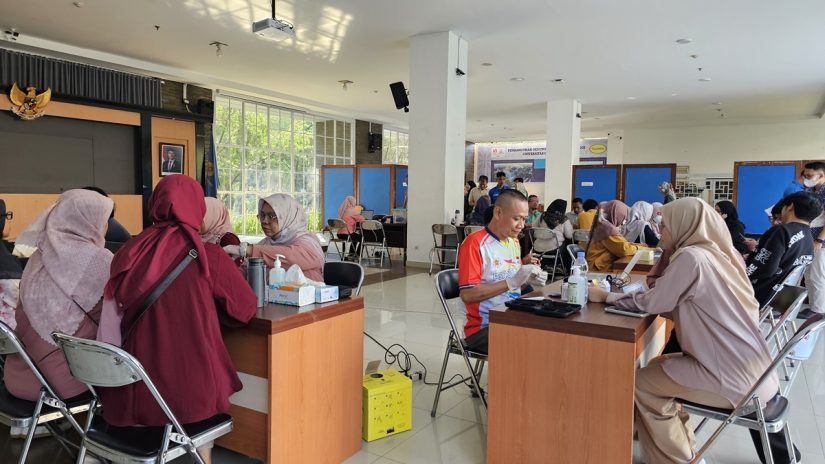
A total of 116 members of the academic community of the Faculty of Psychology, Universitas Gadjah Mada (UGM), participated in the second period of the Integrated Health Development Post (Pos Pembinaan Terpadu/Posbindu), themed Wellness Day: Keeping Body and Mind in Harmony, held on Friday, July 31, at Hall D, Faculty of Psychology UGM. The event provided integrated physical and mental health services, ranging from basic health screenings and medical consultations to psychological consultation services.
Of the 130 people who registered, 116 participants attended the series of activities. Participants included faculty members, administrative staff, outsourced personnel, assistants, as well as professional and postgraduate students.
The implementation of Posbindu Period II reflects the Faculty of Psychology UGM’s commitment to supporting the achievement of Sustainable Development Goal (SDG) 3: Good Health and Well-being through promotive and preventive efforts that encourage early detection of non-communicable diseases and promote better mental health among the academic community.
Posbindu Period II provided basic health screenings, including anthropometric measurements, blood pressure checks, and blood chemistry tests, followed by health consultations with Dr. Novrida, AAK, from Gadjah Mada Medical Center (GMC).
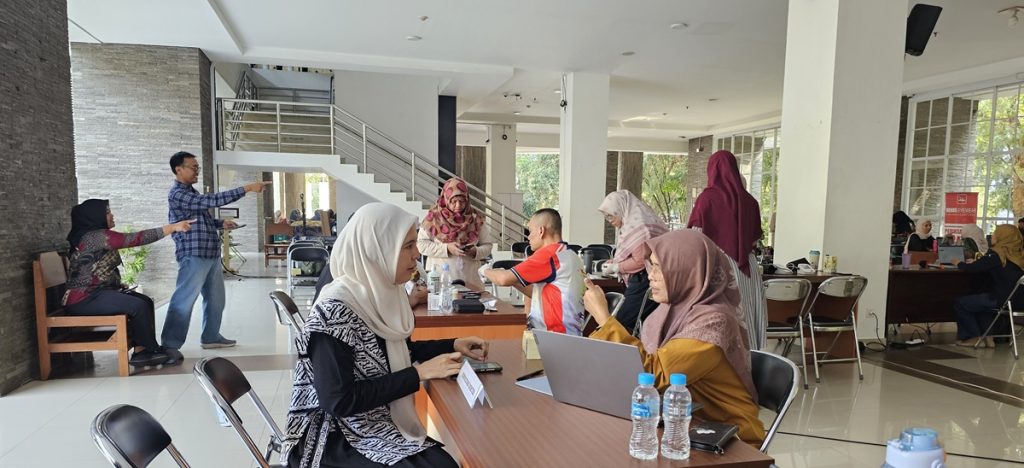
Participants could also access psychological consultation services through the Pojok Curhat (Listening Corner), supported by psychologists from the Psychological Consultation Unit (UKP) of the Faculty of Psychology UGM. Additional services included a Medical Check-Up (MCU) Plus for faculty members and administrative staff aged 40 and above who had not undergone a health examination this year, free eye examinations in collaboration with Venus Eyewear, and face recognition registration to facilitate access to services at Srikandi I Clinic, UGM Academic Hospital (RSA UGM).
Posbindu cadre Dyah Woro Nugraheny, S.Psi., said that the number of cadres and examination equipment was increased compared with the previous period to improve service efficiency and ensure that the screening process could run more effectively.
“We increased the number of cadres and equipment so that services could be delivered more quickly and efficiently,” she said.
According to Dyah, the additional personnel and equipment helped streamline the service flow. She also expressed hope that the Pojok Curhat service could continue to be offered as part of Posbindu activities to support the mental health of the academic community.
Posbindu Period II also marked the first experience for several new cadres. One of them, Dewi Octavianty, S.Psi., admitted that she initially felt nervous while providing services to participants because she was still recalling the examination procedures she had learned during training.
“At first, I was still a little awkward because I had to recall the examination procedures I learned during training. However, after attending to several participants, I gradually became more accustomed to the process,” she said.
Appreciation was also expressed by one of the participants, Sussanti, A.Md. She said that the Posbindu program demonstrated the Faculty of Psychology UGM’s commitment to the physical and mental health of its entire academic community.

“I am grateful that the faculty pays attention to and facilitates both physical and mental health for everyone, from faculty members and administrative staff to students and the women who run the campus cafeteria tenants. After participating in Posbindu, I became more aware of the importance of taking care of my health,” she said.
Through the regular implementation of Posbindu, the Faculty of Psychology UGM continues to promote a healthy lifestyle on campus by providing promotive and preventive services that support both the physical health and mental well-being of its academic community.
Writer and photographer: Erna Tri Nofiyana