
Arsip:

2026

Researchers from UGM Faculty of Psychology and International Partners Validate Indonesian-Language Depression Assessment Tool to Strengthen Mental Health Services

Yogyakarta, May 12, 2026 — Efforts to strengthen mental health services in Indonesia have once again received a contribution from researchers at Universitas Gadjah Mada. A research team from the Faculty of Psychology at Universitas Gadjah Mada, together with national and international partners, successfully adapted and validated an Indonesian-language version of a behavioral activation measurement instrument for depression through a study titled “Adaptation and Validation of the Indonesian Version of Behavioral Activation for Depression Scale – Short Form (BADS-SF) Using Confirmatory Factor Analysis and Rasch Modeling.” The study was published in JP3I (Indonesian Journal of Psychological and Educational Measurement) and involved collaboration between researchers from UGM, Universitas Diponegoro, as well as academics from the University of Wisconsin–Milwaukee and the University of Washington.
Sungkan, People Pleasing, and Decolonization in Academic Publishing

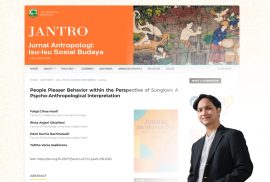
Yogyakarta, May 7, 2026 – Amid the euphoria surrounding scientific publication and the obsession with global indexing systems, one fundamental question is rarely asked: are we truly producing knowledge, or merely fulfilling academic administrative standards?

Research from the Faculty of Psychology at Universitas Gadjah Mada on people-pleasing behavior from the perspective of the Javanese concept of sungkan opens the door to broader reflection. The article titled “People Pleaser Behavior within the Perspective of Sungkan: A Psycho-Anthropological Interpretation” demonstrates that the tendency to please others is not merely an individual trait, but rather the result of deep cultural constructions rooted in values of respect, harmony, and social relationships.

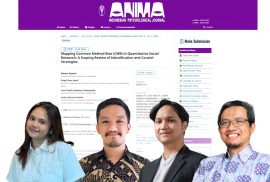
UGM Highlights Methodological Bias in Social Research, Calls for Higher Research Quality to Support the SDGs

Yogyakarta, May 6, 2026 – Amid growing pressure to publish and the increasing emphasis on global indexing systems such as Scopus, researchers from the Faculty of Psychology at Universitas Gadjah Mada have warned that methodological quality should not be sacrificed for publication quantity. This concern was emphasized through a recent study examining common method bias (CMB) in quantitative research methodologies.

UGM Studies the Role of Psychological Factors in Strengthening Public Sector Performance, Supports SDG 16

Yogyakarta, May 5, 2026 – Researchers from Universitas Gadjah Mada have once again highlighted their contribution to strengthening governance through a recent academic publication. The study, published in the Journal of Social Sciences and Politics (JSP), examines the psychological mechanisms underlying public sector employee behavior while supporting the global agenda of Sustainable Development Goal 16 on strong, transparent, and accountable institutions.

UGM Psychology Researchers Reveal Complex Relationship Between Morality and Number of Children Across 51 Countries

Yogyakarta, May 4, 2026 — The persistence of corruption cases and integrity crises in society indicates a serious issue related to individuals’ attitudes toward how wealth or resources are obtained for their families. A recent study conducted by researchers from the Faculty of Psychology at Universitas Gadjah Mada, published in the journal Personality and Individual Differences, sheds interesting light on this issue.

Prof. Ajeng Juwita Puspitasari, Ph.D., LP, ABPP

Prof. Ajeng Juwita Puspitasari, PhD, LP, ABPP is a licensed clinical psychologist, board-certified by the American Board of Professional Psychology (ABPP), specializing in behavioral and cognitive therapies. She currently serves as a Clinical Professor and Director of Clinical Training in the Department of Psychology at the University of Wisconsin–Milwaukee. In addition, she is the founder and director of the Center for Evidence-Based Practice.

Prof. Puspitasari has expertise in evidence-based psychotherapy, particularly for depression, anxiety disorders, suicidal and self-harming behaviors, trauma, as well as perinatal mood and anxiety disorders. Her clinical approaches include Cognitive Behavioral Therapy (CBT), Acceptance and Commitment Therapy (ACT), Behavioral Activation (BA), Exposure Therapy, and Dialectical Behavior Therapy (DBT). She is known for emphasizing culturally sensitive, recovery-oriented, and research-informed care.

Beyond her clinical practice and academic leadership, she is actively involved in publishing scientific articles, providing professional training, clinical supervision, and international consultation. Much of her work focuses on bridging the gap between research and mental health practice to ensure that effective interventions are more widely accessible.

Dr. Anke Karl

Dr. Anke Karl is the strategic lead of the Clinical Psychology Research Group and the Mood Disorders Centre, and serves as Director of the MDC Biobehavioural Lab. Her research examines how biological and behavioral processes shape posttraumatic stress disorder (PTSD) and recovery from psychological trauma. She also works on applying biopsychological knowledge to improve therapies for people with PTSD and depression.

She trained in clinical psychology and behavioural neuroscience at Humboldt University Berlin, where she received the Young Scientist Award in 2001. She later completed postdoctoral research at the Center for Stress and Anxiety Disorders, University at Albany, before holding academic positions in Germany and the UK prior to joining the University of Exeter.

Her work has been published in leading journals and supported by major research funders. She also completed advanced training in cognitive behavioural therapy, is a licensed Psychological Psychotherapist, and practices as an associate therapist at the AccEPT Clinic.