
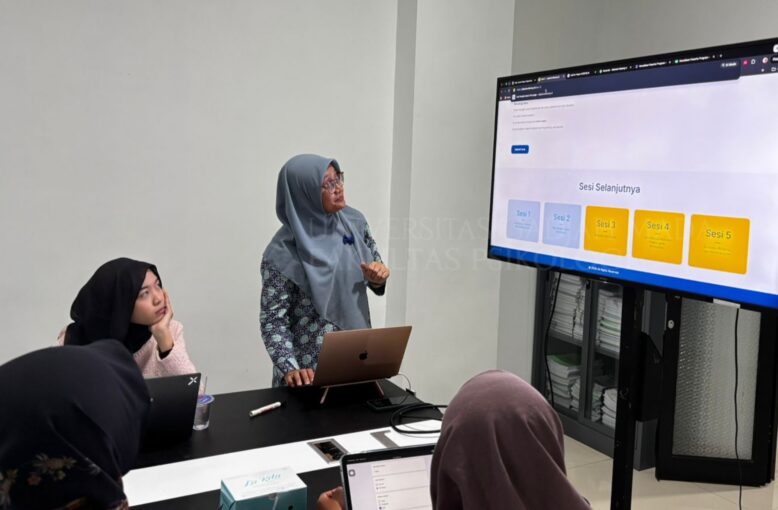
The UGM Faculty of Psychology Research Grant Team is developing a Digital Well-Being (DWB) Intervention Module. The module provides guidelines for interventions based on digital self-regulation and the optimization of high-quality digital activities. It aims to raise individuals’ awareness of their digital usage patterns and help them identify maladaptive behaviors, such as distraction and impulsive use.
The research grant team consists of UGM Faculty of Psychology lecturers Prof. Dr. Avin Fadilla Helmi, M.Si., Haidar Buldan Thontowi, S.Psi., M.A., Ph.D., Lusiana Yashinta Ellysa Putri, S.Psi., M.Sc. The development of the DWB Intervention Module also involves Dr. Sovi Septania, M.Psi., Psikolog, a lecturer at the Faculty of Psychology, Universitas Muhammadiyah Lampung. Doctoral and master’s students, as well as undergraduate alumni of the UGM Faculty of Psychology, have also contributed to the module’s development.
Lusi, a team member and lecturer at the UGM Faculty of Psychology, explained that the development of the DWB Intervention Module was motivated by the growing risk of psychological problems associated with maladaptive technology use. These risks have emerged alongside the development of digital technology, which has transformed individuals’ daily lives. According to Lusi, the DWB Intervention Module focuses on providing interventions through a holistic psychological approach.
“Although various digital well-being initiatives have emerged, most still focus on restricting technology use and are not yet grounded in comprehensive psychological models. Therefore, this digital well-being module was developed as a preventive and promotive psychological intervention to improve digital well-being among young adults,” Lusi explained.
The development of the DWB Intervention Module aims to develop and evaluate the module’s quality based on a conceptual model. This model views digital well-being as the result of an interaction between protective mechanisms, namely digital self-regulation, and promotive mechanisms, namely the optimization of digital activities. Furthermore, the module is expected to contribute to the development of psychology research-based interventions in the digital era.
The development process includes conceptual analysis and the formulation of intervention indicators; the preparation of the module framework and session flow; the development of intervention content; content validation; and a pilot study.
The module was introduced on June 26, with 22 participants aged 17–34 taking part. The session provided an overview of the module’s implementation, which consists of five sessions arranged in a gradual sequence.
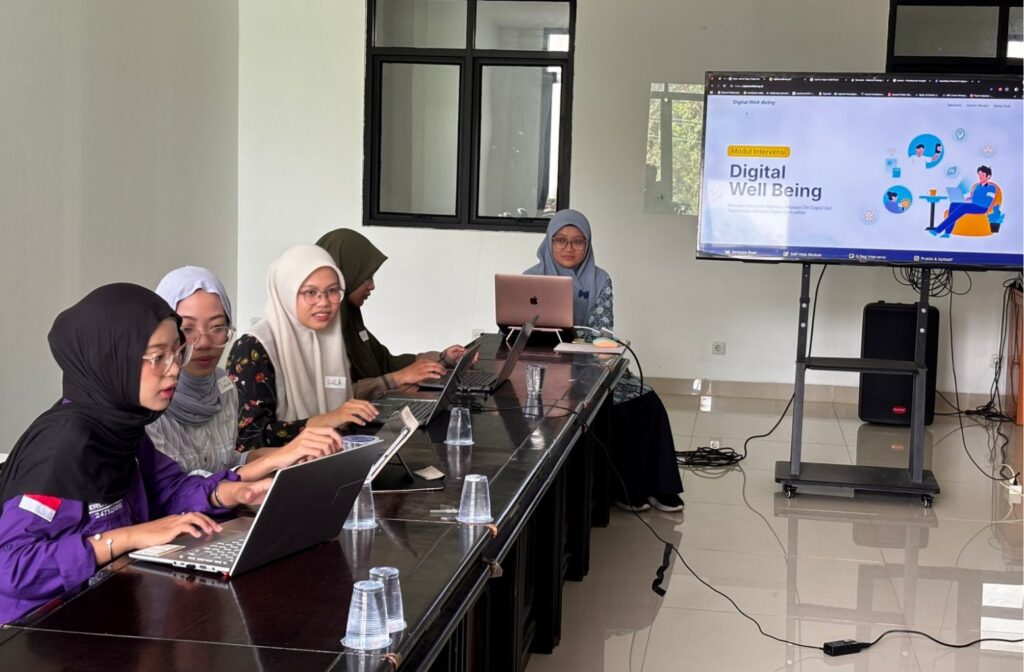
The first session, titled “Recognizing Your Digital Patterns,” began with an opening, the establishment of activity agreements, and an introduction to digital usage patterns. The second session, “Learning How to Thrive in the Digital Era,” focused on helping participants understand the concept of digital well-being.
The activities continued with the third and fourth sessions, titled “Take Control of Yourself in the Digital World” and “Use Digital Technology Meaningfully.” These sessions guided participants in understanding and developing digital self-regulation skills while optimizing the quality of their digital activities. The fifth session, “Designing a Balanced Digital Life,” concluded the module introduction by encouraging participants to integrate the knowledge and skills acquired throughout the previous sessions.
Participants’ enthusiasm was reflected in their commitment to attending and completing all sessions of the DWB Intervention Module. They actively engaged in the activities and demonstrated a strong interest in understanding the material. Going forward, the completed modules will provide valuable information for the research team to evaluate the intervention’s effectiveness in supporting participants’ digital well-being.
Through this initiative, the research team hopes that the DWB Intervention Module, designed for independent use, will be easily accessible to the wider public according to individual needs and circumstances. The module is also expected to serve as a preventive resource for fostering healthier, more balanced, productive, and meaningful digital habits.
Writer: Kayla Anindya Sashikirana
Editor: Erna Tri Nofiyana