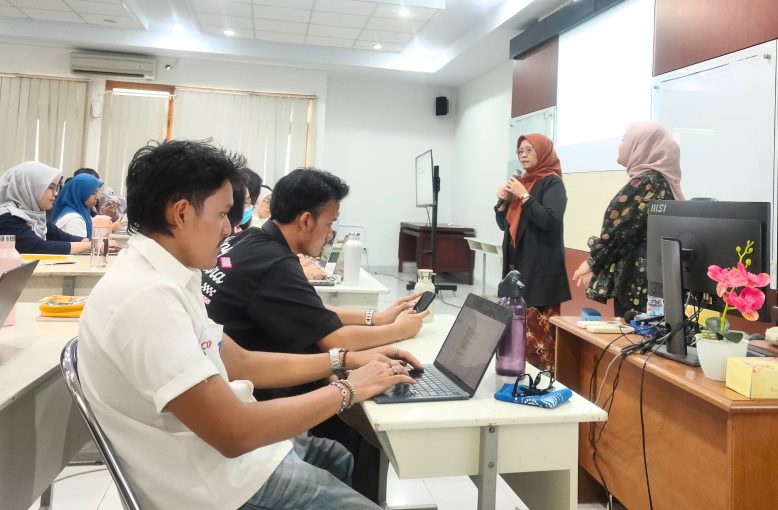
The Faculty of Psychology at Universitas Gadjah Mada (UGM) is conducting a Bridging Course for 49 incoming students of the Sixth Cohort of the Professional Psychology Education Program as preparation before they begin classes in the Odd Semester of the 2026/2027 Academic Year. The program, which runs for eight weeks from June 15 to August 6, 2026, is designed to equalize participants’ basic competencies while preparing them for the demands of professional psychology education.
Head of UGM’s Professional Psychology Education Program, Sutarimah Ampuni, S.Psi., M.Si., M.Psych., Ph.D., Psikolog, explained that the Bridging Course was created to address competency gaps that are still commonly found between undergraduate psychology graduates and the requirements of professional education.
“This bridging course is intended to bridge the gap—just as the name suggests—between the undergraduate psychology curriculum and the professional curriculum, where there are still many gaps,” she said during the online Socialization and Q&A Session for the Sixth Cohort of the Professional Psychology Education Program held in March 2026.
According to Sutarimah, the gap exists not only between undergraduate and professional curricula, but also among graduates from different universities and different graduating cohorts.
“Even within the same university, graduates from earlier cohorts and those from newer cohorts may have different competencies. Therefore, we use this bridging course to ensure that participants enter the professional program ready and with a more or less similar foundation,” she added.
The program begins with an introduction to the role, scope of practice, and professional mindset of a psychologist, including an understanding of Indonesia’s psychological service system and its various stakeholders. Participants are also introduced to the psychologist’s work cycle, which includes assessment, diagnosis, and intervention across four service settings: health, education, workplace, and community.
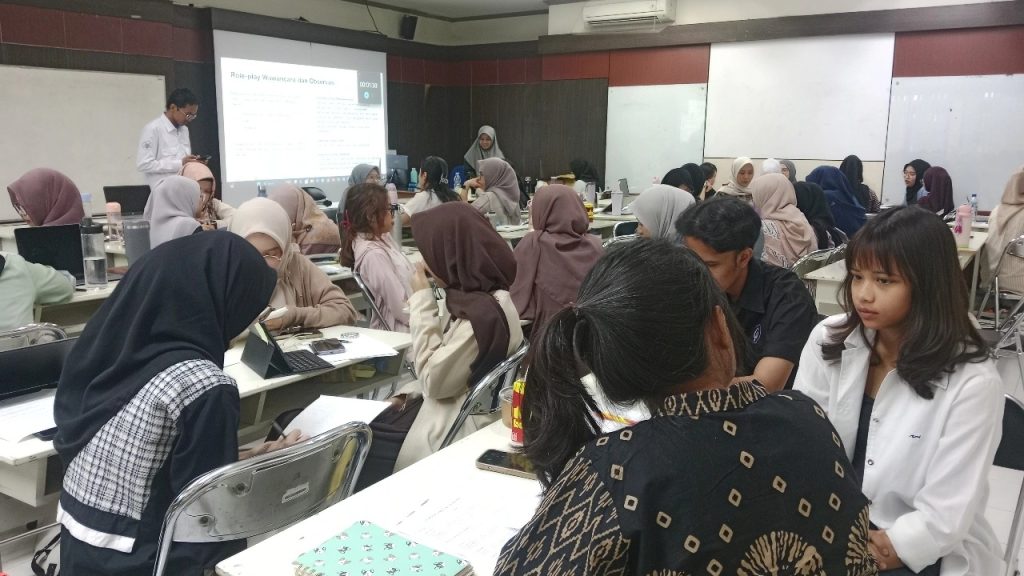
Most of the learning activities focus on strengthening psychological assessment skills. Participants practice using various psychological screening instruments, develop observation and interviewing skills, learn to administer a range of psychological tests, and integrate assessment results as the basis for formulating psychological diagnoses. The curriculum also covers cognitive assessment, personality assessment, interests and aptitudes, and child developmental assessment in accordance with psychological service needs.
In addition to assessment competencies, participants are introduced to the process of establishing psychological diagnoses and to various intervention approaches, including Behavioral Therapy (BT), Cognitive Behavioral Therapy (CBT), humanistic approaches, and group and community interventions. All materials are enriched through gradual practice simulations across the four service settings under the guidance of experienced lecturers and supervisors, allowing participants to apply their knowledge in situations that resemble professional practice.
At the end of the program, participants undergo a comprehensive evaluation consisting of objective tests, reflection activities, case analyses, and practice simulations to measure their mastery of theory, critical thinking abilities, and skills in applying the psychologist’s work cycle. Participants who do not meet the competency standards will undertake a remedial program before being declared to have passed.
Completion of the Bridging Course is a prerequisite for participants to continue their status as students in the Professional Psychology Education Program. For participants who have not yet met the graduation standards after completing the remedial process, the opportunity to pursue professional education is not lost; rather, it will be postponed until the next Bridging Course period.
Author: Erna Tri Nofiyana