
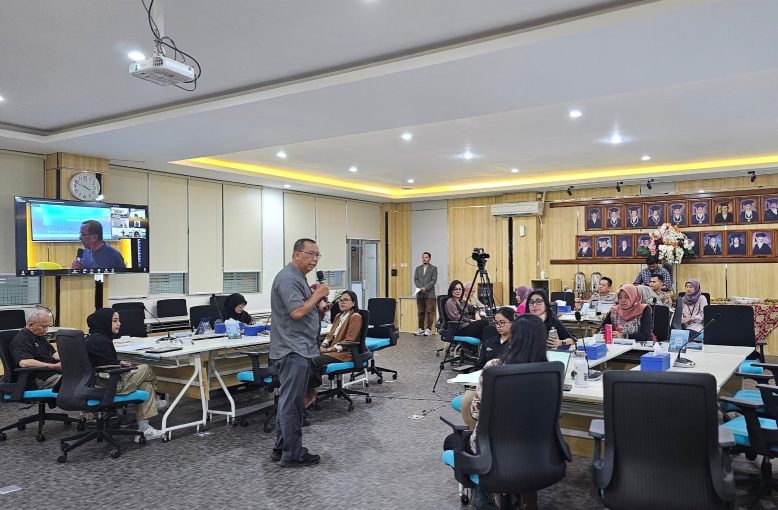
A representative of the Indonesian National Armed Forces Psychology Center (PusPsi TNI) shared a meaningful analogy when describing its partnership with the Faculty of Psychology at Universitas Gadjah Mada (UGM): if PusPsi TNI is the fruit of a tree, then the Faculty of Psychology is its roots. To produce the best fruit, the roots must first be well nurtured. This analogy aptly reflects the findings of the 2026 Partner Satisfaction Survey, which reveal that the Faculty’s partners are not only satisfied with its services but also trust the institution and aspire to continue growing together.
The Faculty recently completed its Partner Satisfaction Survey covering collaborations established during the 2023–2026 period. Managed by the Office of Cooperation, International Affairs, and Alumni (OCIA), the survey gathered responses from 77 partner institutions representing diverse sectors, including government ministries and agencies, village administrations, the Indonesian National Armed Forces (TNI) and National Police (Polri), state-owned enterprises, banking institutions, hospitals, schools, universities, humanitarian NGOs, creative industries, and independent practitioners.
The survey results show that the Faculty of Psychology UGM achieved a Partner Satisfaction Index of 3.36 out of 4.00, equivalent to 84.0 out of 100, placing it in the Good/Satisfactory category. The score reflects the meaningful impact that the Faculty’s partnerships have had on its collaborators.

Strong Partner Loyalty
Trust is most clearly reflected in the survey’s highest-rated indicators: partners’ willingness to collaborate again and to recommend the Faculty to others. These findings suggest that the relationships extend well beyond transactional satisfaction and instead demonstrate genuine loyalty. The highest score, 3.71, was recorded for partners’ intention to continue collaborating with the Faculty, followed by a score of 3.49 for their willingness to recommend its services. Staff members’ friendliness, professionalism, and ethical conduct also received strong appreciation, earning a score of 3.48. Together, these results indicate that partners are committed to sustaining long-term collaboration.
This trust is also evident in how partners perceive their relationship with the Faculty. Sari Fajarini Nainggolan, representing TVRI Yogyakarta, noted that the psychological themes presented through the partnership resonate strongly with both TVRI employees and the broader public.
“The topics presented are highly relevant, especially since TVRI is a public broadcasting institution. For us, the program becomes more meaningful because it provides a platform for discussing psychological issues that are genuinely needed by society,” said Sari.
A similar view was expressed by Claudia from TVRI Yogyakarta, who highlighted the positive audience response to the Obrolan Psikologi (OPSI) program.
“We’ve received a great deal of positive feedback about OPSI. The topics are often relevant and relatable, helping viewers better understand the issues they are experiencing,” she explained.

Impact Across Sectors
The benefits of these partnerships have been felt across various sectors. PT PLN (Persero) acknowledged that the collaboration has helped address organizational needs while strengthening stakeholder trust both internally and externally. The Indonesian Military Academy has enhanced the quality of its research personnel and developed a resilience assessment instrument for cadets. YAKKUM Emergency Unit has strengthened the psychosocial dimension of its disaster emergency response and climate change adaptation services, while the Health Polytechnic of the Ministry of Health in Mamuju has reinforced its research-based service development. The impact has also extended to the wider public, with TVRI Yogyakarta recognizing that the psychological themes featured in its broadcasts are highly relevant to everyday life and resonate with viewers.
Partners’ Future Needs
In addition to evaluating existing collaborations, partners also shared their expectations for future cooperation. Although their needs vary, several common priorities emerged. Many partners expressed interest in expanding digital psychological services and assessments while maintaining high ethical standards, including online counseling, early mental health detection systems, and Computer-Adaptive Test (CAT)-based psychological assessments. They also emphasized the need to develop and update psychological assessment instruments for recruitment, education, and research purposes.
Several partners highlighted the growing importance of adolescent mental health and digital safety amid increasing concerns about cyberbullying and online relationship violence. Others encouraged the Faculty to expand its services for older adults and children with special needs, strengthen collaborative research and publications, and develop creative, accessible psychological education materials for the wider community.
Partners also demonstrated strong enthusiasm for continuing their engagement. A total of 35 out of the 77 partner institutions participated in follow-up discussions with the Faculty. The insights gathered through both the survey and these discussions will serve as valuable guidance for the Faculty of Psychology UGM in continuing to nurture the “roots” of its academic excellence. Returning to the tree analogy, healthy roots will always produce meaningful fruit. By continuously strengthening its academic foundation, the Faculty aims to ensure that its partnerships remain relevant, sustainable, and capable of generating even greater benefits for society.
Author: Raden Roro Anisa Anggi Dinda
Photos: Erna and Hanif