Arsip:

ukp

Faculty of Psychology UGM Strengthens Physical and Mental Health Services through Posbindu Period II

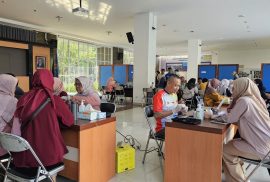
A total of 116 members of the academic community of the Faculty of Psychology, Universitas Gadjah Mada (UGM), participated in the second period of the Integrated Health Development Post (Pos Pembinaan Terpadu/Posbindu), themed Wellness Day: Keeping Body and Mind in Harmony, held on Friday, July 31, at Hall D, Faculty of Psychology UGM. The event provided integrated physical and mental health services, ranging from basic health screenings and medical consultations to psychological consultation services.

Tracks Behind the Consultation Room: Counselling for Employees

Friday (24/09) UGM Psychology Consulting Unit held the 13th UKP Synergy UKP Sharing (UBUB) with the topic “Tracks Behind the Consultation Room: Counselling for Employees” online. The topic that was brought up by UBUB #13 this time was delivered by Diana Setiyowati, Psikolog and Indrayanti, M.Sc., Ph.D., Psikolog.

The purpose of holding counselling for employees consists of several things. First, it aims to help unravel work-related problems. Second, assisting employees in maintaining a work-life balance through professional service facilities. Third, jointly find conflict resolution and reduce stress levels that have an impact on work performance.

Furthermore, Diana also conveyed about things that affect the mental health of employees, such as work targets, workloads that exceed abilities, short and sudden work completion targets, long working hours, challenging roles, relationships with other employees, and work efficiency which has an impact on whether work accumulates.

“The thing to note is that so far people think that counselling, coaching, consulting, and mentoring are the same thing even though they are different, but these four things have something in common in that they both need listening skills,” said Diana.

“In addition, what must be understood is the existence of employees with different types and cultures,” explained Indrayanti. According to Indrayanti, counselling becomes an effective process when the counsellor can equip himself with theoretical knowledge and practical abilities. Then, there are also other things to consider when counselling employees, such as what makes clients come for counselling and what characteristics make employees stay.

UBUB #13 was attended by 52 participants consisting of psychologists and professional students from various fields of specialization who are interested in exploring and broadening their horizons regarding employee counselling services. The event which started at 13.00 and ended at 15.00 was divided into three sessions, with the last session containing questions and answers from participants led by Ainurizan Ridho Rahmatulloh, M.Psi., Psikolog as moderator.


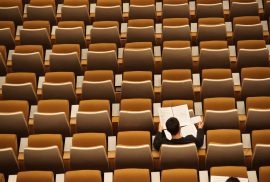
Photo by UX Indonesia on Unsplash

Trails of Stories Behind the Consultation Room: Grief Counselling

Carrying the topic, “Trails of Stories Behind the Consultation Room: Grief Counselling”, the Psychological Consultation Unit (UKP) again held the 12th UKP Synergy UKP Sharing (UBUB) on Friday (10/9). The topic was delivered by Dra. Sri Kusrohmaniah, M.Sc., PhD and Azri Agustin S.Psi., Psychologist and Wirdatul Anisa, M.Psi., Psychologist as moderators.

Appearing as a speaker in the first session, Kusrohmaniah said that grief does not always have to be about loss but can also be about extreme events or changes that occur. “Of course, the change in question is negative,” explained Kusrohmaniah. In addition, as an introduction, he also conveyed that human are creatures who tend to form bonds of love which are facilitated by the hormone oxytocin. When the bond of love is disturbed, then that is when grief occurs which makes the body burdened and must rearrange its condition.

Grief can be interpreted as a natural response possessed by humans, even animals, when experiencing the loss or death of someone or something important to them. When someone is experiencing grief, then at that time humans also experience various emotions, such as loneliness, disbelief, numbness, guilt, anxiety, despair, and even anger.

According to Kusrohmaniah, continuous grief will become a complex disorder if it is not handled quickly and appropriately. These complex disorders include, Post-Traumatic Disorder (PTSD), Major Depressive Disorder (MDD), complicated-bereavement, Prolonged Grief Disorder (PGD), and personality disorders.

Then, in the second session, Azri continued to deliver material, “Recovering from Grief is the title I took to open our presentation of the material and our discussion today”. According to Azri, the grieving process takes time to heal ourselves.

There are several stages of grief that a person goes through, the first is denial, where a person feels that the grief experienced should not have happened. Then, the anger stage which raises the question of why he should experience grief. Next, the bargaining stage that raises the desire to turn back time and the “if only” question. Then, the stage of depression which makes a person go deeper into a deeper level of sadness and great loss. Finally, the acceptance stage where a person begins to manage his condition and find the meaning of loss.

There are important things that need to be considered regarding the stages of grief, among others, that each stage does not take place in a linear manner. Some people can feel one stage then return to the previous stage. However, there are also those who pass through the stages of grief linearly in a short time.


Photo by arash payam on Unsplash

UKP: Introduction to PFA

As an effort to continuously improve services for service users, the Psychology Consultation Unit (UKP) of the Faculty of Psychology UGM presents the event “Skills Improvement Training: Psychological First Aid”. This event was held on Friday (3/9) and was intended for UKP Psychologists and Assistant Psychologists.

Present at this event were Maria Ratih Maharani, M.Psi., a psychologist as a speaker who currently works as a psychologist at Panti Rapih Hospital, Yogyakarta, UKP Psychology UGM, and the Bureau of Intuition Psychology. “Usually, Psychological First Aid (PFA) training is carried out for a minimum of 7-8 hours per session, but if we want to do PFA training for only 1 hour, I request permission not to label this session as training or debriefing,” explained Maria. Therefore, according to Maria, this event is more suitable if it is called an introduction to PFA.

Maria believes that in general people have done PFA, but the person concerned does not realize it because PFA is a very simple thing and is attached to the human side of a human being. Thus, it is hoped that everyone can practice PFA for the surrounding environment and be assisted by an adequate PFA training program.

This event started with a question asked by Maria to the participants about what can and cannot be done during PFA. Some of his statements about whether a person will experience trauma after a traumatic event to the question of whether PFA is the same as trauma healing.

According to Maria, helping with intention is sometimes not enough. Helping skills are needed so that the assistance provided is as needed, does not exceed one’s own abilities, and is able to activate internal resources. These things ultimately make PFA something that needs to be studied.

There are several things that are the goals of doing PFA, namely, to calm others who are stressed, empathize, foster a feeling of security, listen to complaints wholeheartedly, accompany them in difficult times, seek to fulfil basic needs, normalize anxiety, and provide needed information.

At the end of this session, participants were invited to practice directly about PFA by dividing the participants into several groups. One group consisted of three participants who were given the task of taking turns acting as observers, the person who needed the PFA, and the person who gave the PFA.

This event was acknowledged by the participants as very enjoyable and helped them understand what PFA is and how to do it. Participants said they were happy and enthusiastic and hoped that there would be more fun events in the future that would also help them in their role as assistant psychologists and psychologists.


Photo by Dimitri Iakymuk on Unsplash

UBUB #11: Relieve Broken Hearts with Mindfulness

Friday (27/8) the Psychology Consultation Unit (UKP) of the Faculty of Psychology UGM held the 11th UKP Synergy UKP Sharing (UBUB). On this occasion, the topic raised is “Relieve Broken Hearts with Mindfulness”. The resource persons involved in this topic are Vincent Eddy K. H., M.Psi., a psychologist as one of the partner psychologists at UKP.

According to Vincent, romantic relationships become one of the goals of life that a person has, in addition to education and career. One of the causes of the occurrence of a romantic relationship that a person has is the intensity of the meeting that starts from acquaintances then makes friends and then increases to intense depth. “If it is associated with Javanese proverbs, then the one that fits this phenomenon is Witing Tresna Jalaran Saka Kulina,” explained Vincent.

Some characteristics of romantic relationships or can be called passionate love, such as confusion about defining the situation, feeling easily connected to those around them, trying to be physically close, and wanting to be treated the same. However, it is undeniable that not all romantic relationships succeed by having the same feelings between one person and another or people call it “one-sided love”.

Vincent continued, some rejections can be in the form of satire, the person you like experiences a change in attitude, and things don’t go as expected. “I divide the effects experienced by someone who experiences rejection into two groups, namely the effects of feelings and effects of body reactions”. Effects of feelings include sadness, anxiety, fear, hopeless, regret and guilt. Meanwhile, the effects caused by the body as a reaction to the rejection effect are nausea, weakness, headache, fever, giddiness, and even indigestion. According to Vincent, the effects of rejection, both feelings and bodies, have been packaged in one nice word by the late. Didi Kempot, namely ambyar.

Therefore, at the 11th UBUB event, Vincent had the opportunity to help the participants who attended by using one of the ways to reduce confusion with mindfulness. Mindfulness is a process of directing attention to various present (current) conditions without any judgment.

Not only delivering material, but Vincent invites UBUB participants to participate in practicing together one of the postures in mindfulness, namely the sitting position. The practice of mindfulness together directly at UBUB this time is certainly an interesting and unique thing. More than 40 participants were grateful and enthusiastic for holding mindfulness practice together.


Photo by Chelsea Gates on Unsplash

UBUB Chapter 10: Intake Interview

On Friday (13/8), the Psychology Consultation Unit (UKP) of the Faculty of Psychology UGM held the 10th UKP Synergy UKP Sharing (UBUB) which discussed “Trails Behind the Consultation Room: Intake Interview”. The discussion was delivered by Sutarimah Ampuni, S.Psi., M.Si and Dr. Maria Goretti Adiyanti, M.S. In addition, this discussion was moderated by Lucia Peppy Novianti, M.Psi., a psychologist and was attended by 92 participants online via Zoom.

The discussion this time was started by Sutarimah who told her experience while studying at the Master of Psychology in the field of Psychological Counseling, “Imagine, at that time my English was not as fluent as it is now and at that time I had to handle incoming calls… clients who wanted to register and had to do an entrance interview . The experience was very memorable for me which is closely related to the entrance interview”.

Intake interview is the first interview conducted by a counselor or therapist when a client arrives. Intake interviews are conducted to find out what problems bring clients to come. In addition, interviews were also conducted to determine personal and family history. Intake interviews can be conducted by therapists, counselors, assistants, or frontliners face to face or by telephone.

The intake interview is important because it is the first interaction with the client. Through interviews, clients can see or even discourage their intention to continue psychological treatment through the client’s impression of the counselor or counseling service provider institution and vice versa. Based on research, Sutarimah said that the client’s decision to continue therapy or not occurs after the first session of therapy.

“Of course they (clients) come with different feelings. Therefore, there are things that need to be considered and become the interviewer’s obligation,” explained Maria. One of the things that an interviewer must do is be able to create a positive impression. A positive impression is meant by fostering a sense of security and comfort, fostering an understanding that the client is making the right decision with come to counseling services, and providing information about the process during the intake interview. Then the intake interview must also be carried out carefully, both in terms of ability and preparation of facilities and infrastructure.

The intake interview is not just an ordinary interview because the information obtained will bring together the right psychologist with the right therapy. Therefore, psychologists and prospective psychologists are expected to learn well and correctly and continue to improve their skills related to interviews.


Photo by Cytonn Photography on Unsplash

Know Yourself, Unlock Potential: Recipes for Choosing a College Major without Worries

The Psychology Consulting Unit (UKP) of the Faculty of Psychology UGM again held the 9th UKP Bersinergi UKP Berbagi (UBUB) on Friday (30/7). This UBUB event raised the topic “Know Yourself, Unlock Potential: Recipes for Choosing a College Major without Worries” which is open to all people. This event took place from 13.00 WIB to 15.00 WIB and was attended online by approximately 50 participants.

Present as the speaker, Raras Pramudita, M.Psi., a psychologist is a partner psychologist at UKP UGM, as well as a psychologist at the Disability Unit of the Yogyakarta Education Office. Raras opened the event by first asking what the participants’ what you want to be. The participants’ answers varied, some said they want to be a doctor, opened a café, and even became a YouTuber. According to Raras, everyone needs to have a dream so to keep purpose even though they are facing difficulties.

One of the difficulties faced and quite confusing is when someone is faced with choosing a college major. “Lecture is not just a routine, but can also add insight, skills, train oneself to deal with pressure, and even become a life experience for someone,” said Raras. There are several things that need to be considered when someone chooses a college major, such as the characteristics of the majors of interest, values, and parents’ point of view, knowing and knowing one’s potential.

One of the things that can be done to know your potential is the SWOT technique (Strength, Weakness, Opportunity, Threat). Through the SWOT technique, a person not only knows his strengths and weaknesses, but also knows the opportunities and threats that can be an obstacle to self-development.

Another thing that needs to be considered too, according to Raras is passion. “Passion is not just an interest, but a strong interest in something we like”, explains Raras. More specifically, passion is a strong interest in an activity that is liked and considered important so that individuals are willing to invest time and energy to achieve goals.

Through this event, Raras also conveyed tips and tricks for choosing a major consisting of stop, continue, and start. First, stop the habits that can hinder when choosing a major. Then, continue the things that support to choose a major. Finally, start planning to choose a major.


Photo by Philippe Bout on Unsplash

UKP Bersinergi UKP Berbagi “Trails of Stories Behind the Consultation Room: Written Telecounseling”

Friday (25/6) the Psychology Consultation Unit (UKP) of the Faculty of Psychology UGM held a series of UKP webinar events in synergy with UKP Sharing. On this occasion, UKP took the theme of the event with the title “Trails of Stories Behind the Consultation Room: Written Telecounseling”.

The event took place from 13.00 WIB to 15.00 WIB. The event was attended by 50 participants who came from master’s degree students in professional psychology and psychologists.

The two speakers at this event were Idei Khurnia Swasti, M.Psi., a psychologist, a lecturer in Psychology at UGM and Valeria Satwika Anindita, a psychologist partner of UKP UGM. In the first session, Idei gave a presentation entitled “Further Introduction to Text-based Counseling”. Meanwhile, in the second session Valeria gave a presentation entitled “Written Telecommunications as Psychological First Aid”. These two themes are very in line with the current conditions where face-to-face restrictions are still ongoing as part of a health protocol to suppress the spread of the Covid-19 pandemic.

The emergence of Text-based Counseling in the realm of mental health emerged from the context of digital culture. Along with the development of computer technology, also created a variety of new communication tools. The emergence of the latest technology and new habits of society in communicating encourage the development of methods in psychological counseling activities.

“During the last two decades, it was the late ’90s, until now technology has been rapidly developed to support Text-based Counseling,” said Idei, explaining that the two decades were a long period of time for the development of a new method in psychological counseling.

The context of counseling using communication technology is very different from face-to-face which must be understood by the counselor or client. Idei emphasized that counselors need to equip themselves with extra skills to maximize the use of online communication application features.

“…the various media options used (for counseling), yes, whether to use chat rooms, email, then use official accounts on social media. Now that is a contemporary development that we must pursue,” explained Idei.

Idei explained that there are two kinds of Text-based Counseling methods. The first is the synchronous method, namely direct communication, for example by telephone, video conferencing, video calls and chat. The second is the asynchronous method, namely indirect communication, for example using email, fax, discussion forums, websites, blogs, and social media.

In the second session, Aninditia delivered more specific material on one method, namely written telecounseling. Anin, as she is usually called, explained that this written telecounseling has actually been used internationally for a long time, but in Indonesia it is still not widely used. So naturally there are still a lot of doubts and resistance that should be eroded so that this method can run optimally.

“I invite all of you participants to see, measure within yourself, is there resistance? Because if you don’t like it, I don’t think this is the right medium when it will be used later,” said Anin.

The Covid-19 pandemic condition also makes written telecounseling one of the most possible counseling methods to do. Limiting direct meetings according to health protocols makes conventional counseling methods difficult and requires alternative methods to continue to provide mental health services.

“If asked, why do we need to do written telecounseling? The short answer may be yes because we need to provide psychological services according to the client’s needs. According to the client’s own condition, “explained Anin.

This written counseling has benefits also for clients who have trauma, shame, and lack of self-confidence to appear physically and communicate verbally in front of the counselor. In this case, according to Anin, the written telecounseling method is very appropriate to be used as a means of communication between the client and the counselor.

According to Anin, in conducting written counseling, counselors need to equip themselves with good writing skills so that the message conveyed is easy to understand and also creativity in conveying ideas or opinions through writing.
UKP Bersinergi UKP Berbagi “Ready for School: Is ‘Can Read and Write’ Enough?”

Friday (16/7) the Unit Konsultasi Psikologi (UKP) of the Faculty of Psychology, Gadjah Mada University held a webinar with the title “Ready for School: Is ‘Can Read and Write’ Enough?”. This event is part of the “UKP Bersinergi UKP Berbagi” program which is open to all people.

This event takes place from 13.00 WIB to 14.20 WIB. The event was attended by 50 participants who came from academia and the general public.

The resource person for this event was Raninta Wulanwidanti, M.Psi., Psikolog, founder of the Kelas Bermain Pacu-pacu who is also active as a partner psychologist at UKP UGM and Jogja Medical Center Clinic. In this event, the alumnus of the Bachelor of Psychology from the Gadjah Mada University and the Master of Professional Psychology at the University of Indonesia brought material on the issue of children’s readiness to enter school.

Reading and writing skills are often a concern for parents when their children enter school. When children can’t read and write like their friends, parents tend to worry about the situation. Even though the inability of children to read and write at the early age of entering school is a natural thing that does not need to be worried.

Raninta explained that when there is an assumption that children aged 3-4 years should be able to write is a myth. Physiologically, Raninta explained that at that age the bone structure in the fingers and palms of a child is very different from the bone structure of a 7-year-old child. Therefore, when children at that age cannot write, it is only natural.

“If he’s not ready to write, that’s okay. We don’t have to force it. So we have to replace other activities,” explained Raninta while showing other activities that can be given to children to stimulate their fine motor skills.

The ability of children to read and write at an early age also cannot be a predictor of children’s achievement in school in later years. Raninta explained that there is a diversity of abilities in children that cannot be equalized. indeed there are children who have an IQ above the average who can get reading and writing skills faster, but that’s only a small part. Instead of forcing children’s reading skills, Raninta places more emphasis on children’s understanding of the words around them.

“What we need to pay attention to and as parents or teachers what we need to pursue is the child’s understanding, (so) not only that he can read, he must be smart. Later, we’ll check if he understands or not. That is what parents and teachers need to observe,” said Raninta.

Apart from the ability to read and write children, Raninta emphasizes the importance of examples of attitudes and behavior from parents to be able to provide readiness for children to enter school. Parents will be role models for children in socializing with the surrounding community and behaving disciplined in everyday life.

“Well, these examples will also be imitated by children when they socialize at school,” explained Raninta.

Furthermore, Raninta explained that school readiness is assessed as a child’s readiness to take part in learning specific materials according to the child’s development level. This can be measured through the maturation of aspects of child development which will directly help children in the learning process and adjustment to school. Furthermore, Raninta used various approaches to introduce participants to aspects of child development and aspects of children’s readiness for school.

In the last session, Raninta gave examples of sensory activities that can provide stimuli for the activation of motor skills and child development. These activities are very simple, such as recognizing textures, aromas, colors and activities that can sharpen children’s focus such as moving rubber bands and throwing balls. Furthermore, activities that train finger muscles include exercises using clothespins, using a pipette, and free writing by following a pattern of dots using a writing utensil. This can train the child’s finger muscles to prepare for learning to write.

UKP Bersinergi UKP Berbagi “Trails of Stories Behind the Consultation Room: Written Telecounseling”

Friday (25/6) the Psychology Consultation Unit (UKP) of the Faculty of Psychology UGM held a series of UKP webinar events in synergy with UKP Sharing. On this occasion, UKP took the theme of the event with the title “Trails of Stories Behind the Consultation Room: Written Telecounseling”.

The event took place from 13.00 WIB to 15.00 WIB. The event was attended by 50 participants who came from master’s degree students in professional psychology and psychologists.

The two speakers at this event were Idei Khurnia Swasti, M.Psi., a psychologist, a lecturer in Psychology at UGM and Valeria Satwika Anindita, a psychologist partner of UKP UGM. In the first session, Idei gave a presentation entitled “Further Introduction to Text-based Counseling”. Meanwhile, in the second session Valeria gave a presentation entitled “Written Telecommunications as Psychological First Aid”. These two themes are very in line with the current conditions where face-to-face restrictions are still ongoing as part of a health protocol to suppress the spread of the Covid-19 pandemic.

The emergence of Text-based Counseling in the realm of mental health emerged from the context of digital culture. Along with the development of computer technology, also created a variety of new communication tools. The emergence of the latest technology and new habits of society in communicating encourage the development of methods in psychological counseling activities.

“During the last two decades, it was the late ’90s, until now technology has been rapidly developed to support Text-based Counseling,” said Idei, explaining that the two decades were a long period of time for the development of a new method in psychological counseling.

The context of counseling using communication technology is very different from face-to-face which must be understood by the counselor or client. Idei emphasized that counselors need to equip themselves with extra skills to maximize the use of online communication application features.

“…the various media options used (for counseling), yes, whether to use chat rooms, email, then use official accounts on social media. Now that is a contemporary development that we must pursue,” explained Idei.

Idei explained that there are two kinds of Text-based Counseling methods. The first is the synchronous method, namely direct communication, for example by telephone, video conferencing, video calls and chat. The second is the asynchronous method, namely indirect communication, for example using email, fax, discussion forums, websites, blogs, and social media.

In the second session, Aninditia delivered more specific material on one method, namely written telecounseling. Anin, as she is usually called, explained that this written telecounseling has actually been used internationally for a long time, but in Indonesia it is still not widely used. So naturally there are still a lot of doubts and resistance that should be eroded so that this method can run optimally.

“I invite all of you participants to see, measure within yourself, is there resistance? Because if you don’t like it, I don’t think this is the right medium when it will be used later,” said Anin.

The Covid-19 pandemic condition also makes written telecounseling one of the most possible counseling methods to do. Limiting direct meetings according to health protocols makes conventional counseling methods difficult and requires alternative methods to continue to provide mental health services.

“If asked, why do we need to do written telecounseling? The short answer may be yes because we need to provide psychological services according to the client’s needs. According to the client’s own condition, “explained Anin.

This written counseling has benefits also for clients who have trauma, shame, and lack of self-confidence to appear physically and communicate verbally in front of the counselor. In this case, according to Anin, the written telecounseling method is very appropriate to be used as a means of communication between the client and the counselor.

According to Anin, in conducting written counseling, counselors need to equip themselves with good writing skills so that the message conveyed is easy to understand and also creativity in conveying ideas or opinions through writing.