Arsip:

clsd

CLSD UGM Prepares KKN-PPM Students with Early Childhood Development Assistance Training

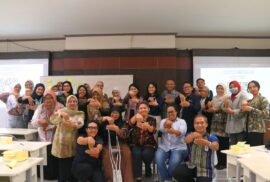
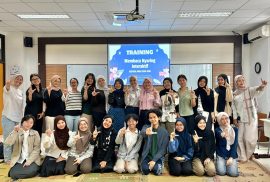
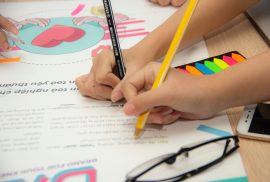
The Centre for Life-Span Development (CLSD) of the Faculty of Psychology at Universitas Gadjah Mada (UGM) organised a KKN Warming Up program in the form of training on socio-emotional stimulation and early childhood literacy on Saturday (16/5). This activity is part of the preparation for students participating in the KKN-PPM UGM program. CLSD itself is a research and community service centre within the Faculty of Psychology UGM that focuses on human development across the lifespan.

Youth Webinar Against Violence: The Role of Families and Schools

Thursday (7/7), the Center of Life-Span Development (CLSD) together with the Faculty of Psychology UGM held an “Adolescent Webinars Against Violence: The Role of Families and Schools”. The event was divided into 2 sessions with different subthemes. In the first session, the sub-theme presented was “Knowing Adolescent Emotional Behavior” which was delivered by Dr. Arum Febriani, S.Psi., M.A and Sutarimah Ampuni, S.Psi., MPsych., Psychologist. Meanwhile, for the second session’s sub-themes, Drs. Sentot Haryanto, M.Sc., Psychologist and T. Novi Poespita Candra, S.Psi., M.Si., Ph.D., Psychologist with the subtheme “Building Anti-Violence Attitudes in Families and Schools”.

At the beginning of the event, Rahmat Hidayat, S.Psi., MSc., Ph.D. gave a speech, “This afternoon’s webinar is an important webinar with topics that are also important and relevant for youth and anti-violence”. Youth and anti-violence are things that need to be developed to solve cases of violence among teenagers. “Adolescent violence is certainly worrying because it has a long impact (from the violence) in terms of the next stages of development that must be passed,” said Rahmat.

In the first session, the presentation of material was started by Sutarimah, “This webinar was held against the background of violent attacks that are still happening”. Violence is not limited to teenagers, but violence can be overcome from a young age.

Meanwhile, Arum continued by deliver the material by focusing more on klithih discussions in Yogyakarta. “Especially, I will share about a phenomenon that seems to never end in Jogja”. At first, klithih had a neutral term that tended to be positive which meant “looking for activities”, but now it is interpreted as something negative.

In the second session, Novi was present as the giver of the first material, “We can actually prevent violence at the school level”. According to Novi, cases of violence are not limited to cases of physical violence, but there is also passive-aggressive violence, such as isolating one or two children because of the formation of certain groups in social circles.

Furthermore, Sentot as the second speaker at the second session as well as the last speaker at this webinar, “We cannot claim that cases of violence occur only because of one cause. Violent cases are complex. Haryanto explained that cases of violence can be achieved with several tasks, such as equalizing everyone’s perception that violence is a critical and complex issue, taking a comprehensive and systematic approach with firmness, and providing a platform for innovation, creativity, and synergy.


Photo by Maria Teneva on Unsplash

Research Ethics Workshop with Child Participants

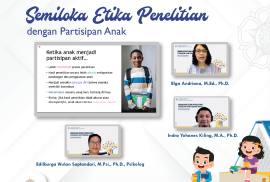
Thursday (13/1) Center for Life-span Development (CLSD) UGM  held a Research Ethics Workshop with Child Participants. This event discusses the dynamics of research with child participants in various contexts. The event is held online by bringing in expert speakers who are experienced in conducting research with children.

This event will be held from 8.00 AM until 0.30 PM. The event was attended by 70 participants.

The speakers in the first session were Edilburga Wulan Saptandari, M.Psi., Ph.D., Psychologist, Head of the UGM Psychology Doctoral Study Program. On this occasion, Edilburga gave a presentation with the title Methodological and Ethical Challenges for Research with Children. The topics discussed in his presentation ranged from reasons why researchers chose not to involve children to tips on how to conduct research with children.

The long history of research ethics was also an important point in the presentation in this first session. Edilburga tells about the beginning of its use in the medical field. The use of strict ethical standards that are able to minimize the risk of research participants is finally adopted by researchers in the social humanities field.

“When there is harm, there is danger, it is not only because of something that enters the body, but there is an aspect of the power relationship between the researcher and the participant. Well, here, of course, we can handle it later with the methodology and ethical steps,” explained Edilburga while explaining how researchers must have a good mindset during research and not look down on participants.

The next session in this event was filled by Elga Andriana, S.Psi., M.Ed., Ph.D, Head of UGM International Undergraduate Program (IUP) and Head of UGM Center for Life-span Development (CLSD). Elga gave a presentation with the research title Melibatkan Anak yang Etis dan Inklusif. In this presentation, Elga invited the workshop participants to recognize the types of disabilities, to adapt research tools and informed consent.

In the context of research, researchers have different approaches to disability. Elga explained that there are at least three commonly used approaches, namely the Medical Model of Disability, Social Model of Disability, and The International Classification of Disability, Functioning, and Health.

“The first and perhaps the most widely used, especially in the Indonesian context, is the medical model of disability. So this model adheres to the understanding that the inability or inhibition comes from the individual,” explained Elga while pointing out that research using this approach leads to improvements in aspects that are not developing properly.

In the last session of the presentation, Indra Yohanes Kiling, M.A., Ph.D., Assistant Professor of Psychology, Faculty of Public Health, Nusa Cendana University, Kupang. Indra gave a presentation entitled Ethics and Child Vulnerability at the Indonesian Border. In addition to explaining the demographic and socio-cultural conditions of the border areas that researchers need to pay attention to when conducting research, Indra also highlighted the lack of awareness of psychology researchers who involve humans to conduct research ethical reviews.

Furthermore, Indra also explained to the workshop participants that when conducting research, one must look at the relationship between adults and children. This is important to get the perspective of the child better and not distorted by the perspective of the adult.

“At the border or other developing areas, for example with relations with children, adults are stronger. (It) makes the perspective (of) this child forgotten, “explained Indra.

The event, which lasted for almost five hours, ran smoothly and interactively. The presenters actively invited the workshop participants to share their perspectives and experiences in conducting research involving children.
Webinar: Providing Accommodation for Students with Disabilities in Indonesia

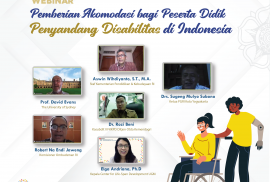
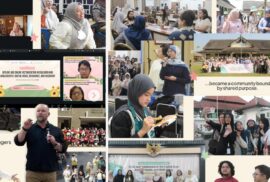
Tuesday (7/12) PGRI Yogyakarta City in collaboration with the Center for Life-Span Development (CLSD) UGM held a webinar with the title “Providing Accommodation for Students with Disabilities in Indonesia”. This event was held in commemoration of International Day of Persons with Disabilities which is celebrated every year on 3 December.

The event took place at 1.00 PM until 3.45 PM. The event was attended by 200 participants from lecturers, students, teachers, and the general public.

This event was moderated by Elga Andriana, S.Psi., M.Ed., Ph.D, a lecturer at the UGM Faculty of Psychology and the Head of CLSD UGM. For almost three hours Elga accompanied the participants, guided the event, as well as being an interpreter at the event which was held bilingually using English and Indonesian. This event is also equipped with a sign language interpreter so it is friendly for people with disabilities.

In this event, the presenters presented about the efforts to provide accommodation for persons with disabilities from various perspectives. Aswin Widhiyanto, ST., M.A. , Staff of the Ministry of Education & Culture of the Republic of Indonesia, as the first speaker said that the government had made several efforts to strengthen services for persons with disabilities in the educational environment. One of them is that in 2020 training has been held for 5000 regular teachers to strengthen the implementation of special education.

“Indeed, this amount is again not sufficient compared to the existing needs, but (this) is a process. And of course, support from the local government is also expected, from the community it is also expected to fulfill this need, “explained Aswin.

Next Dr. Rozi Beni, Head of Sub-Directorate II of FKKPD Ditjen Otda Kemendagri, as the second speaker at this event explained the role of the Ministry of Home Affairs as a facilitator and coach of local governments in implementing policies from the central government which in this context is the law on the implementation of the provision of educational services and facilities for persons with disabilities. . Rozi explained in detail how local government regulations were realized in the form of real executions. Rozi also stated that the community has a participatory right to participate in providing input and opinions in the implementation of local regulations.

“The community has rights and is protected by law in planning, implementing, and providing supervision,” explained Rozi.

In the third session, the material was filled by Robert Na Endi Jaweng from the Indonesian Ombudsman Commissioner. In his presentation, Jaweng explained a lot about the supervision of public services for students with disabilities. Jaweng explains how the relationship between citizens who give political mandates in elections and economic mandates in paying taxes to the state is so that citizens have the right to claim responsibility for the state, namely through public services in which services for persons with disabilities are also included.

“Indeed, the task of the Ombudsman is to monitor the extent to which the state is accountable for the mandates that have been given to them by citizens, including persons with disabilities,” explained Jaweng while emphasizing that the individual approach that has long been used in the policy of providing education services to persons with disabilities will soon be replaced with a social approach that has wider and comprehensive coverage.

Furthermore, the fifth speaker was filled by Prof. David Evans of The University of Sydney. In his presentation, Evans conveyed about how the Sydney government’s policy system was in drafting an anti-discrimination law for persons with disabilities and how the law was actually applied in the scope of education.

Evans provides an example of the application of anti-discrimination laws in Australia. In the education of prospective teachers in New South Wales, they are required to take courses on disability so that when they become teachers, they already have the provisions to deal with students with disabilities. Furthermore all schools in New South Wales are inclusive schools which are very open to persons with disabilities to enroll as students.

The last speaker was Drs. Sugeng Mulyo Subono, Chairman of the PGRI Kota Yogyakarta. In his presentation, Sugeng hopes that the education office will provide solutions and actively help when teachers at schools have difficulty in providing ideal service facilities for people with disabilities.

Publication Writing Workshop: Tips for Reaching Reputable International Journal Publications

Friday (25/11) Centre for Life Span Development or commonly known as CLSD held a “Publication Writing Workshop: Tips for Reaching Reputable International Journal Publications”. This event was held as part of the end of the CLSD Workshop series of events. “The plan is that there will be two publications to be produced, namely publications for the general public that can be seen on the CLSD Instagram account and publications for the international realm and academics in the form of international journal publications,” explained Elga Andriana, M.Ed., Ph.D., as the chairman of CLSD in his speech.

This workshop event presented Dr. Vina Adriany as Head of the Centre for Gender and Childhood Studies, Universitas Pendidikan Indonesia, and Editorial Board of the International Journal of Early Years Education. In the first session, Vina delivered material related to the basic concept of publication consisting of general matters and which journals are appropriate and good for sending publication manuscripts. “I may have to disclaim briefly that what I conveyed at this meeting departed from my experience as an editor in various journals and also my experience as a reviewer,” said Vina.

Through the material presented, Vina invited the participants not to write just to pursue indexing, but also to understand fundamental things related to publication manuscripts. “If I may express it, so that we can straighten out our intentions regarding publication,” said Vina. This was conveyed in relation to the burden that researchers and academics all over the world have on publishing.

Vina also explained why journal publication is a prestigious thing because the journal publication process involves blind peer review. This process is an article review process carried out by several other experts in the same field with manuscripts written by about 2-3 people before the manuscript was published. “The blind peer review process is where the researcher conducts research, then the results are written and then sent to the editor. So, researchers do not have direct contact with reviewers,” explained Vina. Therefore, the editor’s job in blind peer review is only on the rejection of the manuscript or whether the manuscript deserves to be forwarded to the reviewer, not on the decision of the manuscript to be rejected or not.

Writing, especially writing research results, is a necessity for academics and researchers. Through writing, legacy as academics and researchers can be passed down and become immortal. Like Pramoedya Ananta Toer’s quote which reads that writing is the way to immortality.


Photo by Jessica Lewis on Unsplash

Narrative Research Methods Intensive Course

Tuesday (16/11) to Friday (19/11) UGM Center for Life-Span Development (CLSD) in collaboration with the UGM Psychology Doctoral Study Program held an Intensive Course in Narrative Research Methods. This event is the second online narrative training event from CLSD after last year also held it with the same theme.

The opening ceremony starts on Tuesday (16/11) at 10.00 and ends on Friday (19/11) at 16.00. This event was attended by 55 participants consisting of students and the general public.

In this training, participants are invited to understand the history of development, theory, to narrative research methods. On the last day, participants were also given the opportunity to present the outline of the narrative research. With this, it is hoped that participants will gain the skills to carry out narrative research in a variety of contexts and for various purposes.

The first day of the training was opened by the presentation of material on the History of the Development of Narrative Research by Edilburga Wulan Saptandari, M.Psi., Ph.D., Psychologist. This lecturer at the Faculty of Psychology UGM invites participants to understand the emergence of narrative research in the world of qualitative research.

In the second session, Edilburga continued by explaining the theory and design of narrative research. In this session, the trainees are invited to understand how narrative research is structured theoretically and conceptually. In the last hour, the training participants were also invited to practice practicing the steps in preparing a narrative research design.

Furthermore, on the second day of the Narrative training, the materials for Narrative data collection methods were presented by Made Diah Lestari, Ph.D (Cand). The lecturer of Psychology Study Program, Udayana Faculty of Medicine, who is currently completing his doctoral study at Massey University, explained to the participants how the narrative research data was obtained and collected.

In the second session, Made explained about the practice of collecting narrative data from the research he had carried out. From his experiences in the field, Made invites participants to understand what obstacles and challenges will be faced when collecting data in the field. Made also provides several alternative solutions that can be taken if participants face similar problems so that narrative research can continue.

The third day of the training was filled with material on various narrative approaches presented by Prof. Dr. Heddy Shri Ahimsa-Putra M.A., M.Phil. In his presentation Heddy explained the various kinds of narrative traditions that have been embedded in regional culture in Indonesia. This rich variety of narratives continues to grow from traditional media such as wayang to more modern media such as films.

In the second session Heddy guided the trainees to understand and practice narrative analysis. In this session participants are given the opportunity to understand how to use narrative analysis from various approaches to explore data and answer research questions.

On the fourth day the training event was closed by the presentation of research results presented by Elga Andriana, S.Psi., M.Ed., Ph.D. In this session, Elga explains how to present the results of narrative analysis in a good research report, which is interesting and easy for readers to understand.

In the second session on the fourth day, Elga gave the opportunity to several participants to present the narrative research designs they had compiled. This opportunity was taken by five participants, namely three from UGM Psychology Doctoral students and two from general participants.

Preparing for the transition period of learning in children

Friday (12/11) UGM Center for Life-Span Development (CLSD) held a Webinar with the theme “School transitions experiences: Supporting children moving from online to offline learning”. This event discussed the transition period experienced by school children from online to offline as the number of cases of the Covid-19 Pandemic decreased.

The event took place from 15.00 WIB until 17.00 WIB. This event was attended by 60 participants.

The presenters of this event are Prof. Iva Strnadova, Professor of Special Education and Disability Studies at the University of New South Wales, Australia. He is also vice president of the NSW Chapter of the Australian Association for Special Education (AASE). Directly moderated by the Head of Center of Lifespan Development (CLSD) Elga Andriana, S.Psi., M.Ed., Ph.D., Iva explained about the dynamics experienced by children with disabilities from the transition from online to offline classes or in going to school in next level.

In the first session, Iva invited the participants of the webinar to identify the problems faced by children and persons with disabilities. From there, Iva invited the participants to understand that good cooperation from various parties is needed in an effort to provide all the needs of persons with disabilities in facing the transition period. Iva explained that all efforts made to facilitate students with disabilities must be designed and produced together with them.

“how to make their transition work, they really need this process and transformation. It’s not just about reading research literature, it’s not worth it, but actually asking students with actual disabilities. And I think we sometimes forget about this,” explained Iva.

Next, Iva explains four important points in her discussion, namely the definition of school transition and how it is seen over the life span. Next, the second is how the research results are about the school transition experienced by people with disabilities during the pandemic. The third point is what school transition students need when moving from online learning to offline learning. While the last is what kind of support is needed for all students from learning online to offline.

In discussing the dynamics of the transition, Iva explained it with several transition models theorized by experts. Iva started from the OSERS 1984 transition model (will’s bridges) to Paula Kohler’s Model (Taxonomy of Transition Services, 2016).

Iva invites participants to get to know Paula Kohler’s taxonomic model because it is one of two transitional models based on scientific evidence. In it there are five key areas that must be passed to be successful in making the transition.

“Every transition plan must be truly student-centered and most importantly students must really actively participate in this transition planning,” explained Iva.

To smooth the transition phase, self-determination is also important. In her explanation, Iva explained that there are three elements that must be in place to be able to synergize with each other to facilitate the transition phase in children. The three elements are self-determination attitudes & beliefs, self-determination knowledge, and self-determination skills.

The event went smoothly. The presenters are very interactive and always invite webinar participants to contribute by inviting them to identify the problems faced by children during the transition period. The presenters also gave participants the opportunity to ask questions directly or in writing.

COMPRE CLSD Class Opening Event

Friday (8/10) Center for Life-span Development (CLSD) opened the COMPRE (Contemporary Methods and Community-led Lifespan Development Research) class event. This event is a series of Photovoice training and community-led research practices for participants who are committed to participating in this event from beginning to end.

This event starts at 09.00 WIB until 12.30 WIB, then continues at 13.00 WIB until 15.00 WIB. Participants in this event were 24 people consisting of academics, teachers, and community activists who live in Yogyakarta.

The speakers at the opening ceremony were T. Novi Poespita Chandra, S.Psi., M.Sc., Ph.D., Psychologist, lecturer at the Faculty of Psychology UGM as well as the drafter of the Gerakan Sekolah Menyenangkan (GSM). In her presentation, Novi reviewed the philosophy of community-led research and the research ethics in it.

At the beginning of her presentation in the first session, Novi gave material that emphasized a lot about sense of urgency. Novi relates psychological theories to phenomena that are happening in everyday life today. With this, participants are invited to think critically and introspectively.

“Because I believe in any kind of knowledge, if it is not based on reasoning why, then we don’t know what the substance is for,” explained Novi.

In the first session, Novi played a video about changes in behavior and shifts in values in humans. This is due to the development of technology and the discovery of tools whose performance is able to serve humans in meeting their daily needs. Behind the convenience that is available, it also has the effect of increasing the need for connectivity, namely direct interaction between humans.

“It’s as if we are connected, connected faster in the wider world. But we actually don’t have any connection with the people close to us,” said Novi.

In community-led research, the spirit of connectivity and togetherness is highly upheld. Novi explained that to bring about change for the better, the efforts made together with the community will have a wider and sustainable impact. Therefore, researchers must have the awareness to be able to invite the public to carry out their research.

“It’s as if we still have thoughts, like my previous thought, that research belongs only to academics. In fact, research is a way of thinking,” explained Novi, emphasizing that this way of thinking is permissible and can be owned by anyone, both academic and non-academic.

In the second session, Novi discussed a lot about research methodologies and ethical principles of research, especially if the research was carried out together with children. In addition, Novi also provides examples of research involving children as social actors.

The Importance of Accompanying Children’s Thinking Development in the Golden Age

Saturday (2/10) the Center for Life-Span Development (CLSD) held a webinar with the theme “The Importance of Accompanying Children’s Thinking Development in the Golden Age”. The first CLSD event in October 2021 is a psychoeducational activity as part of a series of Research on Memory Development and Executive Skills in Babies 12-24 Months: A Screening Method by Mothers.

The event took place from 10.00 WIB to 11.30 WIB and was attended by 120 participants who were attended by mothers with toddlers, PAUD educators, TPA caregivers, and observers of child development.

The speakers in this event were Elga Andriana, S.Psi., M.Ed, Ph.D., Ammik Kisriyani, S.Psi., M.A., and Hanifah Nurul Fatimah, S.Psi., M.Sc. All three are lecturers of the Faculty of Psychology UGM who are experts in the field of child development. All three are now also active in a research team on the development of memory and executive skills in infants.

Elga as the lead researcher and head of CLSD opened this event as well as gave a speech and thanked the webinar participants who attended this event.

“So this morning is a part where we want to invite fathers and mothers and caregivers as well as PAUD educators to learn together about the importance of developing memory and executive skills in babies. And later we will discuss and ask questions so that we can enrich each other even more,” explained Elga.

The second speaker, Hanifah, in this event discussed more deeply about one aspect of the development of children’s thinking skills at the golden age stage, namely the executive function. He also explained the focuses that parents must pay attention to to support optimal child development.

In her presentation, Hanifah explained that babies already have the power to think even though they are still in a simple stage. He explained that babies already have a foundation for thinking to recognize information and stimuli around them.

“Even though the baby can’t express verbally, communicate verbally, yes, what he thinks, what he feels, but he can receive any information that is captured by his five senses,” explained Hanifah while emphasizing that the ability to recognize language is already possessed. babies even before birth and develop very rapidly in the first year of infancy.

Hanifah also explained about executive function, which is a cognitive skill that facilitates high-level cognitive abilities in planning, prioritizing, making decisions, or controlling oneself. The executive function of the brain has three aspects, namely flexibility of thinking, self-control, and working memory.

Furthermore, in the second session Ammik explained one aspect that is also important from cognitive development after the golden age, namely the ability to remember in children. The ability to remember in early childhood has complex dynamics and is very important for the cognitive development process at the next stage of age.

During the golden age, children can remember what they have experienced and seen in the past. Ammik describes a deferred imitation ability to explain the phenomenon. Although he cannot explain what he remembers in words, it can be known in the form of behavior.

“The ability to remember is very important in the aspect of the development of thinking power in children. Why? Because without this ability to remember which is stored and then recalled over time, we will not be able to learn many things early in life, “explained Ammik.

Ammik added that all memories in children’s early years will remain stored and become an important foundation for learning at the next stage. Children can learn to use an object around them through their memories when they see adults using the object in the past.

Self-Determination and Children’s Voice in Photovoice Research

Friday (17/9) UGM Center for Lifespan Development (CLSD) again held a series of International Online Summer Courses on Disability and Lifespan Development: Indonesian and Global Perspectives. At the 12th meeting, the theme raised was Self Determination and Agency in Children and Youth Voices.

The event took place from 16.00 WIB until 18.00 WIB. The event, which was held online and free entry, was attended by 100 participants from within and outside the country.

The speakers at this event were Elga Andriana, S.Psi, M.Ed, Ph.D. Lecturer of the Faculty of Psychology UGM as well as the Head of CLSD who has expertise in the field of educational and developmental psychology. On this occasion, an alumnus of the University of Sydney, NSW, Australia shared his experiences he got in undergoing several researches. Guided by moderator Wuri Handayani, SE., Ak., M.Sc., MA, Ph.D., researcher and lecturer at the Faculty of Economics and Business UGM, for two hours Elga explained about self-determination in children when they were involved in research on sound. children and about photovoice research methods.

According to Elga, involving children’s voices is an effort to erase the gaps that often occur in the school environment. In its implementation requires great efforts and steps to get rid of the power imbalance.

“What I mean is concrete action and dialogue where one has to commit to listening, respecting, opening minds, and challenging existing beliefs, biases, or prejudices,” Elga explained.

In her presentation on child determination, Elga took her indications from the three research projects she had carried out. The first project was at the time of completing his doctoral program, namely when researching children’s voices regarding inclusion. In this research, Elga introduces a visual research method using photos and images as media.

The second project is a research funded by The American Institute for Indonesian Studies, namely Amplifying Children’s Voices Within Arts-Based Service-Learning: Emerging Inclusive Education Practice in Indonesia. In this study, which also uses the photovoice method, we want to understand and share the children’s point of view regarding their ideas about inclusion, collaboration, community, and the social environment.

Furthermore, in the third project, two webinars were held by ECCD-RD supported by the Tanoto Foundation, namely “Hearing Children’s Voices: The Covid-19 Pandemic from the Eyes of Children” and “What do you want to say about children’s rights?”. In the two webinars, Elga recorded the entire process of the event and analyzed the comments and stories of the children in the event.

From the observations of the three projects, Elga observed that there was self-determination in the children who participated in the event. This can be indicated by the emergence of feelings of interconnectedness with the surrounding environment, competent and autonomous. Of course it will produce a positive impact on the development of children.

In the second session, Elga explained a lot about research methods on children’s voices which are relatively new, namely photovoice. This is very interesting because it is still rarely done in Indonesia. This research also allows the active involvement of children in research.

“In research on children’s voices, children’s voices are the focus of research, surrounded by various interconnected domains. The theoretical framework and research methodology support children’s participation as well as the research themes raised,” explained Elga.

The CLSD summer course class in this 12th edition is very special. Elga also invited three children who were actively involved in his previous research, namely Keanu Arya (SMKN 5 Yogyakarta), Raditya Setadewa (Tumbuh High School), and Ezra Prabu (Indonesian Art Institute). They were also given the opportunity to participate in presenting their experiences of participating in photovoice research as well as telling their respective activities at this time.