
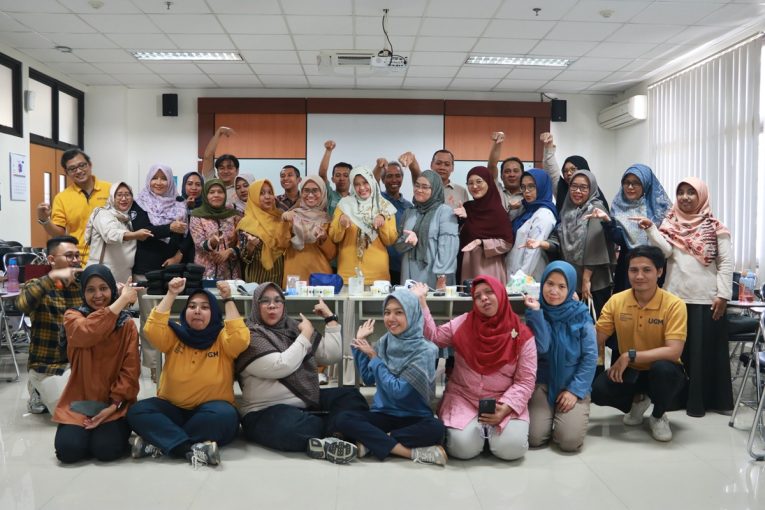
The Faculty of Psychology, Universitas Gadjah Mada (UGM), strengthened its Integrated Health Development Post (Pos Pembinaan Terpadu/Posbindu) services through a Posbindu Cadre Training session attended by administrative staff at Room D-402, Faculty of Psychology UGM, on Friday, July 24. The training was organized to increase the number of Posbindu cadres in response to the growing need for health screening services within the faculty.
The training featured Dr. Novrida, AAK., from Gadjah Mada Medical Center (GMC), who provided participants with guidance on the examination procedures and the use of Posbindu screening equipment. She explained that the screening begins with anthropometric measurements taken while standing, including height, weight, and waist circumference. This is followed by blood pressure measurement in a seated position and blood chemistry tests covering blood glucose, cholesterol, and uric acid levels.
“The first thing to do when conducting a blood test is not to immediately wipe the patient’s skin with alcohol. We need to identify the patient first, and then prepare them for the examination,” said Dr. Novrida.
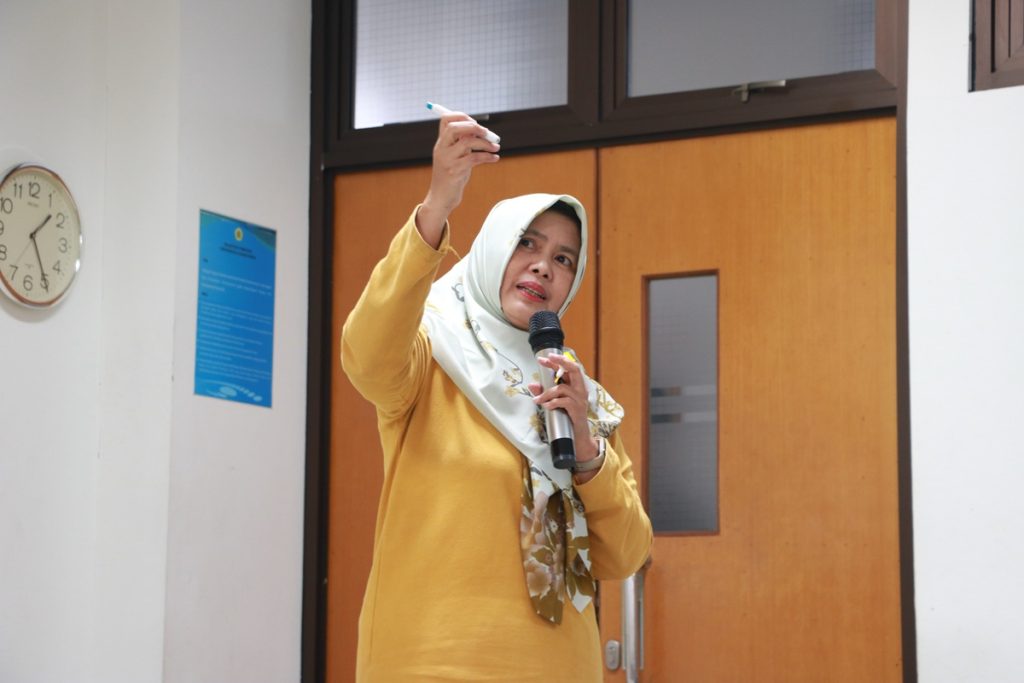
In addition to explaining the examination procedures, Dr. Novrida reminded cadres to replace the lancet needle every time they attend to a new participant to prevent the risk of infection transmission, such as hepatitis. She also advised them to allow the alcohol used to clean the skin to dry completely before collecting a blood sample to ensure accurate test results.
She also explained how to interpret examination results that cannot be read by the device.
“That means there is an error. It does not mean the uric acid level is extremely low and therefore cannot be detected. The test needs to be repeated,” she explained.
During the session, Dr. Novrida also explained the normal ranges for blood glucose, cholesterol, uric acid, and blood pressure as references for cadres when conducting screenings. She emphasized that test results from participants who have not been fasting tend to be higher. Therefore, when necessary, the examination should be repeated after fasting to obtain more accurate results.
In addition to learning the technical aspects of health screening, participants were also trained to use the digital recording system Posbindu.id, presented by Andreas Tri Setiawan, S.Kom.
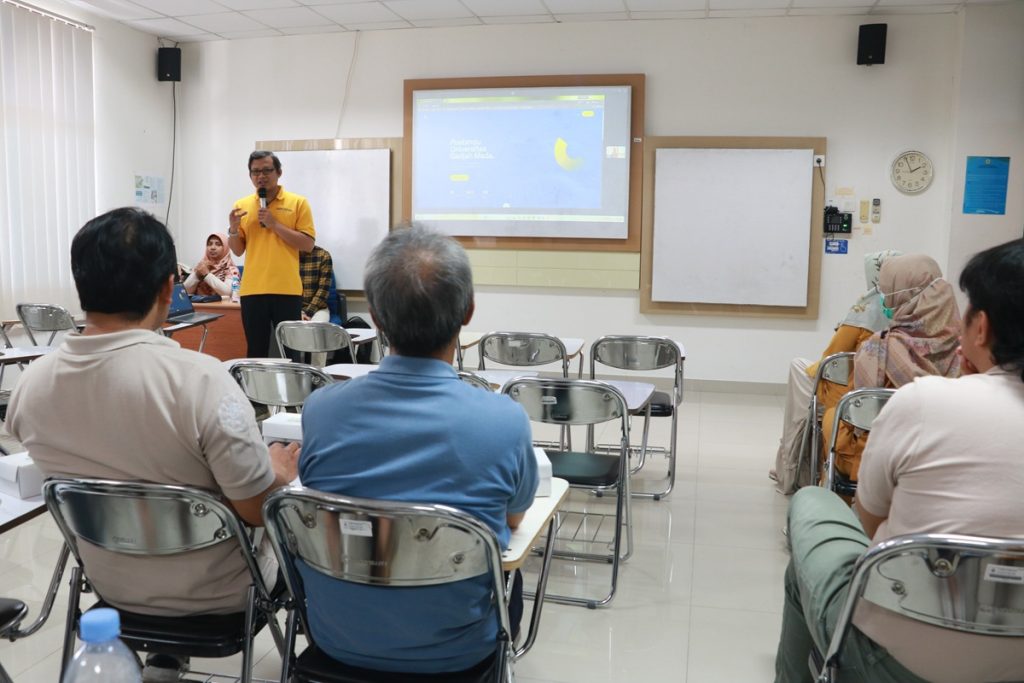
“In the past, we used small paper records, which could easily get lost, and when we needed to find them again, we might not know where the paper was. With this system, both organizers and participants benefit greatly,” said Andreas.
The system replaces paper-based manual record-keeping, allowing examination results to be documented more securely and integrated. Each data entry automatically generates a participant’s health status category, such as pre-hypertension status, based on predetermined reference data.
Andreas emphasized the importance of accuracy when cadres enter data into the system, noting that data-entry errors had occurred during previous Posbindu activities.
“What should have been two hundred became two thousand. That would make the data invalid,” he said.
He added that, ideally, each blood chemistry testing device should be operated by one examination officer and one administrative officer to maintain data accuracy.
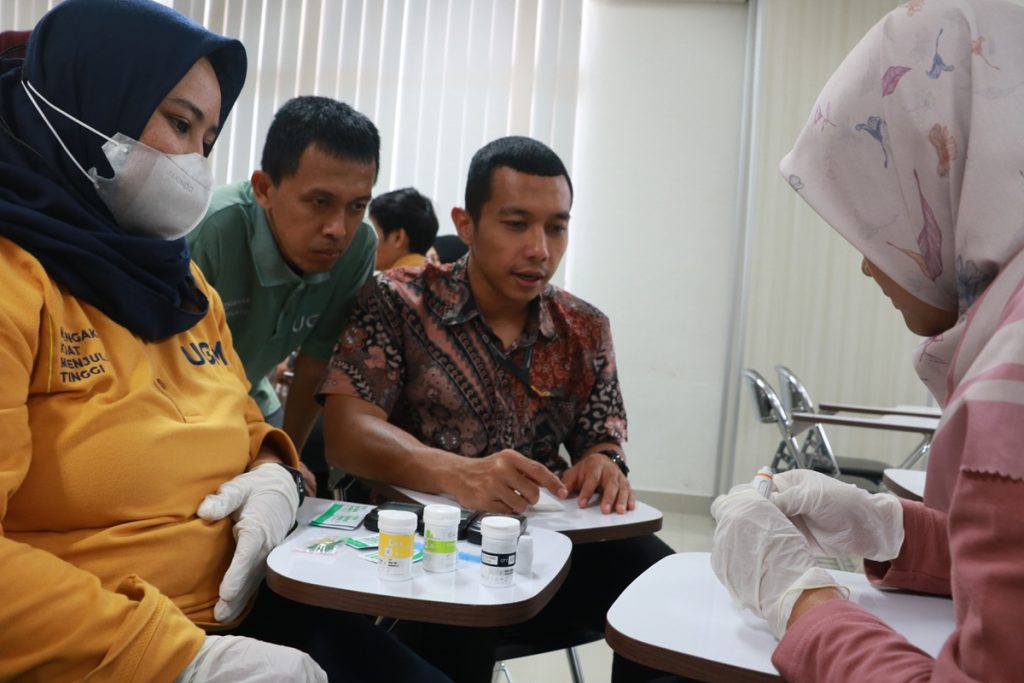
To conclude the training, participants practiced the entire examination process in pairs, starting with anthropometric measurements and blood pressure checks, followed by blood chemistry testing. They also entered the examination results into the Posbindu.id system. The hands-on practice provided the prospective cadres with essential preparation before they begin their duties at the next Posbindu session.
Writer & Photos: Erna Tri Nofiyana