
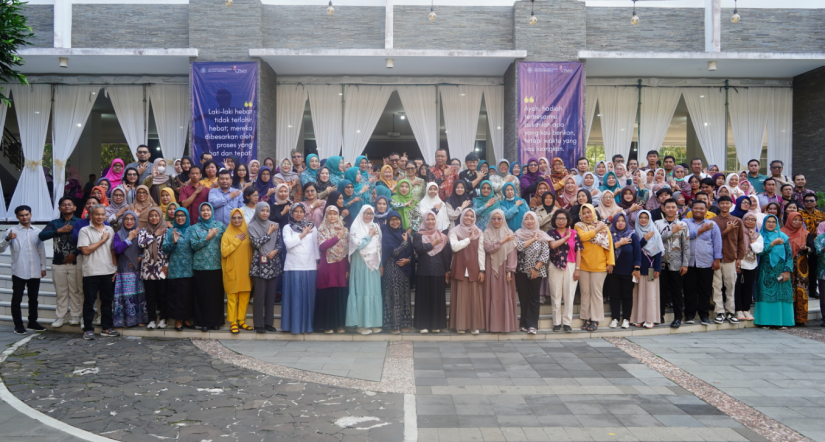
The Faculty of Psychology, Universitas Gadjah Mada (UGM), through its Center for Public Mental Health (CPMH), collaborated with the Special Region of Yogyakarta Representative Office of the National Population and Family Planning Agency (BKKBN) to organize a seminar commemorating National Family Day 2026 on Friday (July 3).
The seminar was held in a hybrid format, taking place onsite at Hall D-100, Faculty of Psychology UGM, and online via Zoom. It attracted more than 500 participants, including members of the public and stakeholders from across Yogyakarta.
Titled “A Shoulder to Cry On: Staying Strong Together, Growing Together, Bringing Fathers into the Family,” the seminar emphasized the importance of fathers’ active involvement in family life. The event also served as part of the Road to the International Short Course on Psychology (ISCP) 2026, which will be held this August.
The seminar featured G.K.B.R.A.A. Paku Alam, Vice Chair of the Family Welfare Movement (PKK) Team of the Special Region of Yogyakarta, as the keynote speaker. She was joined by three distinguished academics and practitioners: Prof. Dr. Avin Fadilla Helmi, M.Si., Professor at the Faculty of Psychology UGM; Cahyadi Takariawan, S.Si., Apt., founder of the Wonderful Family Institute and family counselor; and Diana Setiyawati, S.Psi., MHSc., Ph.D., Psychologist, Head of the Center for Public Mental Health, Faculty of Psychology UGM.
“A father’s presence should not only be measured by quantity but also by quality,” said G.K.B.R.A.A. Paku Alam.
In her keynote address, G.K.B.R.A.A. Paku Alam highlighted the influence of Javanese cultural values on parenting. She explained that fathers play three essential roles: providing a sense of security, creating warmth within the family, and supporting children in making decisions. She also acknowledged mothers who take on dual responsibilities by fulfilling both maternal and paternal roles.
“No family is perfect, but a family that supports one another can provide children with a strong foundation of security and moral values,” she said.
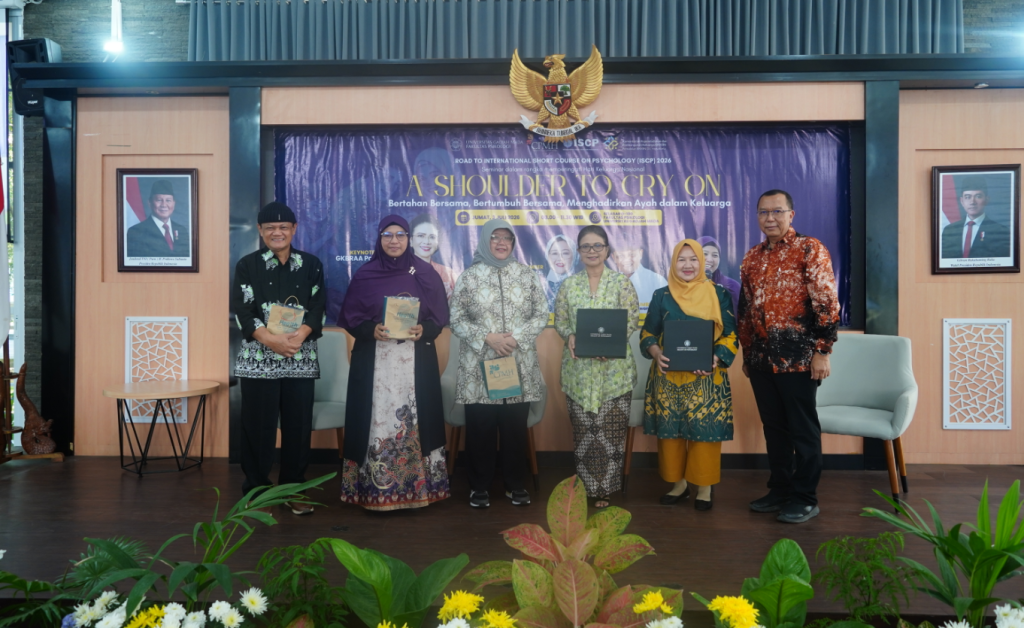
Following the keynote session, the seminar continued with a panel discussion featuring the three invited speakers. In the first session, Prof. Avin Fadilla Helmi shared her insights on the importance of father figures beyond biological relationships, including the role of members of the extended family when a biological father is absent.
“Not every father is present because of blood ties; some become fathers because they choose to be present,” Avin emphasized.
She also discussed the growing challenge of phubbing in the digital era, where parents become overly absorbed in their smartphones and unintentionally neglect interactions with their children. According to Avin, this behavior can reduce the quality of parent-child relationships, making it essential for parents to be more mindful and fully engaged during family interactions.
The seminar then continued with Cahyadi Takariawan, who highlighted the importance of strengthening public awareness in supporting families through contemporary parenting challenges.
Cahyadi explained that in Indonesia, where society is deeply influenced by religious values, family resilience is built upon faith, a shared vision of the afterlife, motivation to worship, and the pursuit of God’s blessings. In addition, healthy marital relationships are nurtured through emotional attachment, effective family leadership, mutual happiness, and respect for each family member’s autonomy.
The final session was delivered by Diana Setiyawati, who emphasized that supporting father involvement is also the responsibility of the state.
“Not only must fathers be present, but the state must also be present,” Diana stated.
She stressed the need for changes in attitudes, social norms, and supportive policies and facilities that enable fathers to participate more actively in family life.
Diana also compared Indonesia’s situation with Australia’s approach, where fathers are increasingly encouraged to move beyond the traditional breadwinner role and become active caregivers through sustained government investment in family development.
“Our goal is to help ensure that public funding is also invested in building the future,” Diana said.
She added that although Indonesia possesses substantial resources, challenges remain in determining development priorities. Strategic allocation of public funding is needed to effectively support family well-being and children’s development.
Participants showed great enthusiasm during the question-and-answer session, engaging in lively discussions and gaining new perspectives on the role of fathers and parenting dynamics in the digital age.
The seminar concluded by reaffirming that building healthy families requires collaboration, effective communication, and the active presence of both parents. A father’s role extends beyond physical presence—it is reflected in the quality of support, warmth, and guidance that fosters a child’s sense of security.
Writer: Arrasya Aninggadhira
Editor: Erna Tri Nofiyana