
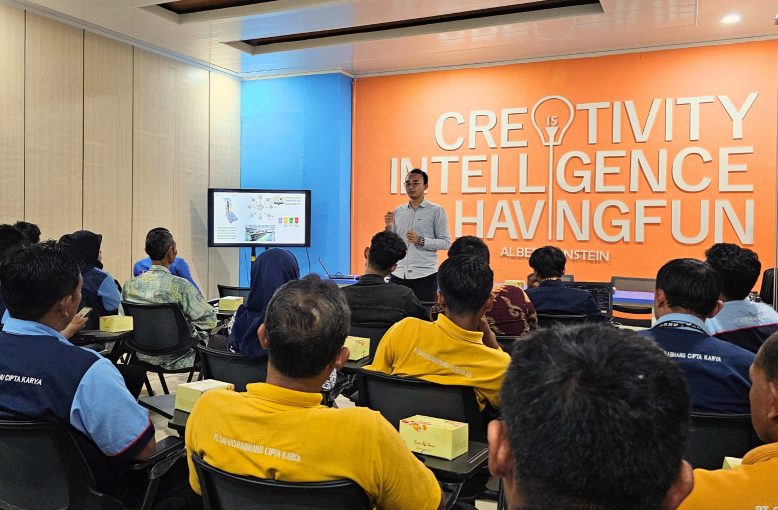
The Faculty of Psychology at Universitas Gadjah Mada (UGM) held a training session on the use of Internet of Things (IoT)-based waste scales on Tuesday (July 28) in Room B-112, Faculty of Psychology UGM. The activity was part of the Sustainability Campus Action (SCA) program and the UGM Waste Management Task Force’s initiative to standardize waste generation measurement across all faculties and work units within the university. The Faculty of Psychology has been using the IoT-based waste scale since May 12, 2026, making this session part of the Task Force’s ongoing technical assistance.
The session was attended by representatives of the SCA Team, the Facilities Team, and outsourced cleaning staff of the Faculty of Psychology UGM. The speaker was Dr. Ir. Thomas Oka Pratama, S.T., M.Eng., IPP., a lecturer in the Department of Nuclear Engineering and Engineering Physics, Faculty of Engineering UGM, who is also a member of the UGM Waste Management Task Force. He was accompanied by fellow Task Force members Yasir Abdulaziz, Muhammad Irfan Abdillah, and Alif Hikmah Kumara Zhali.
In her opening remarks, Head of the Administrative Office of the Faculty of Psychology UGM, Umi Widyaningsih, S.Pd., M.Acc., explained that the session aimed to establish a shared understanding among faculties regarding the proper use of the IoT-based waste scales.
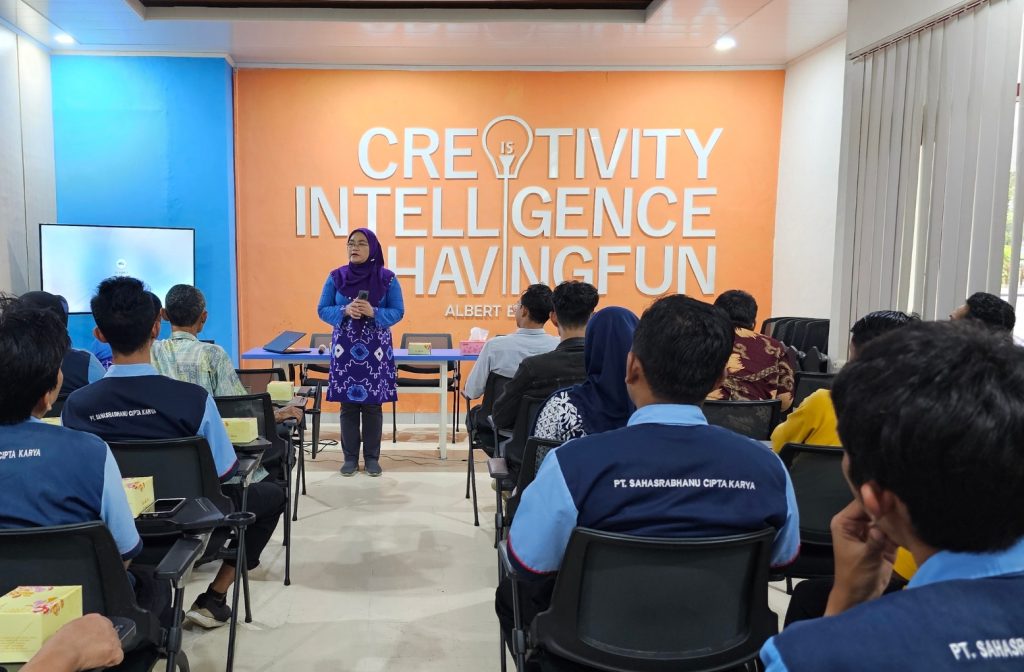
“The goal is for every faculty to have the same understanding of how to use the scales properly and accurately,” she said.
Thomas explained that waste generation data collected by faculties had previously relied largely on estimates, making it prone to inaccuracies.
“We want the recorded waste generation to truly reflect the actual amount produced by each faculty,” he said.
The IoT-based scales enable each faculty to record the exact weight of waste generated every day, categorized into four types: organic or food waste, recyclable or dry inorganic waste, residual waste, and sweeping or yard waste (such as leaves).
Thomas added that the data also contribute to university sustainability assessment indicators, meaning that accurate faculty-level data help improve UGM’s overall performance in university rankings.
Technically, the system consists of a 7-inch LCD display, a microcomputer unit, LAN and USB connectors, and operates on a 220-volt power supply. Weighing data are automatically synchronized with the UGM network via Wi-Fi or LAN connection and displayed on a centralized dashboard accessible to each faculty.
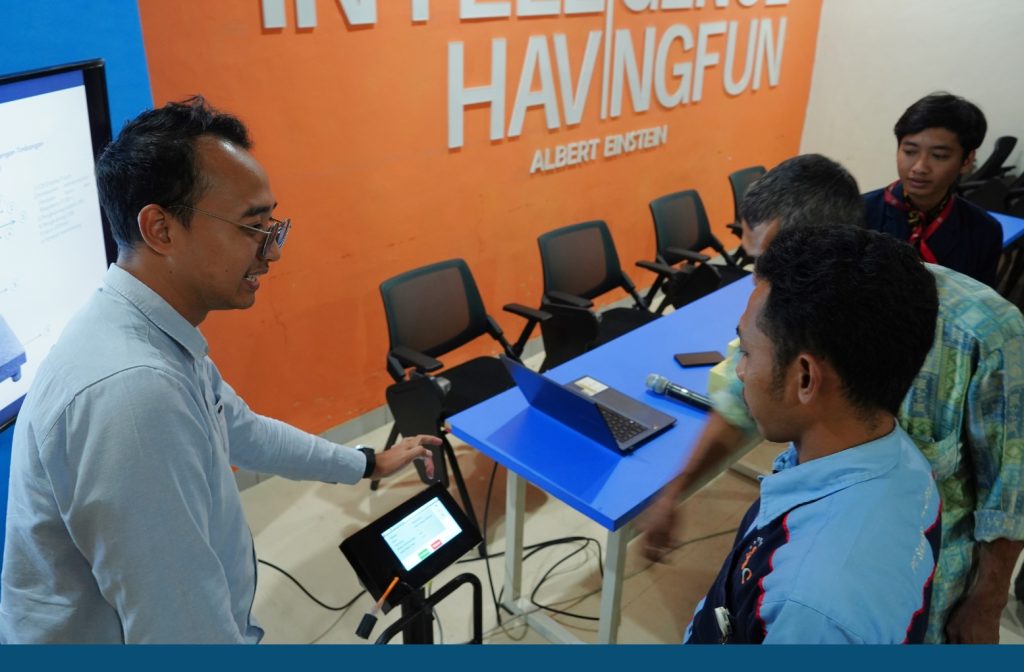
The recording system is divided into two categories: incoming waste, which records all waste collected at designated collection points, and outgoing waste, which records waste transported off campus or sold to recycling collectors. The difference between these two figures represents the volume of waste managed independently by the faculty.
Thomas commended the Faculty of Psychology for separating plastic bottles and cardboard for sale to recycling collectors as part of its independent waste management efforts. According to dashboard data covering May to July 2026, organic waste accounted for the largest share of waste generated in May, while the proportion of inorganic waste increased in June and July.
Regarding proper waste segregation, Thomas acknowledged that this remains a common challenge across all faculties.
“This is still our homework across every faculty,” he remarked.
He encouraged every faculty to issue reminders to lecturers, administrative staff, students, and all building users to sort their waste according to category before disposal.
Author: Erna Tri Nofiyana
Photo: Hanif