
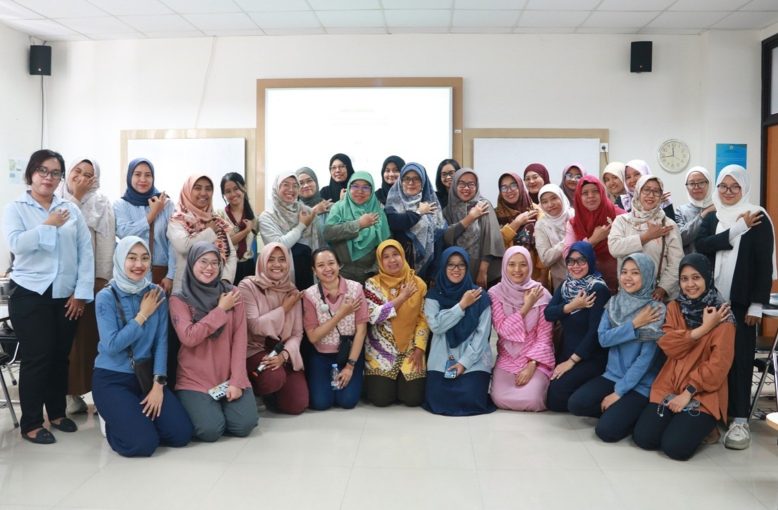
The Faculty of Psychology at Universitas Gadjah Mada (UGM) equipped its administrative staff with the knowledge and skills to serve as Safe Adults and First Aiders for colleagues and students in need of initial psychological support. Organized through a collaboration between the Faculty’s Health Promoting University (HPU) program and the Center for Public Mental Health (CPMH), the training was held in Room D-402, Faculty of Psychology UGM, on Friday (July 24).
In his opening remarks, the Vice Dean for Finance, Assets, and Human Resources of the Faculty of Psychology UGM, Dr. Sumaryono, M.Si., Psikolog, emphasized that mental health training should be based on actual needs rather than following trends.
“Every training program should begin with a proper training needs analysis. It should never be conducted simply because it is trending or without careful consideration,” said Sumaryono.
He also encouraged CPMH to develop practical simulation-based evaluation methods to ensure that participants not only understand the material but are also able to apply it effectively in real workplace situations.
Through a session delivered by Nurul Kusuma Hidayati, M.Psi., Psikolog, participants were introduced to the concept of a Safe Adult—someone who can foster a sense of safety for themselves and others without necessarily having a background in clinical psychology.
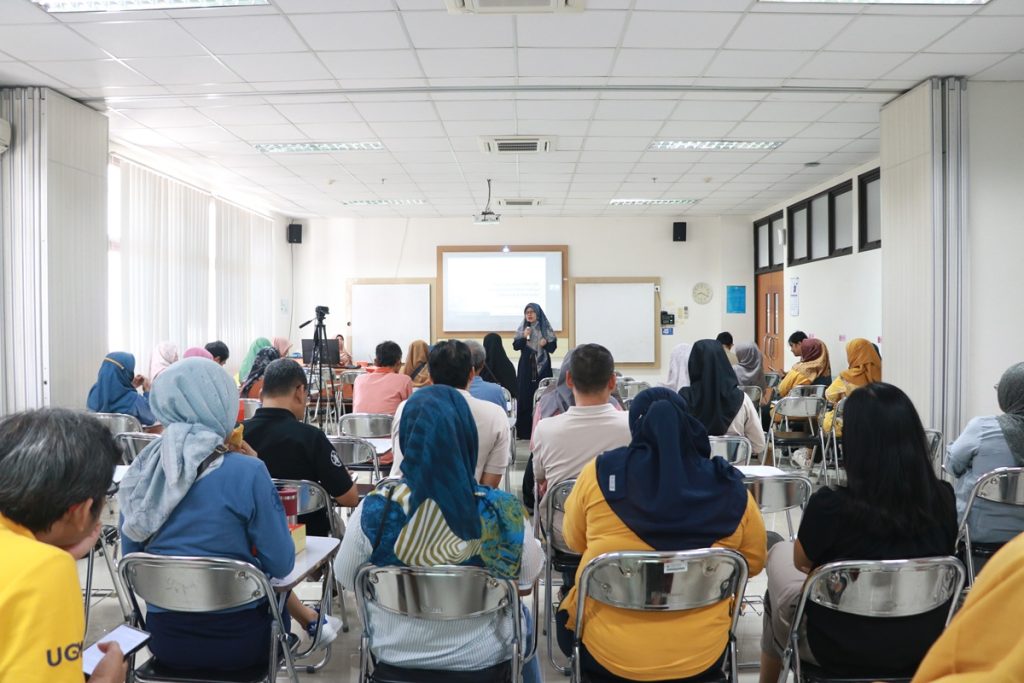
Nurul explained that stress is inherently neutral and experienced by everyone. However, it can become problematic when individuals lose awareness of their own condition because they habitually wear a “mask” in the workplace. According to her, recognizing one’s own mental state and seeking help when needed is a sign of courage rather than weakness.
“People who understand their own condition and know when to seek help are, in fact, courageous,” she said.
She then introduced the Look, Listen, Link framework as a simple approach to providing Psychological First Aid. Look involves recognizing changes in physical condition or behavior in oneself and others. Listen emphasizes being fully present and listening attentively without distractions. Link refers to connecting individuals who need support with their families, supervisors, or professional services such as psychologists.
Nurul also stressed that the role of a first aider has clear limitations. Participants were advised to immediately refer individuals to mental health professionals if they observe any of six critical indicators: self-harm, harm toward others, experiences of violence, suicidal thoughts or attempts, severe anxiety or hysteria, and substance abuse.
The importance of understanding these professional boundaries was reinforced during the debriefing session led by Wirdatul Annisa, M.Psi., Psikolog, at the end of the training.
“Our role is to help people regain their ability to cope—we are not expected to solve all of their problems,” Wirdatul explained.
Throughout the training, participants also learned several psychological stabilization techniques that can be applied both individually and while supporting others. These included the 4-4-4-4 breathing technique, the 5-4-3-2-1 grounding method (using the five senses to identify surrounding objects), the STOP technique (Stop, Take a Breath, Observe, Proceed), and emotion labeling (naming emotions).
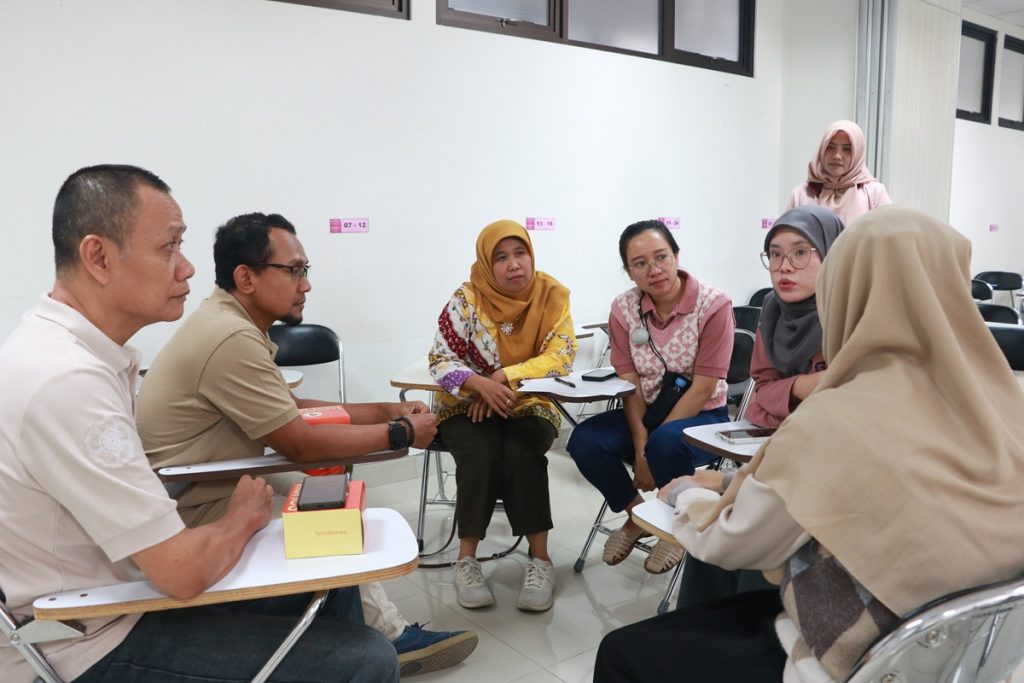
Participants then practiced these techniques through hands-on simulations facilitated by Anggit Nursasmito, S.Psi. They were divided into seven groups that rotated through seven different simulation stations, spending 10–15 minutes at each. During every rotation, two or three participants acted as first aiders while the others observed before switching roles.
The simulation scenarios reflected situations commonly encountered in university and workplace settings, including academic pressure, declining work motivation, work–family role conflict, and unequal workload distribution within teams.
Writer & Photos: Erna Tri Nofiyana