
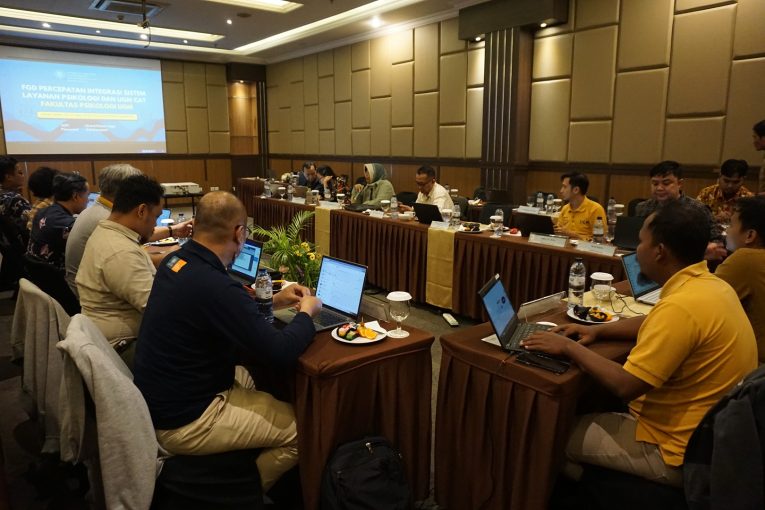
The Faculty of Psychology held a Focus Group Discussion (FGD) to accelerate the integration of psychological service systems and GMST Mandiri on Friday (10/4) and Saturday (11/4) at Grand Rohan Hotel, Yogyakarta. This event is a strategic step to answer the digital development demands.
This FGD involved multiple stakeholders, including Direktorat Teknologi Informasi (DTI UGM), the system development team, Direktorat Keuangan (Ditkeu), and units that use the service, including UKP, UPKM, Career Centre, and Laboratorium Psikodiagnostika. The collaboration aims to align system needs and accelerate the integration of data across units.
The discussion forum discusses the development of a system that is integrated, efficient, and able to support various needs of the service unit. One of the core focuses is the development of the Gadjah Mada Scholastic Test (GMST) application. These developments are intended to support an effective and standardised administration of tests.
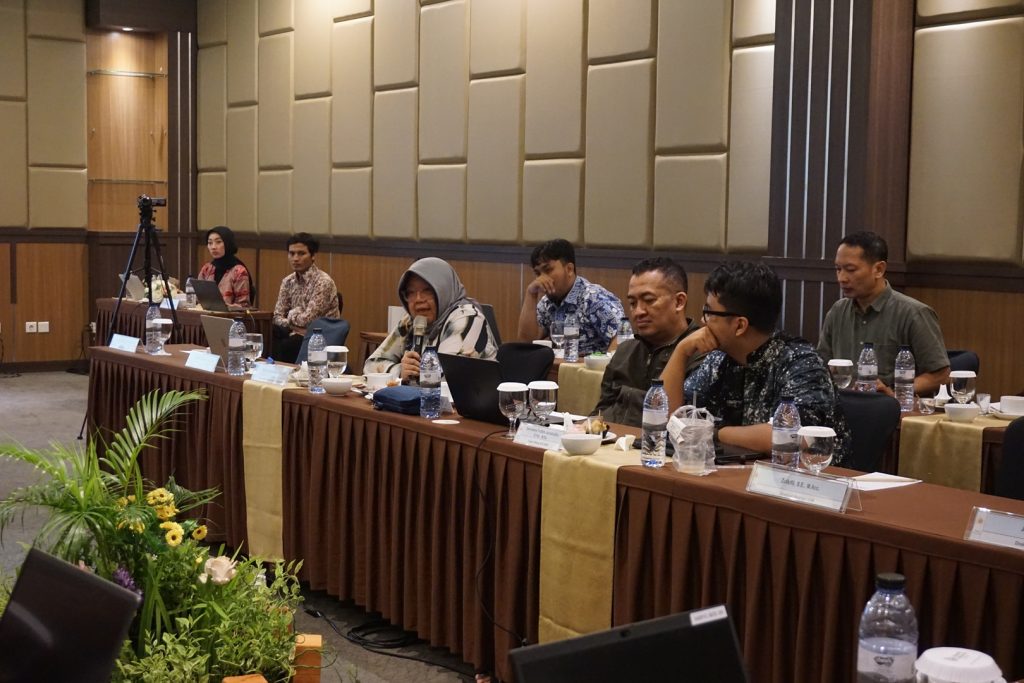
Aside from that, the Faculty of Psychology planned to open the GMST Reguler service to the public. With that said, the integration of the system through an adequate service portal is needed, especially in the process of registration, payment, and certificate publication. The portal is scheduled to be open to the public on 12 May 2026 and will be managed by UPAP Psikologi UGM.
The FGD also highlighted the importance of strengthening the quality of psychological instruments through the development of the item bank. Every test item is expected to have a clear psychometric profile, so the quality is preserved. Old items are analysed using historical data, while the new items are tested through a pilot test or added to an existing test.
In response to this, the Dean of the Faculty of Psychology, Rahmat Hidayat, S.Psi., M.Sc., PhD, emphasised, “This system should not only serve as a service platform, but also as a hub for instrument development. The item bank needs to be updated regularly to prevent item leakage and ensure the quality of measurement”.
The forum also discussed preventive measures for leaked questions, and periodically developing the item variation. By adding and renewing the items every year, the system is expected to preserve the security and validity of the measurement.
Other than that, the FGD also encourages the integration of various test formats, particularly classical test models. The system is designed to be flexible, allowing it to accommodate a wide range of assessments, including personality tests, practicum needs, and even the development of graphic-based item formats. Ultimately, the goal is for the data generated to be accessible and beneficial for the entire academic community, supporting both research and teaching activities.
With Unit Pengembangan Alat Psikodiagnostika (UPAP) serving as the primary administrator, the system is structured to be utilised across multiple units, creating a continuous integration cycle that connects instrument development, assessment implementation, and data utilisation.
Through this FGD, the Faculty of Psychology reaffirms its commitment to building an integrated, adaptive, and quality-driven psychological service system to keep up with the demands of digital transformation in psychological assessment.
Writer: Arrasya Aninggadhira