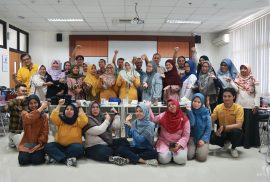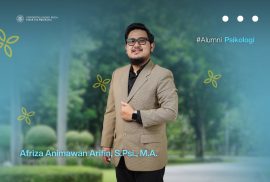

The Center for Public Mental Health (CPMH) at the Faculty of Psychology of Universitas Gadjah Mada held its regular program once again, the Online Lecture (Kulon), now in its 71st edition. Carrying the theme “Take It Slow: Healthy Ways to Manage Anxiety,” the event was conducted online via Zoom on Friday morning (24/4), from 09.00–10.30 WIB, and was moderated by Marsha Prifirani, S.Psi.
SDG 3: Good Health and Well-being
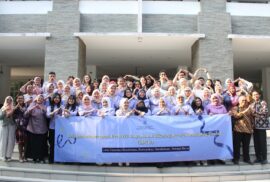
A total of 3,000 participants from across Indonesia took part in the Orientation on Psychological First Aid for Psychological Wounds (P3LP) in Schools for Guidance and Counseling (BK) teachers, held on Wednesday–Thursday, April 22–23, 2026, from 07.30–13.00 WIB. The event was conducted online via Zoom and live streamed on YouTube, as an effort to strengthen the role of schools in promoting mental health as well as enhancing the capacity of BK teachers to provide initial psychological support in crisis situations.
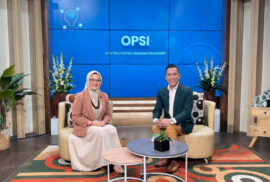
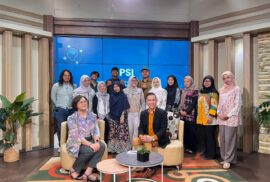
This topic was discussed in the latest episode of Obrolan Psikologi (OPSI), organized by the Faculty of Psychology at Universitas Gadjah Mada (UGM) in collaboration with TVRI Yogyakarta. Maria Gracia Amara Pawitra, S.Psi., M.Psi., Psychologist and lecturer at UGM, explained the phenomenon of violence committed by a partner or former partner, whether in dating relationships or marriage. Such violence can result in physical, psychological, and sexual harm for victims.
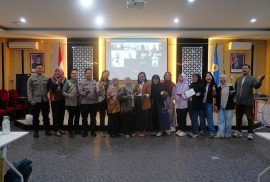
As part of efforts to strengthen a community-based mental health system, the Center for Public Mental Health (CPMH), Faculty of Psychology, Universitas Gadjah Mada (UGM), collaborated with the Department of Women’s Empowerment, Child Protection, and Population Control (DP3AP2) of the Special Region of Yogyakarta (DIY) in an activity titled “Strengthening Agents and Reporters (2P)” with the theme “Assistance for Domestic Violence Cases from a Psychological Perspective.” The event was held on Wednesday (8/4/2026), from 10:30 to 12:15 WIB, at the Nyi Ageng Serang 1 Meeting Room, DP3AP2 DIY.
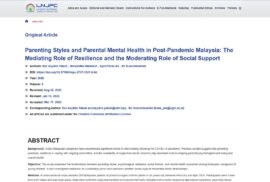
The Faculty of Psychology at Universitas Gadjah Mada (UGM) continues to strengthen its international academic network. This commitment was highlighted by the visit of Prof. Drs. Subandi, M.A., Ph.D., Psikolog , a prominent professor from the faculty, to Universiti Malaysia Terengganu (UMT) from April 6 to 9, 2026.
During this visit, Subandi served as a visiting professor and was warmly welcomed by the Dean of the Faculty of Business, Economics, and Social Development (FPEPS). This strategic meeting focused on bolstering institutional cooperation and discussing academic advancements relevant to both universities.
This topic is explored in the latest episode of OPSI: Obrolan Psikologi, presented by the Faculty of Psychology UGM in collaboration with TVRI Yogyakarta. In the third episode of OPSI this year, Istiana Tajuddin, S.Psi., M.Psi., student of the Doctoral Program in Psychology at Universitas Gadjah Mada (UGM), discusses the phenomenon of when home no longer feels like a place to return to.
YOGYAKARTA – Universitas Gadjah Mada (UGM) has partnered with the Indonesian Hypnosis Centre (IHC) to organize a Transpersonal Clinical Hypnotherapy certification training program. The training, attended by around 100 participants, aims to strengthen the position of hypnotherapy as a science-based mental health practice.
This idea is explored in the latest episode of OPSI: Obrolan Psikologi, presented by the Faculty of Psychology UGM in collaboration with TVRI Yogyakarta. In the first episode of OPSI this year, Lusiana Yashinta Ellysa Putri, S.Psi., M.Sc., a lecturer at the Faculty of Psychology at Universitas Gadjah Mada (UGM), discusses a popular phenomenon amongst many individuals in Indonesia.
Yogyakarta, March 4, 2026 — Amid growing attention to mental health, a collaborative study by researchers from the Faculty of Psychology at Universitas Gadjah Mada and The University of Melbourne highlights an often-overlooked aspect: the role of self-healing in the recovery of individuals who have lost someone to suicide in Indonesia.
Yogyakarta, February 26, 2026 – Psychological disorders such as post-traumatic stress disorder (PTSD) and dissociative symptoms (feeling “detached” from oneself) are common responses when individuals experience profound trauma. A recent international collaborative study has uncovered the dynamics of the relationship between complex post-traumatic stress disorder (CPTSD) and dissociative symptoms through a cross-cultural approach involving participants from Western and South Asian countries.