
This topic is explored in the latest episode of OPSI: Obrolan Psikologi, presented by the Faculty of Psychology UGM in collaboration with TVRI Yogyakarta. In the third episode of OPSI this year, Istiana Tajuddin, S.Psi., M.Psi., student of the Doctoral Program in Psychology at Universitas Gadjah Mada (UGM), discusses the phenomenon of when home no longer feels like a place to return to.
SDG 3: Good Health and Well-being
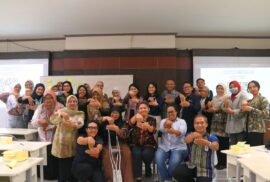
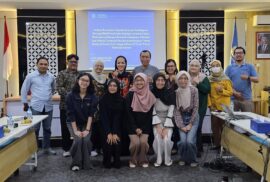
YOGYAKARTA – Universitas Gadjah Mada (UGM) has partnered with the Indonesian Hypnosis Centre (IHC) to organize a Transpersonal Clinical Hypnotherapy certification training program. The training, attended by around 100 participants, aims to strengthen the position of hypnotherapy as a science-based mental health practice.
This idea is explored in the latest episode of OPSI: Obrolan Psikologi, presented by the Faculty of Psychology UGM in collaboration with TVRI Yogyakarta. In the first episode of OPSI this year, Lusiana Yashinta Ellysa Putri, S.Psi., M.Sc., a lecturer at the Faculty of Psychology at Universitas Gadjah Mada (UGM), discusses a popular phenomenon amongst many individuals in Indonesia.
Yogyakarta, March 4, 2026 — Amid growing attention to mental health, a collaborative study by researchers from the Faculty of Psychology at Universitas Gadjah Mada and The University of Melbourne highlights an often-overlooked aspect: the role of self-healing in the recovery of individuals who have lost someone to suicide in Indonesia.
Yogyakarta, February 26, 2026 – Psychological disorders such as post-traumatic stress disorder (PTSD) and dissociative symptoms (feeling “detached” from oneself) are common responses when individuals experience profound trauma. A recent international collaborative study has uncovered the dynamics of the relationship between complex post-traumatic stress disorder (CPTSD) and dissociative symptoms through a cross-cultural approach involving participants from Western and South Asian countries.
The Faculty of Psychology at Universitas Gadjah Mada (UGM), through its Career Center, organized a Graduation Briefing for prospective undergraduate graduates of Period II Academic Year 2025/2026 on Monday (February 23), held online via Zoom Meeting. The event was attended by 59 undergraduate candidates, consisting of 52 regular program graduates and seven graduates from the International Undergraduate Program (IUP).
Yogyakarta, February 24, 2026 – Amid the rapid advancement of digital technology that enables people to stay constantly connected, loneliness has emerged as a new challenge for young generations. This phenomenon is highlighted in a recent study titled “A Multidimensional Predictive Model of Loneliness in Indonesian Generation Z,” published in the Jurnal Ilmiah Peuradeun.
The PREPARED Scale: Measuring the Psychological Preparedness of Indonesian Communities for Disasters
Yogyakarta, 3 February 2026 – A study entitled “The psychological preparedness of at-risk Indonesian communities to disaster (PREPARED) scale: Validation and norm development,” authored by Pradytia Putri Pertiwi et al. and published in Acta Psychologica (Vol. 262), provides an important contribution to the measurement of psychological preparedness for disasters among Indonesian communities. To date, disaster preparedness initiatives in Indonesia have largely emphasized physical and material aspects, while the psychological dimension has received relatively little attention, despite evidence showing that psychological preparedness is associated with better stress management and a reduced risk of post-disaster mental health problems.
Yogyakarta, 3 February 2026 – The rapid development of digital technology has transformed the way people work, interact, and live their daily lives. Behind the many conveniences it offers, an important question arises: how can well-being be maintained in an increasingly digital world? This question is explored by researchers from the Faculty of Psychology, Universitas Gadjah Mada (UGM), through a comprehensive study on digital well-being. The findings were published in the international journal Wellbeing, Space and Society (Elsevier) in an article entitled “Navigating Well-being in the Digital Era: A Scoping Review of Digital Well-being.” The study was authored by Sovi Septania, Avin Fadilla Helmi, and Haidar Buldan Thontowi.
Yogyakarta, 3 February 2026 – Type 2 diabetes mellitus remains a major public health challenge in Indonesia. Beyond medical treatment, the success of diabetes management is strongly influenced by patients’ ability to perform daily self-care. Responding to this need, a research team from the Faculty of Psychology, Universitas Gadjah Mada (UGM), has developed EduDiaCare, a diabetes education module specifically designed to align with the cultural context and living conditions of patients in Indonesia.