Arsip:

Academic Staff

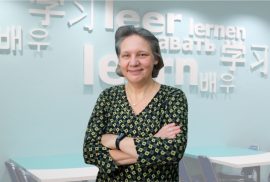
Prof. Dra. Kwartarini Wahyu Yuniarti, M.Med.Sc., Ph.D., Psikolog

Prof. Dra. Kwartarini Wahyu Yuniarti, M.Med.Sc., Ph.D., Psychologist is a prominent academic and psychologist in Indonesia. “Indigenous Psychology: It’s Time to Establish the Mainstream of Science from Our Homeland” is the inaugural speech for her professorship in 2013. She earned her Ph.D. from the University of Hamburg, Germany, which complements her strong educational background in psychology. She obtained her M.Med.Sc. degree from the University of Newcastle Australia and her Dra degree from the Faculty of Psychology at Universitas Gadjah Mada.

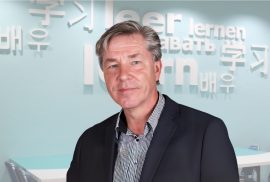
Prof. Dr. Sofia Retnowati, MS., Psikolog

Prof. Dr. Sofia Retnowati, MS., Psychologist, an expert in the field of Clinical Psychology with a long academic and professional track record. On September 12, 2011, Prof. Sofi officially received the title of professor with an inaugural speech titled “Community Health Center Psychologists: Needs and Challenges for the Clinical Psychology Profession in Indonesia.” Previously, she completed his undergraduate education at the Faculty of Psychology at Universitas Gadjah Mada (UGM) in 1978 and obtained a Master’s degree in Clinical Psychology from the same faculty in 1991. Her dedication and love for this field returned her to UGM to obtain a Doctorate in Clinical Psychology in 2005.

Prof. Drs. Subandi, M.A., Ph.D., Psikolog

Prof. Drs. Subandi, M.A., Ph.D., Psychologist is a prominent academic at the Faculty of Psychology, Universitas Gadjah Mada. (UGM). He has a strong educational background, holding a Doctorate in Psychology from the University of Adelaide, Australia, which he obtained in 2006 with a dissertation titled “Cultural Dimensions of Recovery from Psychotic Illness in Java.” Previously, he completed his undergraduate and master’s degrees at Universitas Gadjah Mada (UGM). In 2015, his professorial inauguration was titled “Mental Health in the Perspective of Culture and Religion.”

Adelia Khrisna Putri, S.Psi., M.Sc., Ph.D.

Adelia Khrisna Putri is an Assistant Professor at the Faculty of Psychology, Universitas Gadjah Mada, where her work centres on mental health, bereavement, and suicide prevention and postvention. She received her PhD from The University of Melbourne, where her dissertation, “Exploring Self-Healing in Suicide Bereavement: Lived Experiences and Postvention Resource Development in the Indonesian Context”, examined the lived experiences of Indonesians bereaved by suicide. That work led to the development of Healing After Loss, the first resource booklet for Indonesian suicide loss survivors co-designed with suicide loss survivors, mental health professionals, and faith leaders. She previously completed an MSc in Clinical Mental Health Sciences at University College London, and her undergraduate degree at the Faculty of Psychology, Universitas Gadjah Mada. Working through community-based participatory approaches, she translates the lived experience of survivors into resources that Indonesian communities can use directly. She is active in the Center for Public Mental Health and the Center for Indigenous and Cultural Psychology, and her teaching is grounded in clinical and social psychology.

Prof. Ajeng Juwita Puspitasari, Ph.D., LP, ABPP

Prof. Ajeng Juwita Puspitasari, PhD, LP, ABPP is a licensed clinical psychologist, board-certified by the American Board of Professional Psychology (ABPP), specializing in behavioral and cognitive therapies. She currently serves as a Clinical Professor and Director of Clinical Training in the Department of Psychology at the University of Wisconsin–Milwaukee. In addition, she is the founder and director of the Center for Evidence-Based Practice.

Prof. Puspitasari has expertise in evidence-based psychotherapy, particularly for depression, anxiety disorders, suicidal and self-harming behaviors, trauma, as well as perinatal mood and anxiety disorders. Her clinical approaches include Cognitive Behavioral Therapy (CBT), Acceptance and Commitment Therapy (ACT), Behavioral Activation (BA), Exposure Therapy, and Dialectical Behavior Therapy (DBT). She is known for emphasizing culturally sensitive, recovery-oriented, and research-informed care.

Beyond her clinical practice and academic leadership, she is actively involved in publishing scientific articles, providing professional training, clinical supervision, and international consultation. Much of her work focuses on bridging the gap between research and mental health practice to ensure that effective interventions are more widely accessible.

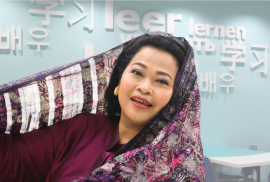
Dr. Anke Karl

Dr. Anke Karl is the strategic lead of the Clinical Psychology Research Group and the Mood Disorders Centre, and serves as Director of the MDC Biobehavioural Lab. Her research examines how biological and behavioral processes shape posttraumatic stress disorder (PTSD) and recovery from psychological trauma. She also works on applying biopsychological knowledge to improve therapies for people with PTSD and depression.

She trained in clinical psychology and behavioural neuroscience at Humboldt University Berlin, where she received the Young Scientist Award in 2001. She later completed postdoctoral research at the Center for Stress and Anxiety Disorders, University at Albany, before holding academic positions in Germany and the UK prior to joining the University of Exeter.

Her work has been published in leading journals and supported by major research funders. She also completed advanced training in cognitive behavioural therapy, is a licensed Psychological Psychotherapist, and practices as an associate therapist at the AccEPT Clinic.

Prof. Byron J. Good, Ph.D

Prof. Byron J. Good, B.D., Ph.D., is a Professor of Medical Anthropology in the Department of Global Health and Social Medicine at Harvard University, as well as in the Department of Anthropology at the same institution. He earned his Ph.D. in anthropology from University of Chicago. As a medical, psychiatric, and psychological anthropologist, Prof. Good has a longstanding interest in how diverse cultural forms shape the manifestation, experience, and response to serious mental illness across societies such as Indonesia, Iran, Turki, Amerika Serikat, and Tiongkok.

Over nearly five decades, Prof. Good has conducted extensive research focusing primarily on serious mental illness and community-based care across diverse settings, including Yogyakarta, as well as post-conflict and post-tsunami contexts in Aceh. Since 1996, he has been actively engaged in research in Indonesia, particularly through ethnographic studies of Javanese culture and its relationship to mental health. In addition, he has developed both quantitative and ethnographic research on the early phases of psychotic disorders, longitudinal trajectories of acute psychosis, and the effectiveness of mental health services.

Prof. Erminia Colucci, Ph.D.

Prof. Erminia Colucci is a Professor of Visual Psychology and Global & Cultural Mental Health in the Department of Psychology at Middlesex University London, as well as an Affiliate Professor at Gadjah Mada University (UGM), Indonesia. She is known for her contributions to research on human rights, mental health, suicide prevention, and domestic violence. Professor Erminia’s research focuses on the direct experiences of individuals with mental disorders and suicidal behavior, particularly in low- and middle-income countries, among ethnic minority groups, and refugees.

Dr. Marijtje Jongsma, M.L.A.

Dr. Marijtje Jongsma, M.L.A., is an Associate Professor at the Behavioural Science Institute and the School of Psychology at Radboud University, Nijmegen, the Netherlands. She is a leading expert in neuropsychology and cognitive neuroscience, particularly focusing on the use of electroencephalography (EEG) to explore mental processes and human behavior. Beyond her role at Radboud, Dr. Jongsma is also actively involved with the Faculty of Psychology at Universitas Gadjah Mada (UGM) in Indonesia, contributing to academic collaborations and advancing research in neuroscience and psychology. Her engagement with UGM exemplifies her commitment to fostering international academic partnerships and supporting the global exchange of scientific knowledge. In her dual capacity as a lecturer and researcher, Dr. Jongsma contributes to the development of interdisciplinary studies that bridge psychology and neuroscience. She is also engaged in academic governance as a member of the Representative Council of the Faculty of Social Sciences at Radboud University, further shaping academic policies and supporting the evolution of higher education. Dr. Jongsma's expertise continues to drive advancements in cognitive neuroscience, while her international collaborations help promote cross-border scientific research and education.

Prof. Theo Bouman

Prof. Bouman is actively involved in teaching at the undergraduate, master’s, and research master’s levels at the University of Groningen. He also serves as the coordinator for the psychology module in the Erasmus Mundus Master’s program NOHA (Network on Humanitarian Action), which includes a partnership with Gadjah Mada University in Yogyakarta, Indonesia.