
Can a game reveal your true personality?
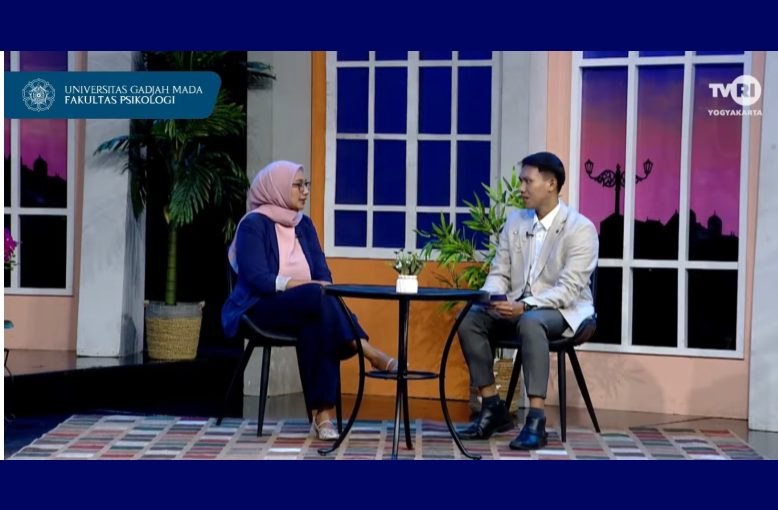
This idea is explored in the latest episode of OPSI: Obrolan Psikologi, presented by the Faculty of Psychology UGM in collaboration with TVRI Yogyakarta. In the second episode of OPSI this year, “Main Game Ketahuan Sifat Aslinya? Ngobrol Bareng Kreator ‘The Lost Treasure’,” Dr. Fadillah, an alumnus of the Doctorate of Psychology at UGM, introduces a mobile-based psychological assessment that moves beyond traditional testing methods.
It is undeniable that psychological workplace assessments are a crucial part of human resource management and development. These are used to understand and evaluate personality, cognitive ability, behaviour, and emotional intelligence of employees or candidates. Assessment of psychology is strongly linked to key behavioural domains, including task performance and organisational citizenship. However, in a workplace assessment, people expect to be tested.
“…when people want to apply for a job or are taking a job test, they know they’re looking for someone who’s committed, responsible, consistent, and well-groomed. That’s what makes people want to appear that way. Well, if you use a questionnaire, it’s really easy to answer,” Dr. Fadillah explains.
This pushes a shift toward improving the validity and integrity of the test data. This innovation utilises gameplay to measure fundamental personality traits. It aims to capture core characteristics such as discipline, responsibility, and decision-making that are relevant to the workplace.
“…so people don’t feel like they’re being tested, and they don’t know what they’re being tested on. So what comes out is what’s natural.“
This innovation aims to mitigate the social desirability bias frequently encountered in conventional assessments. Social desirability bias is the individual tendency to provide responses that will present themselves positively by aligning their answers with socially accepted norms. By fostering an immersive environment through gameplay, the distinction between a ‘testing scenario’ and ‘natural behaviour’ becomes blurred, enabling researchers to capture personality profiles that are both more authentic and objective.
Through an adventure-based storyline, players are required to make a series of decisions, such as choosing between a safe route and a risky shortcut. These decisions are then analysed systematically to build a personality profile, revealing patterns that are often difficult to capture through questionnaires. According to Dr. Fadillah, the output of the game simulation reveals whether a person’s specific personality trait is strong, moderate, or weak.
Compared to traditional assessments, this gamified approach offers:
- Authentic Behavioural Simulation
Unlike traditional questionnaires that rely on self-reporting, this approach measures personality through real-life actions. By focusing on simulated behaviour, the system can capture an individual’s true characteristics through spontaneous decisions in the game, rather than simply consciously controlled responses.
- Mitigation of Social Desirability Bias
The game format creates an environment where participants do not feel like they are being evaluated. This effectively mitigates the respondent’s tendency to manipulate answers to appear “good,” resulting in much more honest, objective data that reflects their true psychological profile.
- Enhanced Engagement and Reduced Fatigue
The immersive game environment helps address respondent fatigue, which often occurs with long, repetitive conventional tests. By maintaining user focus and engagement, data quality is maintained, and the risk of careless responses is minimised.
- Digital-Native Accessibility
As a mobile-based platform, this innovation is highly relevant to the habits of today’s Gen Z workforce. This approach ensures the assessment is more accessible, inclusive, and adaptable to the lifestyles of younger generations in the modern workplace.
While the results are promising, Dr. Fadillah emphasises that such tools must remain carefully structured. The game should be engaging, but not overly entertaining, so the data remains valid and reliable.
Looking ahead, this innovation has the potential to reshape psychological assessment, not only in recruitment but also in areas such as medical intervention and personal development.
Ultimately, this approach highlights a fundamental shift: understanding people not only through what they say, but through what they do when they don’t feel observed.
Don’t miss other engaging episodes of OPSI: Obrolan Psikologi!
Watch the live replay and stay updated with insightful discussions on psychology through the Faculty of Psychology UGM Knowledge Channel:
Watch the full episode on YouTube!
Note:
Let us know if there are specific psychology topics you would like us to explore on the talk show Obrolan Psikologi (OPSI), a collaboration between the Faculty of Psychology UGM and TVRI Yogyakarta.
Share your suggestions and feedback regarding OPSI through the following channels:
Email: humas.psikologi@ugm.ac.id
Instagram: @psikologiugm
Author: Arrasya Aninggadhira