Amid the growing role of social media in shaping public opinion, a new study from the Faculty of Psychology at Universitas Gadjah Mada (UGM) examines how political conversations in digital spaces influence young people’s emotions and political engagement. Drawing on the dynamics of discourse on platforms like TikTok—from sympathetic support to aggressive commentary, the research seeks to understand users’ response patterns to political conversations of differing tones and characteristics. This study is funded by the 2025 Research Grant of the Faculty of Psychology UGM and is situated within the Cyberpsychology theme at the Center for Indigenous and Cultural Psychology (CICP).
SDG 16: Peace Justice & Strong Institutions
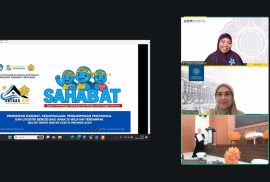
Pradytia Putri Pertiwi, S.Psi., Ph.D, a lecturer at the Faculty of Psychology, Universitas Gadjah Mada (UGM), was invited by the American Red Cross through the Global Disaster Preparedness Center (GDPC) to present her research on the inclusivity and actionability of volcanic hazard Early Warning Systems (EWS) for persons with disabilities (PwD) in Indonesia. The study has been published on the GDPC–American Red Cross platform under the title “Inclusivity and actionability of volcanic hazard Early Warning System in Indonesia: Perspectives of persons with disabilities”.
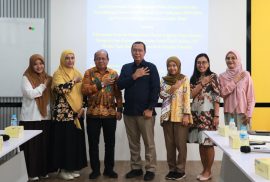
The Faculty of Psychology, Universitas Gadjah Mada (UGM), has established a partnership with the Civil Service and Human Resource Development Agency (BKPSDM) of Balikpapan City. The signing of the cooperation agreement took place at the Faculty of Psychology UGM on Wednesday (September 24).
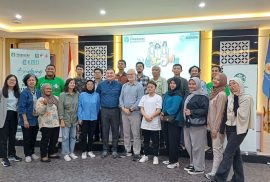
The Faculty of Psychology at Universitas Gadjah Mada, through the Center for Indigenous and Cultural Psychology (CICP), organized an Internal Workshop: Youth Studies, Livelihood, Relational Wellbeing, and Scoping Review on September 10–12, 2025, at ARTOTEL Yogyakarta. This activity is part of the U’Good Grant Program: Vulnerable Youth – Navigating Meaningful Livelihood in Indonesia, an international research initiative that aims to explore social relations, community support, and the role of institutions in helping vulnerable youth achieve meaningful livelihoods. The UGood Grant Program is supported by the National Research Foundation (South Africa), Fondation Botnar (Switzerland), and the Human Sciences Research Council (South Africa).
A proud achievement comes from the Faculty of Psychology at Universitas Gadjah Mada. The book Tazkiya Therapy in Islamic Psychoteraphy by Dr. Bagus Riyono, M.A., Psikolog, originally published by the renowned international publisher Routledge, has now been officially released in Russian. This work, born from the thoughts of an Indonesian academic, is a testament that local ideas can be appreciated and recognized on the global stage.
Yogyakarta – The Center for Public Mental Health (CPMH) of the Faculty of Psychology at Universitas Gadjah Mada (UGM) once again held an online lecture titled “Childhood Footprints: The Impact of Adverse Experiences and the Power of Positive Experiences” on Friday (07/18). The theme explored how childhood experiences affect mental health and how positive experiences can counteract painful ones.
In her presentation, Diana Setiyawati, S.Psi., MHSc., Ph.D., Psychologist, a lecturer at UGM’s Faculty of Psychology, emphasized that life stress alone is not the sole cause of mental disorders.
The Faculty of Psychology at Universitas Gadjah Mada (UGM) once again held its graduation ceremony for postgraduate programs alongside the professional oath-taking for psychologists of Academic Year 2024/2025, Term IV. A total of 44 graduates were officially released during the event held at Hall D of the Faculty of Psychology UGM on Wednesday (July 23). This number includes three graduates from the Doctoral Program in Psychology, 19 from the Master of Psychology Program, and 22 from the Professional Master of Psychology Program.
The Faculty of Psychology at Universitas Gadjah Mada (UGM), in collaboration with TVRI Yogyakarta, has once again presented the “OPSI: Obrolan Psikologi” (Psychology Talks) program, now in its eighth episode, aired on Tuesday, July 15, 2025, from 3:00 to 4:00 PM. This episode carried the theme “Online Gender-Based Violence: Caring Together, Protecting Together”, discussing the importance of collective awareness in preventing sexual violence in digital spaces. This increasingly prevalent issue in the digital age must continue to be addressed through public education efforts to help create online environments that are safe, equitable, and free from gender-based violence.
Online Gender-Based Violence (OGBV) is a form of sexual violence that occurs in digital spaces and can affect anyone—from children to the elderly. This was conveyed by Lucia Peppy Novianti, M.Psi., Psychologist, a clinical and forensic psychologist as well as a doctoral candidate at UGM. She emphasized that individuals with low digital literacy, especially children and adolescents, are particularly vulnerable to becoming victims because they may not yet be able to distinguish between original content and manipulated content such as AI-edited materials.
The Center for Public Mental Health (CPMH) at Universitas Gadjah Mada (UGM) held an online lecture (kulon) titled “Teening Your Parent: Embracing Differences, Cultivating Understanding” on Friday (July 4). The webinar, attended by students, university undergraduates, professionals, and educators, aimed to offer insights for teenagers on how to communicate effectively with their parents to avoid unnecessary conflict.
The first speaker, Nurul Kusuma H., M.Psi., Psychologist, presented an in-depth discussion on the psychological development of adolescents aged 10 to 16, and also explored differences in parenting styles between Generation X and Generation Y parents. These two topics served as a foundational framework for participants to understand perspectives from both sides—teenagers and their parents.
Yogyakarta, July 2, 2025 — Rigid bureaucratic culture has long been a challenge to fostering innovation in Indonesia’s State-Owned Enterprises (SOEs). A recent study by a team of researchers from Universitas Gadjah Mada (UGM) reveals that authentic leadership and psychological empowerment are critical drivers of innovation within SOEs in Indonesia.
Published in the high-impact international journal Journal of Open Innovation: Technology, Market, and Complexity (Scopus Q1, CiteScore 14.0), the study was authored by Indrayanti, Nida Ulfia, and Taufik Hidayat. The article, titled “From Bureaucracy to Innovation: How Authentic Leadership and Empowerment Drive Change in Indonesian State-Owned Enterprises,” argues that innovation is not just about structure—but about genuine leadership and empowered employees.