Yogyakarta, February 24, 2026 – Amid the rapid advancement of digital technology that enables people to stay constantly connected, loneliness has emerged as a new challenge for young generations. This phenomenon is highlighted in a recent study titled “A Multidimensional Predictive Model of Loneliness in Indonesian Generation Z,” published in the Jurnal Ilmiah Peuradeun.
Yogyakarta, 10 February 2026 – How do public memory and attention toward disasters change over time? This question is at the center of a recent study involving researchers from the Faculty of Psychology, Universitas Gadjah Mada (UGM), in an international research project on the dynamics of collective disaster cognition in the digital era.
The study was published in the Journal of Disaster Research in an article titled “Spatio-Temporal Dynamics of Collective Disaster Event Cognition in the Digital Sphere: A Long-Term Case Study of the Great East Japan Earthquake (2011–2025).” The research is a collaboration between scholars from Japan and Indonesia, with academics from UGM’s Faculty of Psychology participating as members of the author team.
The PREPARED Scale: Measuring the Psychological Preparedness of Indonesian Communities for Disasters
Yogyakarta, 3 February 2026 – A study entitled “The psychological preparedness of at-risk Indonesian communities to disaster (PREPARED) scale: Validation and norm development,” authored by Pradytia Putri Pertiwi et al. and published in Acta Psychologica (Vol. 262), provides an important contribution to the measurement of psychological preparedness for disasters among Indonesian communities. To date, disaster preparedness initiatives in Indonesia have largely emphasized physical and material aspects, while the psychological dimension has received relatively little attention, despite evidence showing that psychological preparedness is associated with better stress management and a reduced risk of post-disaster mental health problems.
Yogyakarta, 3 February 2026 – The rapid development of digital technology has transformed the way people work, interact, and live their daily lives. Behind the many conveniences it offers, an important question arises: how can well-being be maintained in an increasingly digital world? This question is explored by researchers from the Faculty of Psychology, Universitas Gadjah Mada (UGM), through a comprehensive study on digital well-being. The findings were published in the international journal Wellbeing, Space and Society (Elsevier) in an article entitled “Navigating Well-being in the Digital Era: A Scoping Review of Digital Well-being.” The study was authored by Sovi Septania, Avin Fadilla Helmi, and Haidar Buldan Thontowi.
Yogyakarta, 3 February 2026 – Type 2 diabetes mellitus remains a major public health challenge in Indonesia. Beyond medical treatment, the success of diabetes management is strongly influenced by patients’ ability to perform daily self-care. Responding to this need, a research team from the Faculty of Psychology, Universitas Gadjah Mada (UGM), has developed EduDiaCare, a diabetes education module specifically designed to align with the cultural context and living conditions of patients in Indonesia.
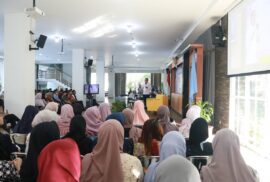
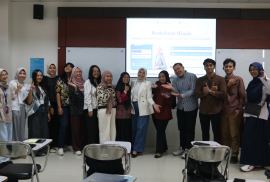
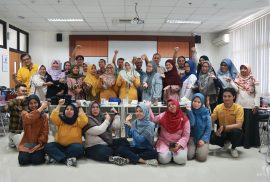
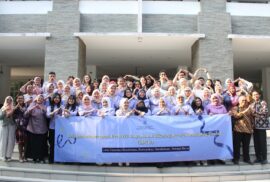
Bangli, Bali — In commemoration of the 61st Anniversary of the Faculty of Psychology, Universitas Gadjah Mada (UGM), the UGM Faculty of Psychology Alumni Association (Kapsigama) organized a series of Alumni Day 2026 activities at Pasraman Gurukula, Bangli, Bali, on 31 January–1 February 2026. The event combined an alumni gathering with community service in the form of mental health promotion for students at Pasraman Gurukula.
Yogyakarta, 30 January 2026 – A recent study entitled “Is low self-compassion characteristic of ICD-11 complex PTSD? Further investigation using cross-cultural samples,” authored by Hong Wang Fung, …, Riangga Novrianto, et al., and published in the Journal of Psychiatric Research (Vol. 193), examines the association between self-compassion and symptoms of complex posttraumatic stress disorder (complex PTSD) as classified in ICD-11. Complex PTSD is a trauma-related disorder that has been relatively recently recognized in ICD-11 and is reported to have a higher prevalence than standard PTSD.
Isnan Hidayat’s journey reflects consistency and dedication in navigating the field of psychology. A 2009 cohort alumnus of the Undergraduate Psychology Program at Universitas Gadjah Mada, he completed his bachelor’s degree in 2013. From his early years in university, his academic path was closely tied to active involvement in community service and education.
Yogyakarta, January 26, 2026 – Online shopping is not only an economic activity but also involves complex cognitive processes. However, identifying cognitive load during online shopping activities is often inconsistent. To address this, a research team from Universitas Gadjah Mada (UGM) has developed an Artificial Intelligence (AI)-based technology to classify users’ cognitive load levels while shopping online.
The Faculty of Psychology at Universitas Gadjah Mada (UGM) carried out an aptitude assessment and counseling program for Grade XI students of SMA Taruna Nusantara Magelang. This activity aimed to obtain an overview of students’ interests and potential talents as a foundation for personal development and future educational planning.