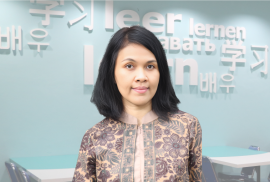
This topic is explored in the latest episode of OPSI: Obrolan Psikologi, presented by the Faculty of Psychology UGM in collaboration with TVRI Yogyakarta. In the third episode of OPSI this year, Istiana Tajuddin, S.Psi., M.Psi., student of the Doctoral Program in Psychology at Universitas Gadjah Mada (UGM), discusses the phenomenon of when home no longer feels like a place to return to.
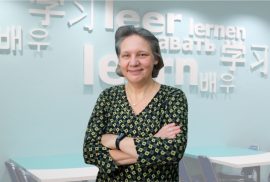
Dr. Marijtje Jongsma, M.L.A., is an Associate Professor at the Behavioural Science Institute and the School of Psychology at Radboud University, Nijmegen, the Netherlands. She is a leading expert in neuropsychology and cognitive neuroscience, particularly focusing on the use of electroencephalography (EEG) to explore mental processes and human behavior. Beyond her role at Radboud, Dr. Jongsma is also actively involved with the Faculty of Psychology at Universitas Gadjah Mada (UGM) in Indonesia, contributing to academic collaborations and advancing research in neuroscience and psychology. Her engagement with UGM exemplifies her commitment to fostering international academic partnerships and supporting the global exchange of scientific knowledge. In her dual capacity as a lecturer and researcher, Dr. Jongsma contributes to the development of interdisciplinary studies that bridge psychology and neuroscience. She is also engaged in academic governance as a member of the Representative Council of the Faculty of Social Sciences at Radboud University, further shaping academic policies and supporting the evolution of higher education. Dr. Jongsma's expertise continues to drive advancements in cognitive neuroscience, while her international collaborations help promote cross-border scientific research and education.
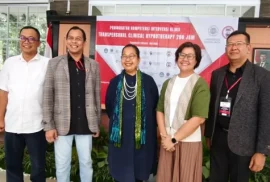
YOGYAKARTA – Universitas Gadjah Mada (UGM) has partnered with the Indonesian Hypnosis Centre (IHC) to organize a Transpersonal Clinical Hypnotherapy certification training program. The training, attended by around 100 participants, aims to strengthen the position of hypnotherapy as a science-based mental health practice.
This idea is explored in the latest episode of OPSI: Obrolan Psikologi, presented by the Faculty of Psychology UGM in collaboration with TVRI Yogyakarta. In the second episode of OPSI this year, “Main Game Ketahuan Sifat Aslinya? Ngobrol Bareng Kreator ‘The Lost Treasure’,” Dr. Fadillah, an alumnus of the Doctorate of Psychology at UGM, introduces a mobile-based psychological assessment that moves beyond traditional testing methods.
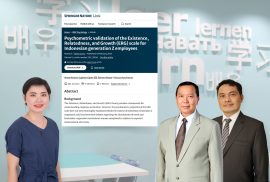
Yogyakarta, March 16, 2026 — The shifting characteristics of the workforce, now increasingly dominated by Generation Z, have created the need for a new understanding of work motivation within organizational settings. In response, researchers from Universitas Gadjah Mada have developed and validated a psychological instrument to measure the motivational needs of Generation Z employees in Indonesia.
Elga Andriana, S.Psi., M.Ed., Ph.D. is an academic at the Faculty of Psychology, Universitas Gadjah Mada (UGM). Dr. Elga holds a Bachelor of Psychology degree (S.Psi.) from the Faculty of Psychology at Universitas Gadjah Mada, a Master of Education (M.Ed.) from Monash University, Australia, and a Ph.D. from the University of Sydney, Australia. With a strong educational background, she demonstrates her dedication to pursuing knowledge and expertise in the fields of psychology and education.
Dr. Yuli Fajar Susetyo, S.Psi., M.Si., Psychologist completed his undergraduate, master’s, and doctoral education at Gadjah Mada University. Dr. Yuli’s expertise includes the field of Psychology, specifically Educational Psychology and Adolescent Psychology. He has research interests and experience in character development, motivation, learning, mental health in schools, self-leadership, self-regulation in learning, and well-being. His expertise is not only beneficial in the academic realm but also has practical applications in improving the quality of education, student resilience and character, learning practices, and mental health in schools, demonstrating his dedication to the development of character, achievement, and student well-being.
Ammik Kisriyani, S.Psi., M.A., is an academic and researcher in the field of Educational Psychology and Development. She is currently pursuing a doctoral degree at the University of Sydney, Australia. Ammik completed her undergraduate studies at the Faculty of Psychology, Universitas Gadjah Mada, Yogyakarta, and then continued her master’s education at the University of Birmingham, England, focusing on Inclusion and Special Educational Needs.
Anjuni Khofifah Hanifi, S.Psi., M.Sc. is a graduate of the Psychology Program at Universitas Gadjah Mada and holds a Master of Science with Merit in Human Cognitive Neuropsychology from the University of Edinburgh. Her academic interests focus on cognitive and neuropsychological processes underlying decision-making and health-related behaviour, particularly within the framework of applied cognitive science. She has experience in quantitative and experimental research, including studies on framing effects in health promotion and examinations of the role of grandparental involvement in children’s psychological well-being using a life-span developmental approach. In addition, she has been involved in teaching assistance, laboratory-based research, and interdisciplinary academic activities at the Faculty of Psychology, Universitas Gadjah Mada.
Lusiana Yashinta Ellysa Putri, S.Psi., M.Sc., is an academic and researcher in psychology with strong interests in educational psychology, cultural psychology, youth issues, and indigenous psychology. She completed her undergraduate studies at the Faculty of Psychology, Universitas Gadjah Mada, and later pursued a Master’s degree in Educational Studies at the University of Glasgow, United Kingdom.
Throughout her professional career, Lusiana has been actively involved in various research and program management initiatives at both national and international institutions. She has served as a project manager in an international research project focusing on vulnerable youth in Indonesia.
As an academic, she is committed to actively contributing to the development of research that is both scientifically rigorous and contextually relevant to Indonesian society.