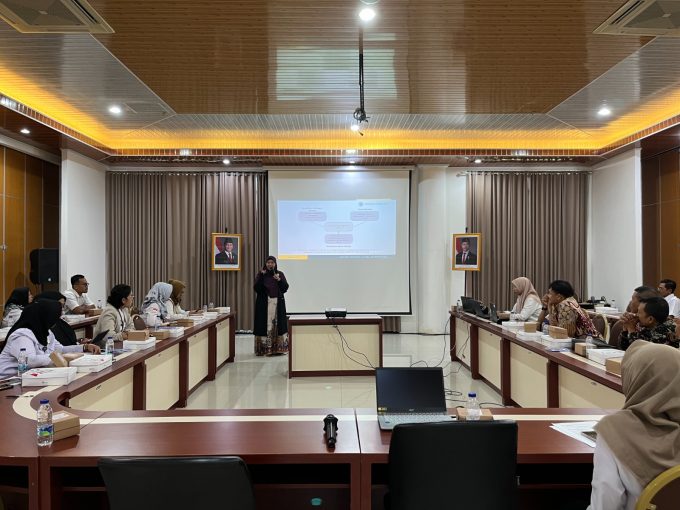
As part of efforts to strengthen a community-based mental health system, the Center for Public Mental Health (CPMH), Faculty of Psychology, Universitas Gadjah Mada (UGM), collaborated with the Department of Women’s Empowerment, Child Protection, and Population Control (DP3AP2) of the Special Region of Yogyakarta (DIY) in an activity titled “Strengthening Agents and Reporters (2P)” with the theme “Assistance for Domestic Violence Cases from a Psychological Perspective.” The event was held on Wednesday (8/4/2026), from 10:30 to 12:15 WIB, at the Nyi Ageng Serang 1 Meeting Room, DP3AP2 DIY.
This activity was a follow-up to a prior audience between DP3AP2 DIY and the Regional Office of the Ministry of Law of DIY regarding Legal Aid Post (Posbankum) services in the region. Through this program, it is expected that stronger synergy will be built between legal and psychological aspects in handling cases of domestic violence (DV). Participants included legal counselors and representatives of paralegals from Legal Aid Posts across various villages in DIY. Village leaders, such as village heads and representatives of the Family Welfare Movement (PKK), who have been directly involved in handling cases of domestic violence and divorce, were also present. Their involvement is crucial given their role as the frontline responders to cases occurring in the community.
The event began with remarks from the Head of DP3AP2 DIY, followed by the main presentation and a discussion session. As the main speaker, Diana Setiyawati, S.Psi., MHSc., Ph.D., Psikolog from the Center for Public Mental Health (CPMH), Faculty of Psychology UGM, delivered a presentation on handling domestic violence cases from a psychological perspective. She emphasized the importance of a Trauma-Informed Intervention approach, which not only focuses on administrative or legal resolution but also pays attention to the psychological impact experienced by victims.
According to her, understanding psychological impacts is key to ensuring that interventions do not worsen the victim’s condition, as each survivor has different emotional dynamics, experiences, and recovery needs. Support providers are expected to recognize psychological responses and offer safe, empathetic support for DV survivors.
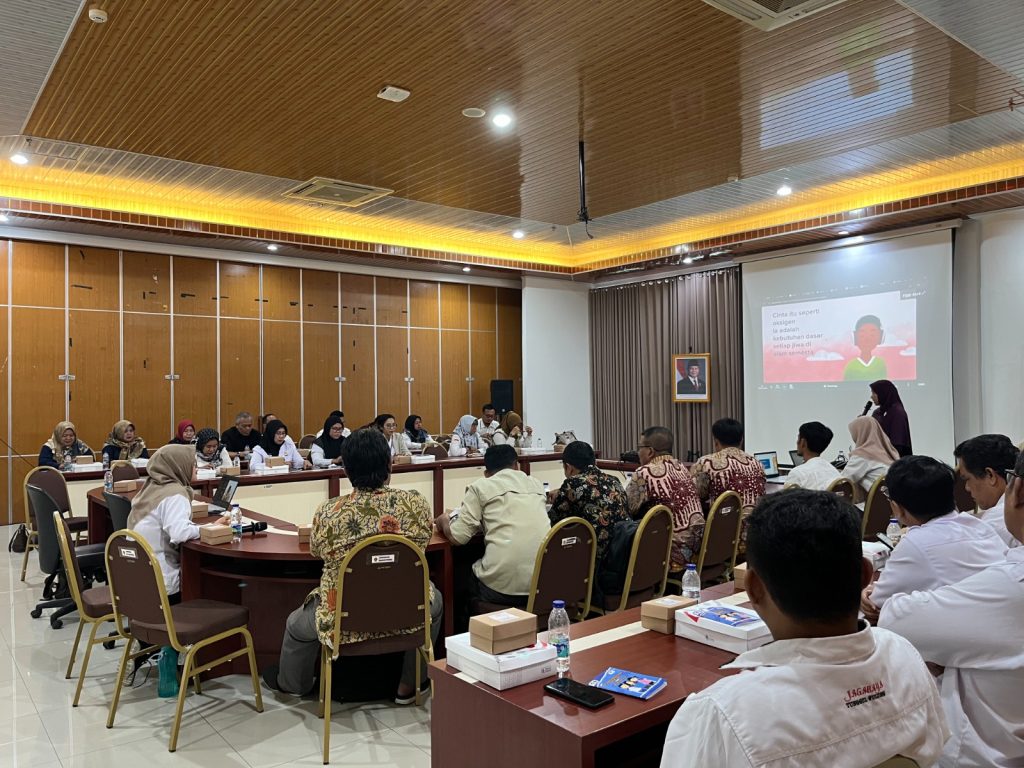
In addition, the speaker highlighted the importance of building family resilience through preventive approaches. Since the participants include village officials who have access to village funding management, they are encouraged to develop preventive programs that strengthen family relationships and reduce the risk of violence. This approach is considered more sustainable than focusing solely on post-incident case handling.
CPMH’s involvement in this activity is also part of its advocacy efforts for strengthening community-based mental health systems. Through collaboration with stakeholders, including government agencies and community leaders, CPMH promotes an integrated response system. This effort aligns with CPMH’s broader mission to strengthen a collaborative and sustainable community-based mental health system.
Through this activity, CPMH emphasizes the importance of strengthening the capacity of agents and reporters (2P) as part of building a more comprehensive community-level response system for domestic violence. Cross-sector collaboration involving local government, professionals, and community leaders is key to establishing a system that is not only responsive to cases but also sensitive to psychological impacts and oriented toward sustainable prevention.
Author: Nurul Hidayati
Photo Source: Documentation of DP3AP2 DIY