
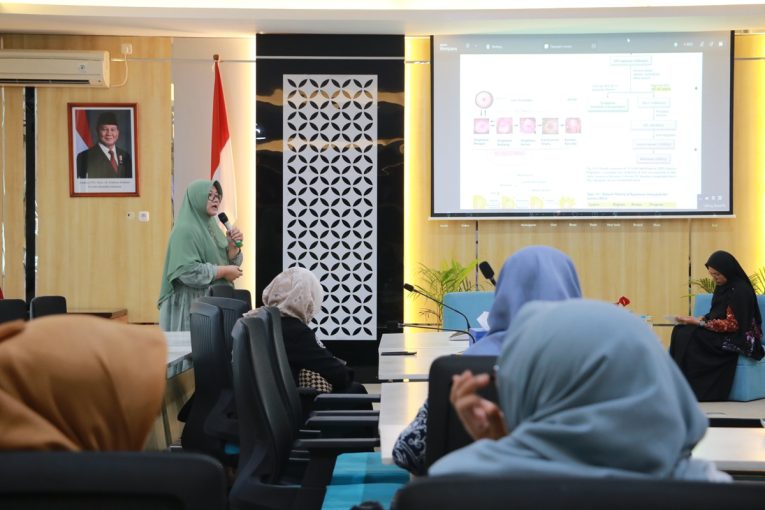
The Faculty of Psychology at Universitas Gadjah Mada, through its Health Promoting University (HPU) program, held a Reproductive Health Seminar titled “Cervical Cancer Education and Prevention” on Tuesday (12/5) at Room A-203 of the Faculty of Psychology UGM and online via Zoom. The event was attended by 47 participants consisting of female lecturers, educational staff, and students.
The seminar was organized to increase the academic community’s understanding of cervical cancer prevention and the importance of early detection as a measure to protect reproductive health.
The Vice Dean for Finance, Assets, and Human Resources of the Faculty of Psychology UGM, Dr. Sumaryono, M.Si., Psychologist, emphasized that reproductive health has broad implications not only for individuals, but also for future generations. He also shared a personal experience that strengthened his awareness of the issue.
“I once cared for my older sister who had cervical cancer, and the treatment process was very long. Thankfully, she has now recovered completely from stage 4B to being entirely cancer-free,” he said.
He added, “This is an important issue related to reproduction, and it is actually not only about women themselves because when we discuss reproductive health, scientifically it is also connected to future generations.”
The seminar featured dr. Widya Dwi Astuti, Sp.OG., an obstetrics and gynecology specialist from the Rumah Sakit Akademik UGM, who explained that cervical cancer remains one of the most serious health threats for women in Indonesia.
“Every two hours, an Indonesian woman dies from cervical cancer, and Indonesia has the highest number of cervical cancer cases in Asia,” she explained.
Widya stated that cervical cancer is generally caused by infection with the Human Papilloma Virus (HPV) and develops over a long period, making it highly preventable through vaccination, education, and routine screening.
“From the initial exposure until it causes severe damage, it takes at least fifteen years,” she explained.
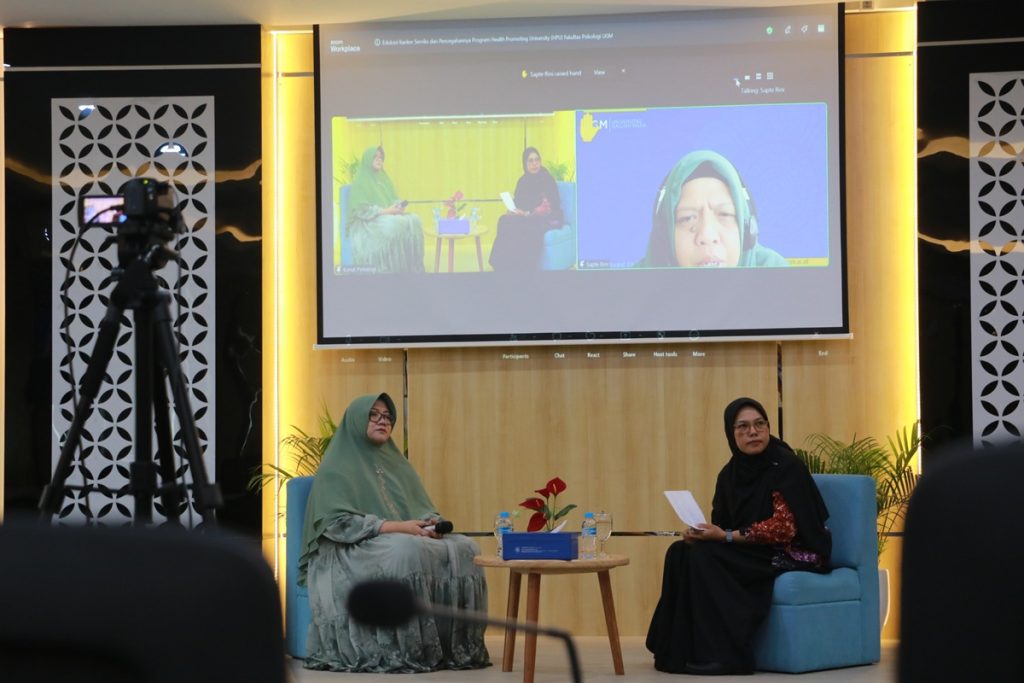
Seminar participants also gained knowledge regarding risk factors, early symptoms, and early detection methods such as the IVA test, Pap Smear, HPV DNA testing, and co-testing as preventive measures. Widya stressed the importance of early screening.
“The earlier it is detected, the better the prognosis,” she emphasized.
Moving forward, the HPU program of the Faculty of Psychology UGM hopes that similar activities can continue to be held regularly as part of efforts to maintain the health of the academic community.
Writer: Erna Tri Nofiyana
Photo: Erna Tri Nofiyana