
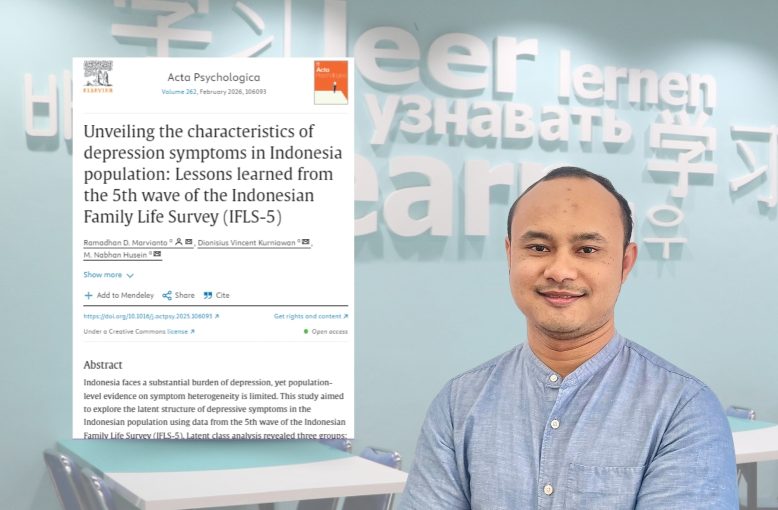
Yogyakarta, January 12, 2026. A recent study titled “Unveiling the characteristics of depression symptoms in Indonesia population: Lessons learned from the 5th wave of the Indonesian Family Life Survey (IFLS-5)” by Ramadhan D. Marvianto et al., published in Acta Psychologica (262), provides a comprehensive overview of the diversity of depression symptoms within the Indonesian population. This research responds to the high burden of depression in Indonesia, which has not been matched by population-level empirical evidence regarding symptom heterogeneity.
The study utilized data from the 5th wave of the Indonesian Family Life Survey (IFLS-5) and applied a latent class analysis approach to identify underlying patterns of depressive symptoms. The analysis revealed three risk groups: high risk (16.8%), moderate risk (36.9%), and low risk (46.3%). Demographic factors such as age, gender, and marital status emerged as significant predictors, with older individuals, married individuals, and women more likely to fall into higher-risk groups.
Interestingly, despite differences in symptom severity, all groups reported relatively high levels of hope and happiness. This finding suggests the influence of cultural values—particularly collectivism and religiosity—on emotional expression in Indonesian society. In addition, cognitive symptoms such as feeling overwhelmed and difficulty concentrating were identified as early indicators of depression. The study highlights the importance of culturally sensitive depression screening and the development of more targeted interventions in Indonesia.
Congratulations to Marvianto and the team of authors.
Layout: Fauzi
Editor: Zufar
Article link: https://www.sciencedirect.com