The Faculty of Psychology at Universitas Gadjah Mada (UGM), through the Center for Public Mental Health (CPMH), has implemented a series of psychosocial support programs for communities affected by floods and landslides in Aceh. Supported by Emergency Disaster Response Community Service Funding for the Aceh, North Sumatra, and West Sumatra regions from the Directorate of Research and Community Service (DPPM) of the Ministry of Higher Education, Science, and Technology, the program is designed to address the urgent mental health recovery needs of survivors while strengthening long-term psychosocial support systems at the community and local government levels.
The Dean of the Faculty of Psychology UGM, Rahmat Hidayat, S.Psi., M.Sc., Ph.D.,, explained that within the funding mandate covering Aceh, North Sumatra, and West Sumatra, the faculty strategically focused its intervention on Aceh.
“We chose to focus on Aceh because it would not be feasible for us to cover everything. Our resources are limited, and based on the principle of maximizing impact as well as considering our strong experience and networks in Aceh. However, this focus in no way diminishes our sympathy for the communities in West Sumatra and North Sumatra who are also affected,” said Rahmat.
The Head of CPMH, Diana Setiyawati, S.Psi., MHSc., Ph.D., Psikolog, explained that CPMH’s interventions in Aceh are built on two main pillars: direct assistance to the community and the strengthening of sustainable mental health and psychosocial support (MHPSS) governance.
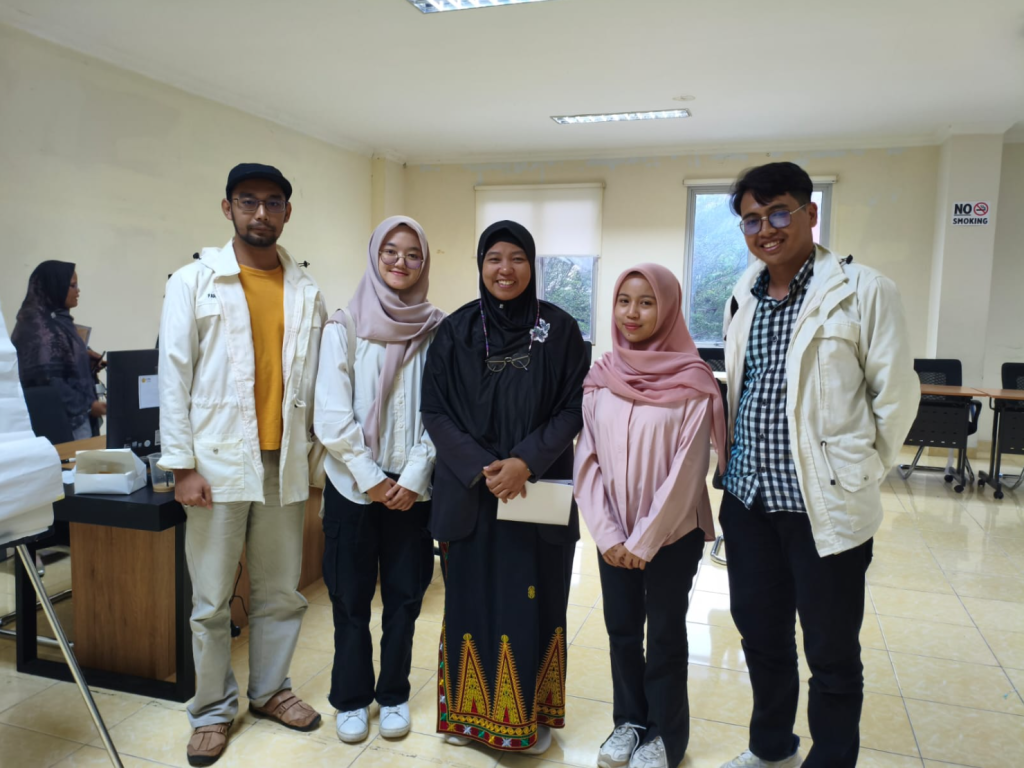
“As a public mental health research center, and with the expertise we have, we need to take strategic actions. We do not come merely to distribute aid, but also to ensure that psychosocial support in Aceh is coordinated, evidence-based, and does not harm the community,” Diana explained.
Direct Assistance: Dignity Kits to Uphold Survivors’ Dignity
In the direct assistance phase, CPMH UGM collected and distributed dignity kits for survivors, particularly women and families in evacuation shelters. These dignity kits contained daily basic necessities such as underwear, bras, hijabs, sanitary pads, sarongs, soap, and other hygiene supplies, tailored to the socio-cultural context of Acehnese communities.
Rahmat emphasized that choosing dignity kits as the primary form of support during the emergency phase was an effort to address specific needs that are often overlooked in disaster situations.
“In disaster contexts, there are specific needs that are frequently neglected, such as women’s needs related to their monthly cycles when access to clean water and sanitation facilities is very limited. Our capacity to provide basic needs like food and drinking water is indeed limited, so we chose to focus on something that both delivers tangible benefits and raises awareness that these specific needs are important and must be addressed,” Rahmat explained.
The dignity kit concept was adapted from guidelines issued by international organizations such as UNICEF and UNESCO, and then modified to meet specific field needs. Procurement of the kits was carried out in collaboration with networks of entrepreneurs and private-sector partners, resulting in 400 kits for adolescent girls and women, 200 kits for men, and 200 kits for children, with the total value of support reaching hundreds of millions of rupiah.
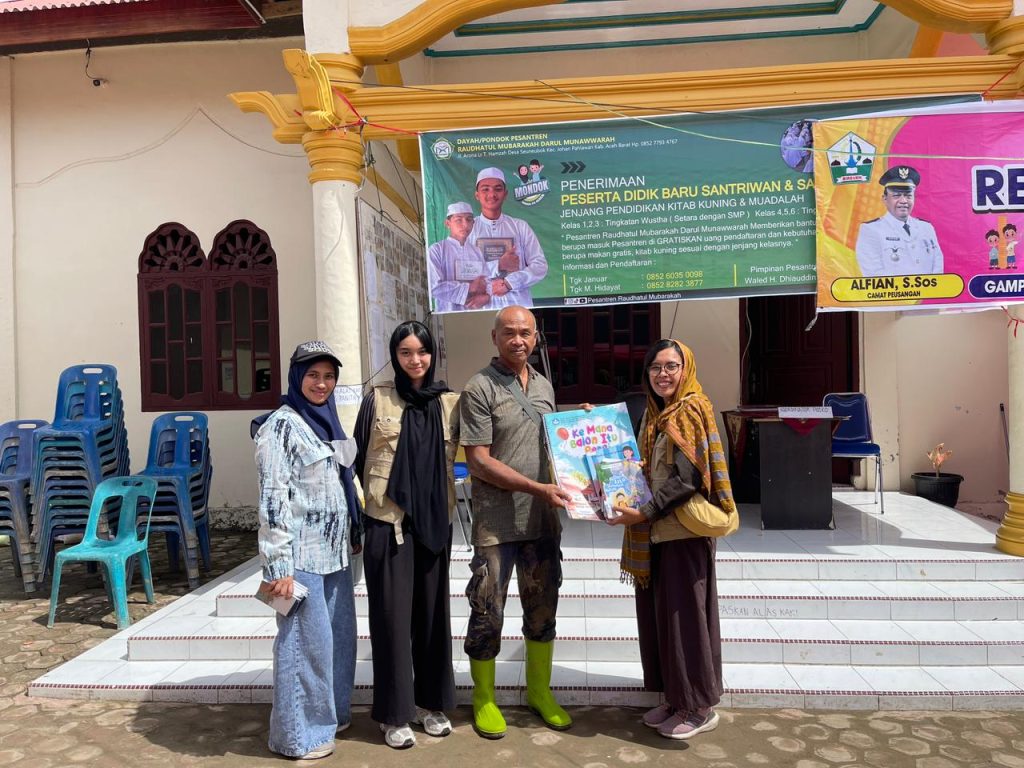
“In disaster situations, a sense of safety and dignity is often eroded by loss and deprivation. We designed these dignity kits so that survivors, especially women, can maintain personal hygiene and dignity amid extremely difficult conditions,” Diana explained.
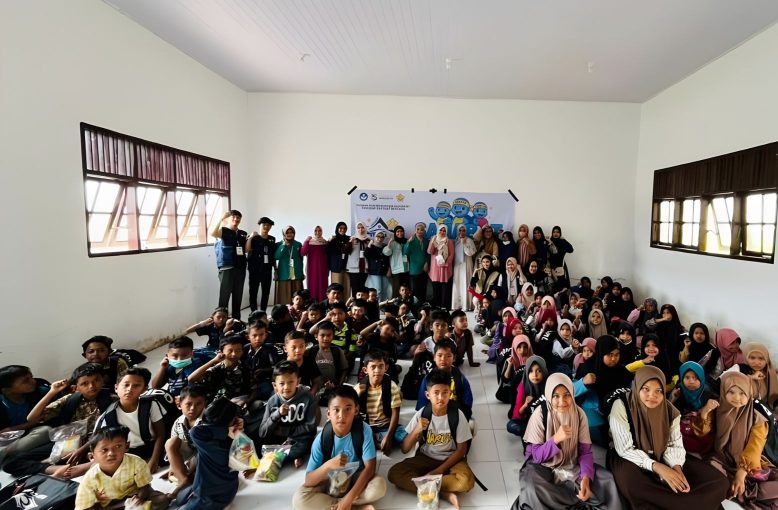
Distribution of the dignity kits was conducted through local volunteers who had first received briefings from the CPMH team. These volunteers came from Syiah Kuala University and community networks in several affected districts. The aid packages were distributed alongside child-friendly safe space activities and brief educational sessions for adults at evacuation sites.
Psychosocial Conditions on the Ground: Collective Anger and Emotional Exhaustion
Diana revealed that the current psychosocial condition of Acehnese communities is marked by collective anger and frustration. Widespread infrastructure damage, more than a hundred damaged bridges, electricity shortages, and uneven aid distribution have intensified the psychological burden on survivors.
“Many residents are angry because they are hungry, exhausted from waiting for assistance, and living in uncertainty. These conditions accumulate into collective anger, which of course affects their mental health,” she said.
Rahmat added that once the emergency phase passes, various psychosocial stressors risk developing into medium- and long-term mental health problems.
“After the emergency stage, psychosocial problems may emerge and develop into mental health issues. Roles as parents, students, workers, and community members are disrupted because homes are damaged, electricity is unavailable, the environment is not conducive, and physical health deteriorates. In the long term, this can lead to prolonged sadness, anxiety, anger, and feelings of injustice, which at certain levels may manifest as depressive and anxiety disorders and a loss of optimism,” he explained.
These conditions form one of the foundations for strengthening psychosocial interventions, ensuring that communities receive not only physical assistance but also support in processing the traumatic experiences they have endured.
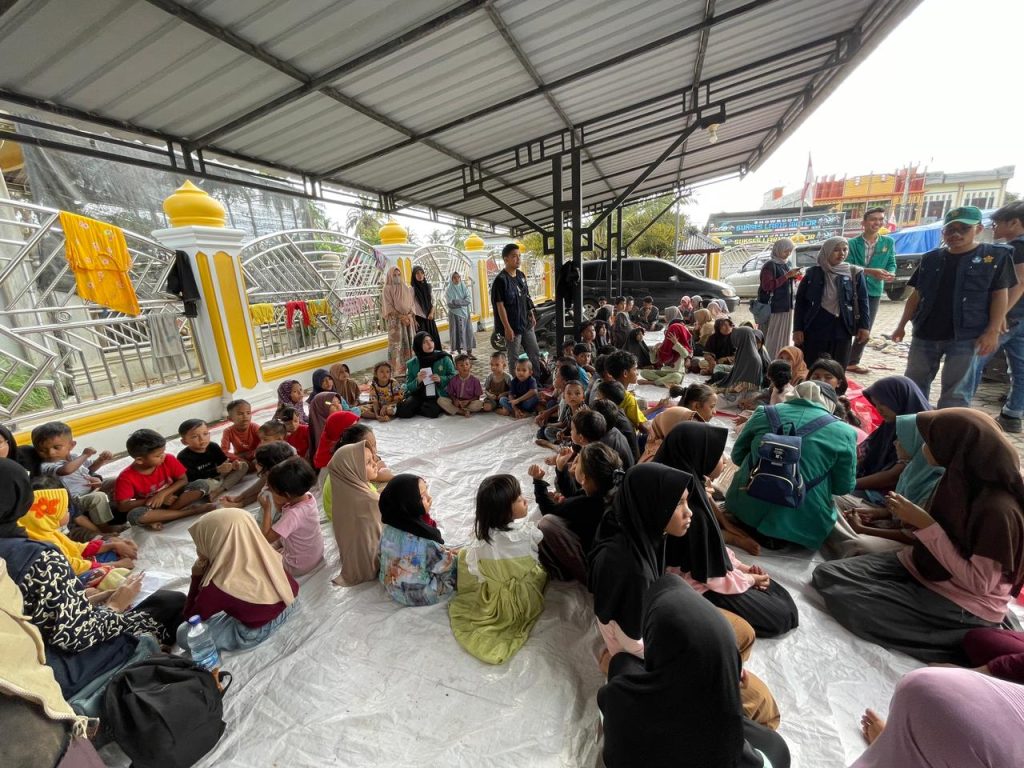
Long-Term Strengthening: Building a Mental Health & Psychosocial Support Hub in Aceh
Beyond direct assistance, CPMH UGM has focused on long-term strengthening through the establishment of a mental health and psychosocial support hub in Aceh. Through this hub, various institutions working on mental health and psychosocial support issues are brought together within a single coordination platform.
CPMH invited around 11 partners from Syiah Kuala University, Malikussaleh University, Ar-Raniry State Islamic University Banda Aceh, Muhammadiyah University of Aceh, HIMPSI (the Indonesian Psychological Association), GEN-A (Generasi Edukasi Nanggroe Aceh), YKMI (Yayasan Kemanusiaan Madani Indonesia), Yagi, AWPF (Aceh Women’s for Peace Foundation), TDMRC (Tsunami and Disaster Mitigation Research Center), and PULIH, all of which have been or are currently implementing MHPSS programs in Aceh. They participated in a two-day workshop and training in Banda Aceh facilitated by the CPMH team.
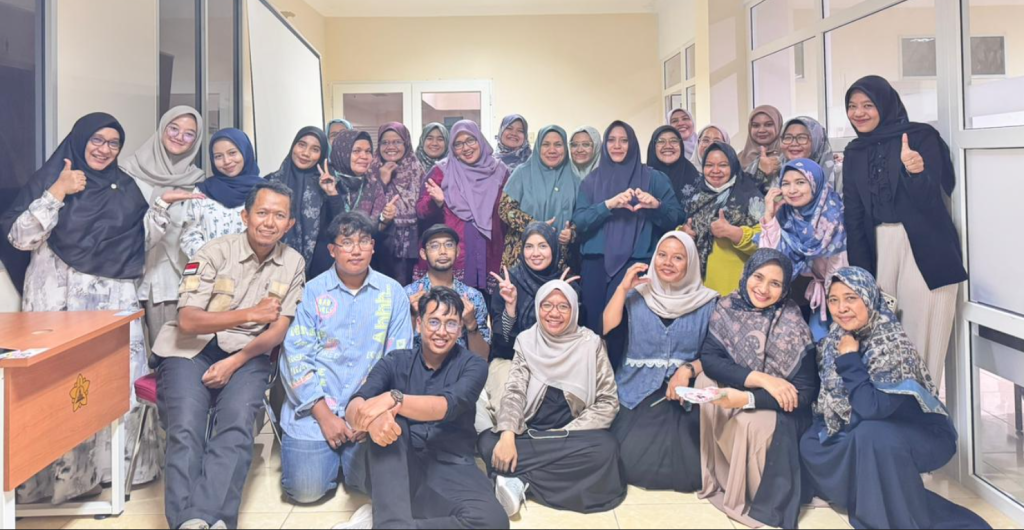
During the activities, participants jointly discussed and practiced four main pillars:
- A mental health and psychosocial support framework for post-flood recovery in Aceh.
- Mental health approaches in disaster settings to ensure safe and well-directed interventions.
- Psychological First Aid (PFA) in disaster situations as initial support for survivors.
- Rapid Mental Health Assessment (RMHA), a rapid mapping of the mental health conditions of affected communities.
The workshop resulted in a shared commitment to unify efforts and strengthen inter-agency coordination. Through this hub, MHPSS programs in Aceh are expected to complement one another, avoid overlap, and be grounded in evidence-based practices.
“We found that there are still many assistance practices carried out with good intentions but that are not yet methodologically sound. Through this hub, we want to ensure that every psychosocial intervention in Aceh is implemented with caution and does not create new harm for survivors,” Diana explained.
University Collaboration and the Role of AP2TPI
At the national level, the Faculty of Psychology UGM is also consolidating synergy among psychology higher education institutions through the Association of Indonesian Psychology Higher Education Providers (AP2TPI). Rahmat explained that the Aceh program will be positioned as part of AP2TPI’s collective efforts to respond to the psychosocial impacts of disasters in Sumatra.
“We are identifying higher education institutions that are affected and those that have already been deployed to disaster sites, in order to map needs and mobilize resources across all AP2TPI members. Our focus remains on psychosocial and mental health issues, particularly through capacity building. It is not only our team that implements programs, but we also train and develop the capacity of local institutions, both universities and local NGO networks,” Rahmat explained.
Knowledge Products and Policy Advocacy
As a follow-up, CPMH together with its network of organizations in Aceh will develop the “Mental Health and Psychosocial Support Guideline for Aceh Flood Recovery.” This document is expected to serve as a reference for government agencies, humanitarian organizations, and volunteers in designing local-level MHPSS programs.
In addition, CPMH will promote multi-level policy advocacy, from the institutional level and local governments to relevant ministries. This advocacy aims to ensure that mental health and psychosocial support issues are integrated into post-disaster recovery and development plans in Aceh.
In closing, Rahmat emphasized that this response is not merely a momentary act of concern, but also part of the institutional learning process of the Faculty of Psychology UGM in facing future disasters.
“We hope that what we have done truly benefits the affected communities, at least so they do not feel alone and feel that UGM Psychology cares and takes concrete action to help restore their sense of agency. At the same time, this becomes a learning process for us to better understand disasters, their impacts, and effective ways to provide assistance to affected communities,” Rahmat concluded.
“Our focus is not only on responding to the current emergency, but also on preparing a more resilient psychosocial support system for the future. CPMH will continue to work with local partners to ensure that Aceh’s recovery proceeds comprehensively, both in terms of physical recovery and mental health,” Diana concluded.
Documentation and coverage of the activities through other media:
- https://penanews.co.id/ugm-dan-usk-gelar-workshop-penanganan-kesehatan-mental-dalam-situasi-bencana-di-aceh/
- https://www.wartapembaruan.co.id/2025/12/ugm-dan-usk-gelar-workshop-penanganan.html
- https://www.sabanginfo.com/2025/12/ugm-dan-usk-gelar-workshop-penanganan.html
- https://www.radaraceh.id/2025/12/ugm-dan-usk-gelar-workshop-penanganan.html?m=1
Writer: Raden Roro Anisa Anggi Dinda