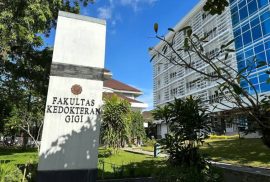
Yogyakarta — The Human Resources Development Unit (UPKM) of the Faculty of Psychology, Universitas Gadjah Mada (UGM) has once again been trusted as the implementing partner for the Potential and Competency Assessment for employees of the Ministry of Transportation (Kemenhub). In this period, the assessment is aimed at employees within the Directorate General of Land Transportation (DJPD). This activity is part of the strategic collaboration that has been established routinely for the past few years between UPKM and Kemenhub in an effort to support the strengthening of the quality of human resources (HR) in the transportation sector.
SDG 3: Good Health and Well-being
The Faculty of Psychology at Universitas Gadjah Mada (UGM) and TVRI Yogyakarta return with the latest episode of OPSI: Psychological Talk. The third episode aired on Tuesday, May 6, 2025, from 3:00 to 4:00 PM WIB, featuring the theme "Thriving Schools as the Foundation of a Golden Generation: Pillars of the Nation’s Future."
The article presents the effectiveness of Exposure and Response Prevention (ERP)-based psychotherapy in treating individuals with Body Dysmorphic Disorder (BDD). BDD is a mental disorder characterized by an excessive preoccupation with perceived physical flaws that are often unnoticeable to others. This condition frequently leads to severe anxiety, social isolation, and a decline in quality of life.
In this case series, the researchers documented the ERP therapy process in several patients diagnosed with BDD. The therapy results demonstrated significant reductions in anxiety levels, compulsive behaviors, and social functioning impairments. ERP — a component of Cognitive Behavioral Therapy (CBT) — proved effective in helping patients confront their fears without engaging in compulsive responses such as excessive mirror checking or seeking reassurance.
Furthermore, Riangga stated that this research not only contributes to clinical practice in the treatment of BDD but also supports Sustainable Development Goal (SDG) 3: Good Health and Well-being, particularly target 3.4, which emphasizes the importance of promoting mental health and reducing non-communicable diseases through appropriate prevention and treatment approaches.
Below is the introduction, keywords, and article link:
Introduction. Body Dysmorphic Disorder (BDD) is characterized by a persistent preoccupation with perceived physical flaws that are often unnoticed by others. It affects approximately 1.9–2.2 % of the population (Veale et al., 2016) and is associated with significant risks, including suicide attempts in 24–28 % of cases (Phillips, 2007). Effective treatment is critical. Exposure and Response Prevention (ERP), a form of Cognitive Behavioral Therapy (CBT), helps patients confront feared stimuli while resisting compulsive behaviors (Hyman and Pedrick, 2010). While randomized trials support CBT’s effectiveness (Wilhelm et al., 2019), research on BDD treatment in Indonesia remains limited despite the disorder’s prevalence and suicide risk.
This study examines three BDD patients receiving weekly online and in-person ERP at a Jakarta psychotherapy office. Patients consented to the anonymized data use for research. Assessments included the Patient Health Questionnaire (PHQ), Body Dysmorphic Disorder Questionnaire (BDDQ), and the Yale-Brown Obsessive-Compulsive Scale Modified for Body Dysmorphic Disorder (BDD-YBOCS) (Jaya et al., 2024; Phillips et al., 1995; Phillips et al., 1997). Progress was tracked through symptom reduction and changes in BDD-YBOCS scores.
Keywords: Body Dysmorphic Disorder; Exposure and Response Prevention Therapy; Cognitive Behavioral Therapy; Case Series
Link:
https://www.sciencedirect.com/science/article/pii/S1876201825001480?via%3Dihub
Yogyakarta, May 5, 2025 — A recent study titled “A bibliometric analysis on disaster volunteer resilience research: All time period”, published in the Scopus-indexed proceedings IOP Conference Series: Earth and Environmental Science 1479 012036, reveals global trends, collaborations, and key focuses in disaster volunteer resilience research.
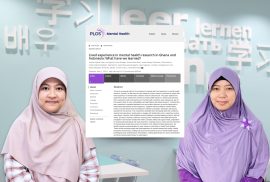
The Faculty of Psychology, Universitas Gadjah Mada, through its Center for Public Mental Health (CPMH) team, has once again received international recognition with the successful awarding of funding for the proposal “Religion and Healing: Collaborative and Participatory Methodologies (RHEAL)” from the Horizon Europe Framework under the Marie Skłodowska-Curie Actions (MSCA) Staff Exchanges scheme. The RHEAL program focuses on developing cross-cultural and interdisciplinary approaches to healing in the field of mental health.
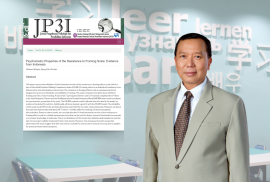
Yogyakarta, April 24, 2025 — An article titled “Understanding Work Engagement in Public Administration: A Comprehensive Bibliometric and Systematic Review of the Past Decade”, authored by Iqbal Saffariz Santosa, Erwan Agus Purwanto, Sumaryono, and Puguh Prasetya Utomo, has been published in Social Sciences and Humanities Open, Volume 11 (2025), Article Number 101479. This journal is indexed in Scopus (Q1), with a 2023 SJR of 0.691 and an Impact Score of 4.2.
Yogyakarta, April 23, 2025 — An article titled “The Hygiene Hypothesis of Crime: Examining the Link Between Disgust-Related Diseases and Crime Incidence” by Samudera F. Jamaluddin has been published in Acta Psychologica, Volume 256, article number 105013. This journal is indexed in Scopus with a Best Quartile (Q1), an SJR score of 0.854 (2024), and an Impact Factor (IF) of 2.1.
The Faculty of Psychology at Universitas Gadjah Mada (UGM), in collaboration with TVRI Yogyakarta, presents a weekly interactive talk show titled OPSI: Psychological Talk. The premiere episode aired on Tuesday, April 15, 2025, from 3:00 to 4:00 PM WIB, featuring the theme "Unveiling the Phenomenon of Brain Rot."
The Center for Public Mental Health (CPMH) at the Faculty of Psychology, Universitas Gadjah Mada, once again demonstrated its commitment to improving mental health and disability literacy among adolescents through the organization of the Adolescent Mental Stability Advocate Competition (AMSAC) Vol. 2. Carrying the theme “Breaking Barriers, Opening Opportunities: Realizing a Generation that Cares about Mental Health and Disabilities,” this year’s AMSAC series took place from April 10 to May 25, 2025, with the main event held at Joglo GIK UGM.
AMSAC Vol. 2 was designed as a platform for junior and senior high school students from across Indonesia to express their concern and ideas on mental health and disability issues. Through various creative competitions such as essay writing, digital poster design, reels, and short story contests, participants were encouraged to highlight the role of youth in building inclusive environments, fostering appreciation for mental health warriors, and breaking down the negative stigma that still exists in society. All submissions were collected online from April 20 to May 4, 2025, and the enthusiasm was evident with around 200 participants taking part.
The workshop featured three lecturers from the Faculty of Psychology, Universitas Gadjah Mada (UGM): Prof. Dr. Sofia Retnowati, M.S., Psychologist; Prof. Drs. Subandi, M.A., Ph.D., Psychologist; and Dr. Diana Setiyawati, M.HSc.Psy., Psychologist. These individuals were directly involved in psychosocial recovery programs following the tsunami. UGM played a significant role in Aceh’s recovery post-tsunami, with its Faculty of Psychology actively supporting the psychosocial rehabilitation of the community. This support included deploying psychologists to various community health centers (puskesmas), including in the Meulaboh area, and initiating collaboration to establish a Psychology Study Program at the Faculty of Medicine, Syiah Kuala University. This initiative was part of long-term efforts to build local capacity in mental health.
The workshop’s in-depth discussions aimed to evaluate the achievements of mental health programs over the past two decades while formulating concrete follow-up action plans. “All parties agree that the presence of psychologists in puskesmas needs to continue, just as it was during the tsunami recovery period. This step is crucial for strengthening mental health services at the community level,” explained Dr. Diana Setiyawati.
The main commemoration event is scheduled for December 26, 2024, in Meulaboh, one of the areas most severely affected by the disaster. The event will be attended by the Dean of the Faculty of Psychology UGM, Rahmat Hidayat, M.Sc., Ph.D., and Drs. Haryanto, M.Si., Psychologist, representing the Faculty of Psychology UGM, along with local officials and community members. This commemoration serves as an important moment to honor the victims and to strengthen solidarity in building a more resilient future for Aceh.
This series of commemorative events is not only an opportunity for reflection but also a reminder of the importance of preparedness and collaboration in facing future disaster challenges.
Author and photo: Wulan Nur Jatmika, S.Psi., M.Sc.