The Faculty of Psychology at Universitas Gadjah Mada (UGM), through the Center for Public Mental Health (CPMH), has implemented a series of psychosocial support programs for communities affected by floods and landslides in Aceh. Supported by Emergency Disaster Response Community Service Funding for the Aceh, North Sumatra, and West Sumatra regions from the Directorate of Research and Community Service (DPPM) of the Ministry of Higher Education, Science, and Technology, the program is designed to address the urgent mental health recovery needs of survivors while strengthening long-term psychosocial support systems at the community and local government levels.
SDG 16: Peace Justice & Strong Institutions
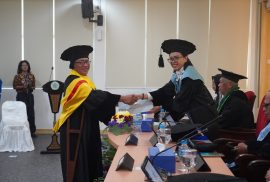
Universitas Gadjah Mada has once again conferred the Anugerah Insan Berprestasi (Outstanding Person Award) to members of its academic community and alumni who have demonstrated exceptional contributions and performance to the university and to society at large. This year, the Faculty of Psychology UGM is proud to receive the Inspiring Lecturer in Social Sciences and Humanities award, which is presented to faculty member IIndrayanti, S.Psi., M.Si., Ph.D., Psikolog.
Diana Setiyawati, S.Psi., MHSc., Ph.D., Psikolog, a lecturer at the Faculty of Psychology, Universitas Gadjah Mada (UGM), is one of the grantees of the Community Service Program for Emergency Disaster Response in the Provinces of Aceh, North Sumatra, and West Sumatra funded by the Directorate of Research and Community Service (DPPM), Ministry of Higher Education, Science, and Technology. She received funding for a program entitled “Integrated Psychosocial Recovery Program for Communities Affected by Floods in Sumatra.”
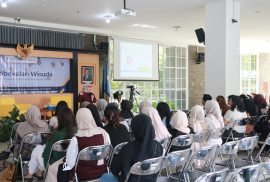
The Faculty of Psychology, Universitas Gadjah Mada (UGM), in collaboration with Kesehatan Mental Tuli Indonesia (KMTI), organized a training titled “Bridging Minds: Mental Health Training for Deaf Leaders and Mental Health Professionals” on 20–21 November 2025 at the Faculty of Psychology UGM. This activity is part of a broader initiative to strengthen inclusive mental health support for Deaf communities in Indonesia.
Non-Suicidal Self-Injury (NSSI), or self-harming behavior without suicidal intent, is increasingly observed, particularly among adolescents and young adults. In Indonesia, several studies indicate that this phenomenon appears in everyday settings, influenced by emotional pressure, unsupportive social relationships, and the growing complexity of life challenges. A research team from the Faculty of Psychology, Universitas Gadjah Mada (UGM) is developing a psychoeducational module on NSSI designed as a first step to understand this behavior, reduce stigma, and help individuals and their immediate circles respond more appropriately. This initiative is funded by the 2025 Research Grant of the Faculty of Psychology UGM.
Understanding Indonesia’s mental health landscape requires a clear map of what has been studied, where, by whom, and with what focus. Responding to this need, a research team from the Center for Public Mental Health, Faculty of Psychology, Universitas Gadjah Mada, is undertaking a study to trace scientific publications on the prevalence, risk factors, and patterns of mental disorders across population groups and regions.
Student mental health is now a serious concern on many campuses, including Gadjah Mada University. Data and observations show an increase in mental health problems among students, especially after the COVID-19 pandemic. Amidst various academic responsibilities and other activities such as organizations, part-time jobs, and friendship dynamics, there is a risk of problems such as health issues and psychological problems arising. However, students' willingness to access mental health services still faces many obstacles.
A research team from the Center for Life-Span Development (CLSD), Faculty of Psychology, Universitas Gadjah Mada (UGM), is initiating a qualitative study to understand how Indonesian adolescents define mental health, the challenges they face, and the protective and risk factors that shape their psychological well-being. National data indicate that 34.9% of adolescents experienced mental health problems in the past 12 months, yet only 2.6% have accessed services. In response, this study seeks to foreground adolescents’ own voices to ensure that resulting interventions genuinely align with their lived experiences. This research is funded by the 2025 UGM Faculty of Psychology Research Grant.
The surge of online gambling practices in Indonesia, estimated to involve 1 percent of the population, with the majority in productive age groups, highlights the need for an accurate screening tool to detect gambling disorder and its impacts on mental health, social relationships, and work performance. Responding to this need, a multidisciplinary research team from the Faculty of Psychology, Universitas Gadjah Mada (UGM), in collaboration with the Karolinska Institute, Sweden, is adapting and validating the Gambling Disorder Identification Test (GDIT) into Indonesian. This initiative is expected to provide a valid and reliable screening instrument for researchers and practitioners in Indonesia.
Amid the growing role of social media in shaping public opinion, a new study from the Faculty of Psychology at Universitas Gadjah Mada (UGM) examines how political conversations in digital spaces influence young people’s emotions and political engagement. Drawing on the dynamics of discourse on platforms like TikTok—from sympathetic support to aggressive commentary, the research seeks to understand users’ response patterns to political conversations of differing tones and characteristics. This study is funded by the 2025 Research Grant of the Faculty of Psychology UGM and is situated within the Cyberpsychology theme at the Center for Indigenous and Cultural Psychology (CICP).