
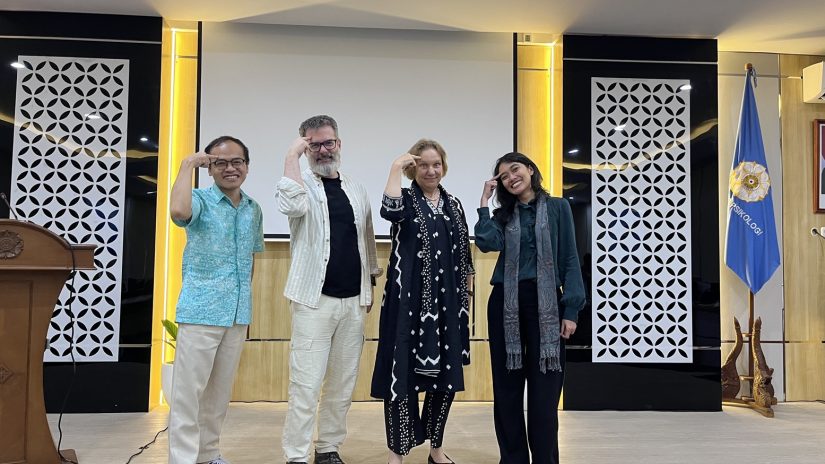
The Laboratory of Mental Processes and Behaviour (PMB), Faculty of Psychology, Universitas Gadjah Mada, held an international seminar titled “Studying Mental Processes Using EEG/ERP” on Friday (05/12). The event, attended by 40 participants, was conducted in a hybrid format—via Zoom Meeting and on-site in Room A-203 at the Faculty of Psychology UGM. This seminar served as a platform for knowledge sharing and scientific discussion on the use of EEG and ERP in studying human mental processes.
The event was opened by the Vice Dean for Academic and Student Affairs of the Faculty of Psychology UGM, Dr. Wenty Marina Minza, M.A., who emphasized the importance of developing neuropsychology research to better understand human mental processes. The opening was followed by remarks from the Head of the PMB Laboratory, Zulfikri Khakim, S.Psi., M.Sc., who expressed hope that the seminar would strengthen research collaboration and enhance both practical and methodological understanding of EEG/ERP in psychological research.
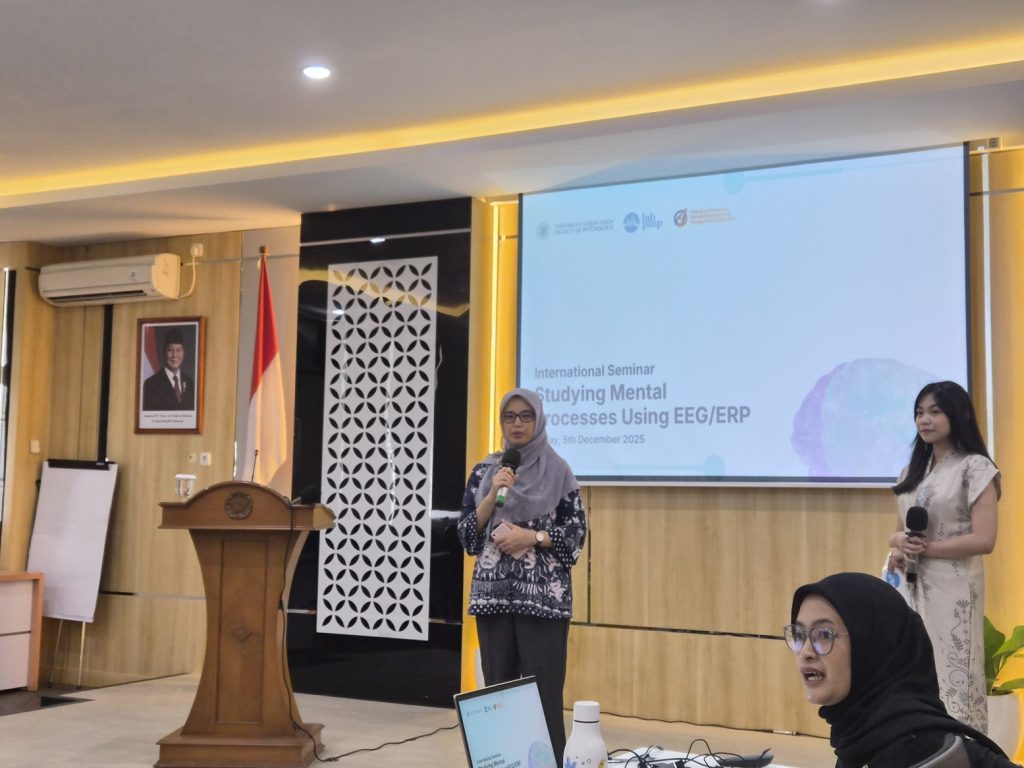
As the first speaker, Zulfikri Khakim, S.Psi., M.Sc. delivered an introduction to the definition and basic principles of EEG/ERP. He explained that this technique enables researchers to observe electrical activity in the brain in real time, making it highly valuable for understanding how humans process information.
“EEG/ERP gives us the ability to capture changes in brain activity within milliseconds. This makes it an essential tool in cognitive research, as it allows us to identify mental processes that occur even before behavior becomes visible,” he said.
The second speaker, Dr. Ferenc Honbolygo from Eötvös Loránd University, Hungary, discussed the use of ERP in language processing research. He explained how ERP components can show the brain’s responses to linguistic structure and word meaning very quickly. He also emphasized that ERP analysis enables researchers to understand the cognitive stages involved when a person reads or listens to language.
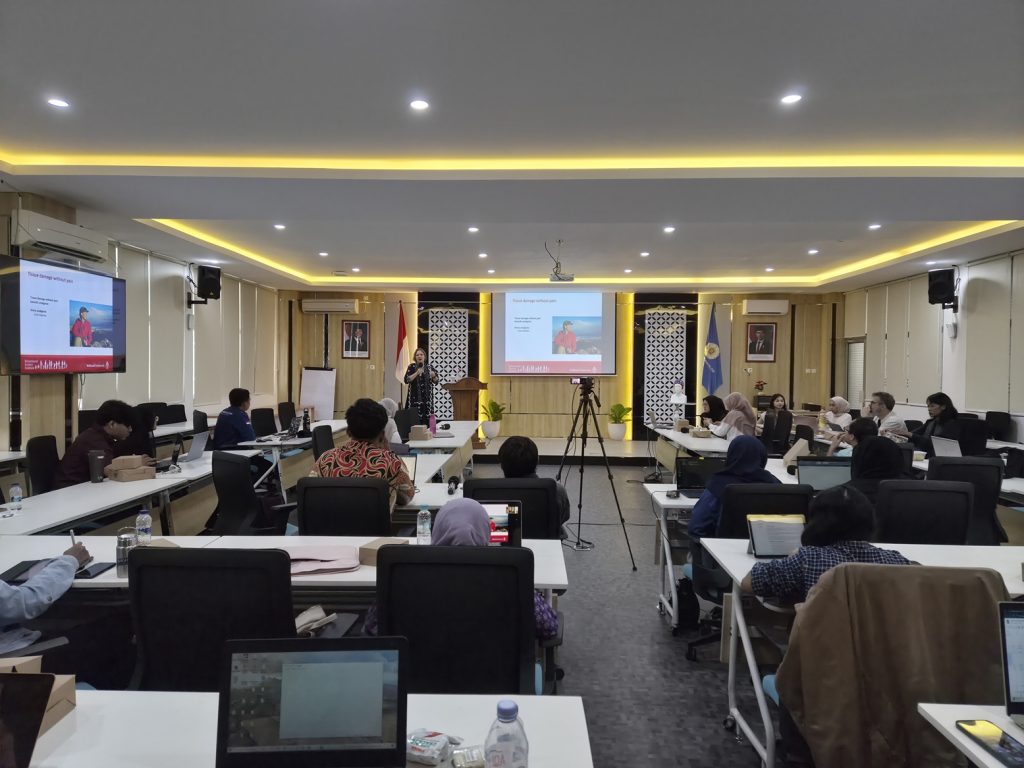
The third speaker, Dr. Marijtje Jongsma from Radboud University, Netherlands, discussed the use of ERP in social cognition research. She highlighted how brain responses recorded through ERP can help researchers understand cognitive processes involved in recognizing emotions, intentions, and social interactions. Jongsma also stressed that this approach offers significant potential for studying social dynamics in a deeper and more objective manner.
The fourth speaker, Dr. Satwika Rahapsari, S.Psi, M.A., from Universitas Gadjah Mada, presented the use of ERP in the study of cognitive control. She explained how ERP components can help reveal the brain mechanisms involved in attention, decision-making, and response regulation. Satwika emphasized that this understanding is important for identifying cognitive patterns underlying various behaviors, including those examined in clinical and developmental contexts.
Writer: Relung Fajar Sukmawati